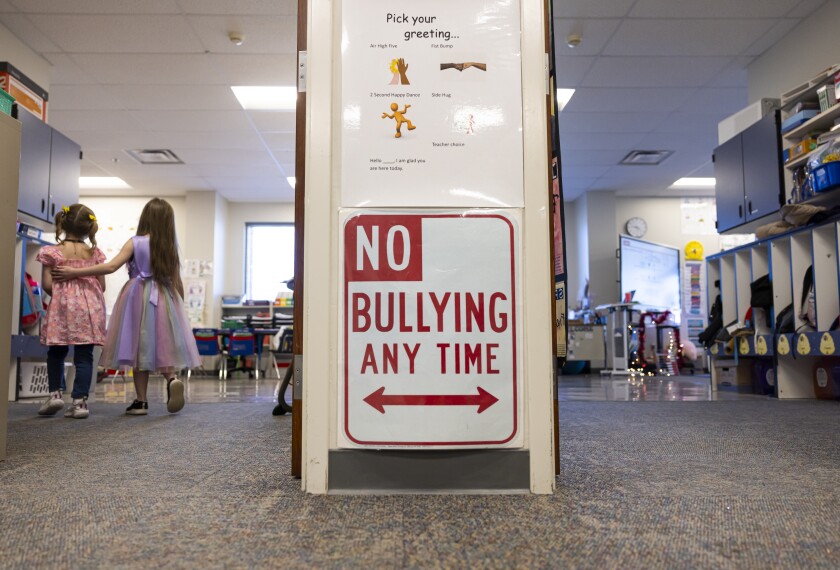
| Project 540 puts a new spin on student activism by helping teens promote school reform. |
For years, tardiness was a major problem at Yukon High School in central Oklahoma. The school has two campuses—one for grades 9 and 10 and another for grades 11 and 12—located a five-minute walk apart, and students who took courses at both sites were often late for class. Last fall, a school reform group studied the issue, soliciting recommendations from students on how to solve the problem. Many suggested that the school could help kids get to class on time if it linked the two campuses’ separate public address and bell systems. The reform group persuaded the local board of education to purchase and install a costly unified announcement and bell system; now everyone is in sync.
Board members were unaware that the school’s PA and bell systems weren’t linked, but the bigger surprise was the reform group itself, which was made up of Yukon High students assisted by a teacher-adviser. “I was really shocked,” says Darryl Andrews, the physical science and leadership teacher who advised the reformers. “I knew we had support. I knew [school board members] were interested, but I didn’t think they would fund a $67,000 system.”
Board member Don Easter says the students’ initiative in approaching them convinced officials the upgrade was worthwhile. “We felt it was important to show them that their opinion counted and that they could come to us and take up what they felt were the most pressing issues in the district, and we would listen to them and, if we could, implement their suggestions,” he says. “So we did.”
The Yukon High students are among more than 100,000 teenagers in 14 states who got involved with school reform this past year through a new Pew Charitable Trusts program called Project 540. The number refers to a 540-degree turn, or a revolution and a half, which represents the program’s problem-solving goals. First, students come full circle by identifying issues that matter to them and mapping out resources they can use to improve their schools. Then they take their ideas the next half-turn by developing recommendations for change, which they present to school or community officials in the form of an action plan. Regional Project 540 officials provide school groups with training, resource guides, technical assistance, and connections to other student-reformers in the network.
Schools should be practice grounds for democracy, asserts Rick Battistoni, founder and director of Project 540 and a professor of political science at Providence College in Rhode Island. The irony, he says, is that many high school students don’t feel they have a voice. “The schools are doing a pretty good job of formal civil education,” Battistoni explains. “But students lack motivation. There needs to be more opportunity and a reason for exercising their civic duties. They don’t necessarily have to win, but they need to know their opinions will be taken into consideration.”
Having students act as problem-solvers in their schools and communities is not unique to Project 540, says Barbara Cervone, president of What Kids Can Do, a Providence, Rhode Island-based organization that tracks activist projects undertaken by young people working with teachers and other adults. “But there aren’t many other initiatives that have put their money and muscle behind that,” she adds. Pew has invested almost $4 million in introducing the program to about 300 schools nationwide, training facilitators, and connecting groups within the network. This school year, Project 540 plans to focus on helping more school reform groups put their action plans into motion.
‘We felt it was important to show them that their opinion counted and that they could come to us and take up what they felt were the most pressing issues in the district.’
Board Member |
After one year, the majority of the project’s reform groups are somewhere in the middle of the process. For example, students at Rosemount High School in Minnesota have identified three school, district, and community issues that top their wish list: improving accessibility to the school’s library and computers; developing a sliding scale for student parking fees based on factors like financial need and academic achievement; and extending the city’s curfew for teens. This year, they’re working to improve communication between students and school and community officials to help them change policies in these areas.
But at some schools, reform efforts have fizzled. Michelle Bremen, a senior at Lake Norman High School in Mooresville, North Carolina, says that last year, her group identified several ways to improve lunch time. They suggested extending the25- minute lunch period, offering kids the opportunity to leave school during lunch, and allowing off-campus food to be delivered. They also wanted to establish a teen hangout of some kind in the community. But their ideas raised a slew of regulatory and insurance questions and were met with resistance. “Almost everything we wanted to do was shut down,” Bremen says. “We ran into all these things, and it was, like, just a dead end.”
Cervone says it’s difficult for adults to be handed a concept like Project 540 and hit the ground running, even with the guidance, examples, and connections the program provides. “Even the most apathetic teen has a reservoir of good will that can be tapped with the right solution,” she says. “But for a lot of teachers, the skills and organization and risk-taking to make this work is unfamiliar terrain.”
The fact remains that schools are tough places to change. But even making the attempt to reform education gives students a sense of empowerment, argues Thomas Scott, a social studies teacher at Rosemount High. “What I see out of this project,” he says, “is a core of students who have gone before their peers—which is a very difficult thing to do—and elicited their feedback. And now they are trying to put it into some kind of workable action. It’s the first time I’ve seen that happen.”
—Lynn Waldsmith