
After three years of interrupted schooling, many students are disengaged and behind—far behind—academically.
To get students back in school and performing on grade level, school leaders are trying to hire more tutors, nurses, counselors, and attendance coordinators. But even as district coffers are flush with cash, some simply can’t find enough people to fill all their open roles.
What if they also asked for help from parents? The pandemic provided a stark reminder of the importance of the school-to-home connection. Schools had to lean on parents during the depths of the pandemic; perhaps that can be a recovery strategy as well.
Schools would need to think carefully about how to engage parents constructively. But an investment in parents would more than pay for itself. It may be more cost effective to work with parents rather than try to hire new employees, especially in the current labor market. And an upfront investment to help parents support their child’s academic and behavioral development could help teachers focus on teaching and save the school money on costly remedial services.
There’s a name for this type of arrangement: co-production. Co-production occurs when the beneficiaries participate in the delivery of services they use. As my Edunomics Lab colleague Marguerite Roza highlighted last year, districts are already experimenting with co-production efforts in a wide range of services, including transporting kids to school, purchasing school supplies, or encouraging teenagers to take summer courses. Similarly, schools could pay parents to read to their children every night, make sure their child completes math lessons on the Khan Academy website or language lessons on Duolingo, or practices a musical instrument.
Would parents engage with this type of request? I think they would. Over the summer, I created a back-to-school reading challenge called Read Not Guess. It sent parents short lessons over email with tips on how to work with their children on basic phonics skills.
Schools could use their federal relief funds to design and implement financial incentive programs for parents ... to work with their children.
The Read Not Guess lessons were short, just 5 to 10 minutes a day, but over 1,100 people subscribed and half of them completed 80 percent or more of the lessons. Participating parents said the lessons helped build their child’s skills and stoke their interest in reading.
Now, what if the schools were the ones engaging families to help with reading or other subjects and providing financial incentives for their involvement? That type of partnership could make real headway on recovery efforts. To be the most effective, the research on incentives suggests that parents’ work should focus on inputs like effort and behavior rather than outcomes. For example, a study on incentives in Dallas and Washington, D.C. found particularly promising gains among students who were paid small dollar amounts for attendance, good behavior, and turning in their homework in on time.
Yes, some parents may need convincing that they should participate in such an effort. Researchers have diagnosed a troublesome “perception gap”—parents think their children are doing better than they are—which undermines the willingness of parents to sign up for voluntary intervention programs. The key for schools then is to communicate clearly about the achievement gaps they see and effectively harness and direct parent efforts.
There’s evidence to suggest that’s possible. Light-touch interventions like sending text messages to parents have led to big reading gains for children, especially the most disadvantaged ones. Teaching parents how to work with their child on specific reading skills also has strong positive effects.
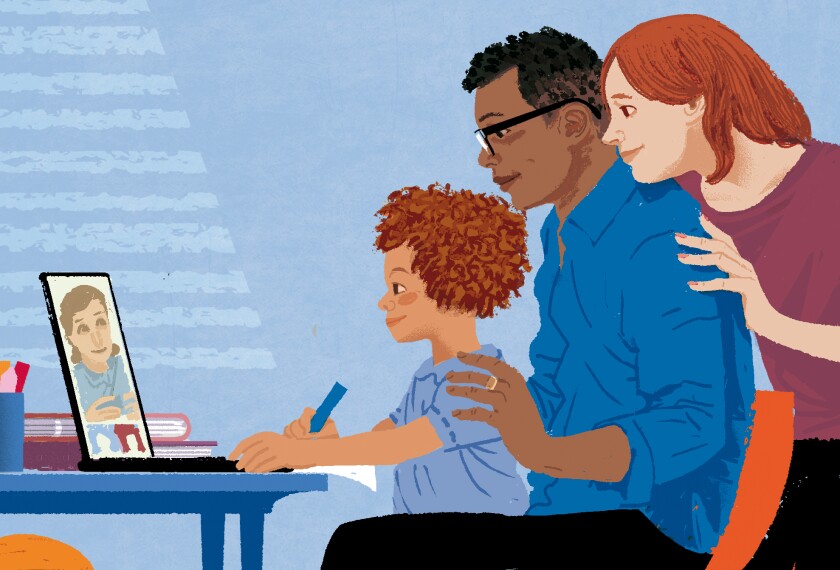
There’s also the issue of time. Naturally, most education policies are aimed at maximizing the impact of the hours kids spend in school. Take, for example, the push for more personalized tutoring and the growing movement to improve early reading instruction. But even if the quality of in-person instruction is high, that still leaves a lot of unused time before and after school, on weekends, holidays, and summers.
Schools could use their federal relief funds to design and implement financial incentive programs for parents and other caregivers to work with their children. Teachers and school leaders may initially resist the idea out of concerns that only some families will benefit. That could allow some kids to get ahead while others stay behind. That’s both an equity problem and a pedagogical one, if teachers have to deal with students who come into the classroom at wildly different achievement levels.
But the wealthiest families already have the most books at home and already provide the most enrichment activities for their children. Teachers already have to deal with students at different performance levels—and this got worse during the pandemic.
Parents could help fill in those gaps, if they’re asked. That could free up teacher time and other resources that schools could use to support students that are furthest behind. Successfully engaging parents in recovery efforts could add up to a potential win-win situation: kids learning more thanks to their families and schools stretching their resources.


