
One of the classes I (Jen Cheatham) teach at the Harvard Graduate School of Education is a doctoral course called Leaders of Learning for K-12 education leaders who are studying to become system-level leaders. The course aims to prepare educators to lead for student, adult, and organizational learning. And it argues that leaders of learning must do more than assess the quality of instruction. They must continually examine the larger system that either supports or constrains excellent instruction and both seek and use shared insight to cultivate collaborative change.
This course was originally taught by Richard Elmore, a professor at the ed school who died in 2021. Last year, I worked with two former teachers, administrators, and graduates of the ed school—co-authors Erica Lim and Carmen Williams—to update it. In our preparation, we culled through recent literature about adult and organizational learning. We also returned to Elmore’s work, in particular his now-classic essay, “I Used to Think … and Now I Think ...,” in which he demonstrates how he evolved over his long career and challenged himself to explore “truths” that he might have otherwise taken for granted. Elmore’s essay seems especially salient given today’s challenges.

The harsh setbacks brought on by the pandemic, the deeply partisan political climate, and the ensuing culture wars have made it nearly impossible to engage in dialogue that leads to authentic learning. Today, everything is black or white, right or wrong, in alignment with one’s political affiliation, identity, or espoused values. In our course, we wanted to teach that educators must first and foremost be learners who are open and willing to change their own hearts and minds. By doing so, they will be better able to create the conditions for others to learn and change as well.
Creating the conditions for adults to change their minds, however, is not easy, especially when they feel attacked, defensive, or misunderstood. But it is possible, as the voices of our students from this class attest.
Here are a few lessons from our teaching that we hope will help all leaders of learning—school and district leaders, especially—to create more resilient opportunities for educators to grow, even in these uncertain times.
Warm Beginnings and Endings
First, we think it is crucial to embed rituals for reflection and community building in our class meetings. For this reason, we open our course with a community-building circle and invite class members to share their learning goals. These activities generate a commitment to our individual and collective growth. At the beginning of each subsequent session, we check in on class commitments, like our agreements to lean into discomfort or remain curious. We end each class by sharing parting thoughts, epiphanies, and questions on a big piece of chart paper. This activity helps to both synthesize and celebrate the learning process by making our evolving thinking visible.
What to consider: So often, spaces for educators to learn are untethered from their individual learning goals. What rituals could anchor your professional learning sessions to ensure they signal the value of personal growth?
Provocation and Inspiration
To provoke new thinking, we also believe it is important to bring in voices that are different from our own. One assignment prompts our students to shadow and complete empathy interviews with K-12 students and their teachers to gain insight and a deeper understanding of the enabling and constraining factors of the school day’s current design. Our learners then share those stories in our class. One of our class participants shadowed a Spanish-speaking student, who recently immigrated to the United States, to understand his daily experience in school. Another shadowed a seasoned elementary school teacher who felt she lacked the agency to do her best work. As we listen to the stories, we focus on the feelings they elicit before moving to analysis and implications for practice. Sometimes, the stories make us sad and angry; sometimes, we feel inspired and hopeful; every time, we are surprised by the empathy they generate. What is most important is that by connecting with these stories emotionally before analysis, we commit ourselves to compassionate exploration of multiple viewpoints.
What to consider: School and district leaders too often make assumptions about the intentions of our students, parents, and colleagues. How might you provoke new insight during your professional learning sessions by bringing in more perspectives? How might you design ways to explore those viewpoints with care?
Sharing Wisdom
We know adult learners bring a wealth of experience and understanding to the table. Accumulated over a lifetime, their knowledge and skills are crucial to the class content. And it is wisdom we want them to share. When they do, tensions can arise across gender and racial/ethnic identities or among those who are parents and those who aren’t. In last year’s class, we noted that there was tension between former school and central-office leaders, so we started exploring the question, “Who is best positioned to do what work?” In other words, rather than tamp down the differences of opinion, we remain curious and let new through-lines of inquiry emerge.
What to consider: Too often, school and district leaders don’t draw on the experience in the room. How might you maximize your participants’ knowledge and skill? How might you make space for authentic inquiry into areas of disagreement?
Co-Design
The design process for adult learning needs to be collaborative, continuous, and iterative, in full partnership with the participants. To ensure our course meets the needs and desires of each new student, we offer one-on-ones before class begins to better understand their professional experiences, career goals, and personal learning objectives. Last year, we also met with a focus group of participants who have less experience in the field to engage them in the course design. Throughout the semester, we then model the co-design process and sustained collaboration we believe are at the heart of leading meaningful learning.
What to consider: Educators frequently feel like they are receiving professional learning as opposed to participating in it. How might you engage adult learners (your teachers/principals, for example) in co-design?
Designing, teaching, and reflecting on this course has reminded us that for adults to learn—to truly challenge their long-held beliefs like Elmore did and then to change them—they need a different kind of learning space from what their current meeting structures offer. We see, in just a matter of weeks, a change in how these educators view themselves, the work to be done, and each other. Only by offering spaces that are more respectful, humane, and stimulating can we nurture the expansive thinking we need now.
Changing your mind or evolving your thinking is not easy. Hear how these education leaders did just that.
I used to think... we needed revolution.

I used to think... there were a few roles that if done correctly could radically transform education.
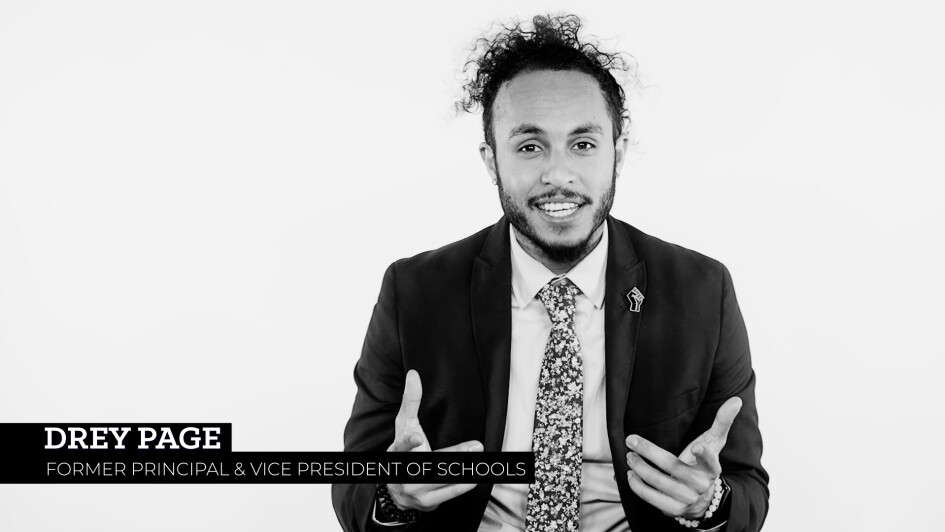
I used to believe... in policy solutions to ensure an equitable, level playing field for every child.

Want to hear more perspectives?


