
Zephyr Teachout, who ran against New York Gov. Andrew Cuomo two years ago in the Democratic primary by attacking his policies about testing and the Common Core State Standards, is now campaigning on a similar platform as she seeks a seat in Congress as a Democrat.
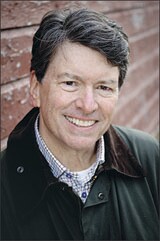
Her GOP opponent, John Faso, has a record of supporting charter schools when he served previously in the state legislature and when he unsuccessfully ran for governor in 2006.
Both Faso and Teachout, an associate professor at Fordham University law school, are seeking the seat in the U.S. House of Representatives being vacated by U.S. Rep. Chris Gibson, a Republican, who represents the state’s 19th congressional district. The district consists of several upstate counties around Albany.
A victory for Teachout would mean that those critical of high-stakes tests and the Common Core State Standards would get a big-time champion in Washington, maybe their most outspoken one. She would also represent a state where the backlash to those policies has been particularly strong, as expressed through the testing opt-out movement.
According to recent polling, they’re running neck and neck. And the National Republican Congressional Committee chairman, U.S. Rep. Greg Walden of Oregon, acknowledged that it’s a tight race between the two.
Some Similarities
In a few respects, Teachout’s view of education policy isn’t wholly different from Faso’s.
In 2014, Teachout became something of a hero for progressives and others who expressed disgust at education policy in New York state under Cuomo, former state school board chief Merryl H. Tisch, and then-Commissioner of Education John B. King Jr.—who’s now U.S. secretary of education.
She said she was taking a stand for public education and charged that Cuomo was responsible for policies that undermined schools, including K-12 underfunding and teacher evaluations tied to test scores.
Teachout lost the Democratic gubernatorial primary to Cuomo by a significant margin, but garnered a bigger share of the vote, 33 percent, than many expected.

As the state assembly minority leader, Faso wrote legislation to expand charter schools in New York state. A decade ago, when he ran for governor, Faso criticized then-Gov. Eliot Spitzer, a Democrat, for not being a bigger fan of charters. The New York Post reported that Gibson has endorsed Faso to replace him.
In an interview, Faso said the federal government has injected itself too much into state and local K-12 decisions over the past dozen years.
And he was particularly critical of the No Child Left Behind Act—which he said he would have voted against had he been in Congress—and of the Race to the Top grant New York state received for work on curriculum, standards, and accountability.
“The federal government could have just dropped [money] out of airplanes, and it would have had the same impact,” Faso asserted.
‘Government Overreach’
Teachout, who could not be reached for comment, has repeatedly stressed that she is in favor of “public education.” On her website, Teachout notes that she used to work as an aide to a special education teacher in a rural school and remembers that when she was a child, her teachers were “demanding” but also “attentive.”
“A top-down, highly regimented testing regime like that embodied in the common core would not have worked for all those children, in large part because it would have straightjacketed teachers, instead of allowing them to respond to particular needs,” her website says. (The state has stuck by the common core under Cuomo, although New York recently publicized proposed revisions to the standards.)
Her website says that “stopping government overreach on local public education” is also a top priority.
It’s not clear if she is a fan of the Every Student Succeeds Act which shifts more control over K-12 policy to states and districts. ESSA doesn’t ban the common core, but it does prevent the U.S. Department of Education from incentivizing or otherwise influencing states’ decisions regarding content standards.
Faso acknowledged that he and Teachout share suspicion about the federal government’s role in K-12, and they both don’t really like the common core, with Faso criticizing the standards’ implementation in New York and arguing that they aren’t uniformly high quality. But Faso said that unlike him, Teachout is “a shill for the unions.”
Teachout isn’t a fan of charter schools, because she says they drain money from traditional public schools, often for the benefit of private organizations.
Faso has taken the opposite view. The bill he previously authored would have lifted the cap on New York state charter schools. New York eventually did raise the cap in 2010. He said that charters in upstate New York have many remarkable successes, along with some failures. He also said that “reasonable” measures of student achievement should be used to evaluate schools and teachers, and that he doesn’t want to see testing completely abandoned as an accountability measure.
“None of these things are panaceas themselves,” he said.
He also addresses college affordability on his website. Faso wants a national campaign to encourage parents to save more for higher education, specifically through mechanisms like 529 savings accounts. And he wants private organizations to provide seed money for these accounts to help parents get started.


