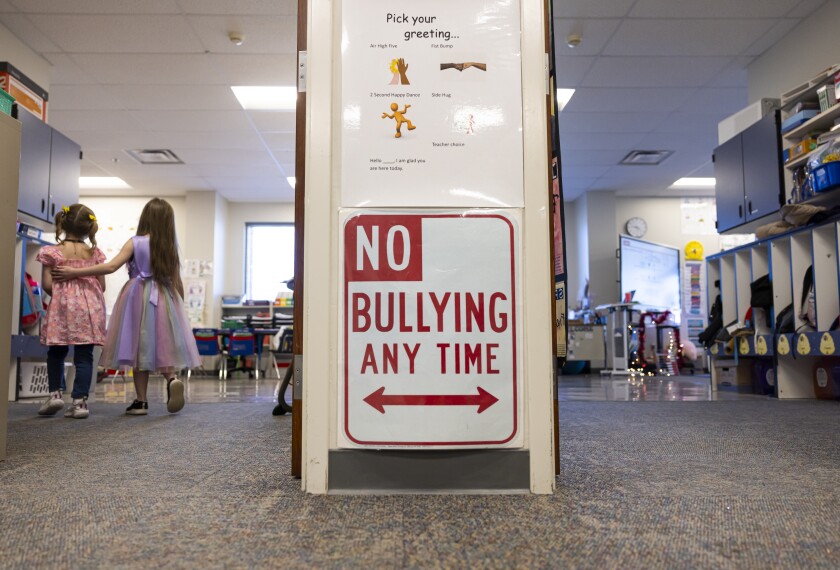
The politics of social-emotional learning have shifted drastically in the past few years—especially in some conservative states—with critics claiming that SEL is a form of liberal indoctrination or a means for unqualified teachers to practice therapy.
This shift has left many teachers and SEL practitioners in a tricky situation, trying to address parents’ concerns while continuing to teach SEL programs that may be required by the district and state.
That’s been the case for Candace Peyton Wofford, an instructional coach and, up until recently, an SEL teacher in a middle school in Corpus Christi, Texas. She has had her fair share of parents voice concerns that SEL is teaching their children concepts that go against their values. Through her conversations with parents, Wofford—who is a big proponent of SEL—has found ways to help calm their fears.
Wofford shared her insights with Education Week. This conversation has been edited for length and clarity.
What concerns are you hearing from parents, exactly?

The main argument is that they think that I’m trying to encroach on their belief system. Usually, it’s a Christian belief that they think I’m trying to go against. And I am just very transparent with them and very honest about what I’m teaching, and [that] it is not to go against anyone’s belief. It is truly just to help their child navigate life and be a better person.
And most of what I teach, if they just take a step back and look at the lesson plans and look at what I’m expecting of their child, it could mean that their Christian child could be very Christ-like, if they did things that I’m saying. I’m definitely not going against what they’re trying to teach in their home spiritually.
Is that what parents ultimately conclude? That SEL isn’t a threat to their values?
It takes a while, but eventually, yes, because when you’re transparent with them and you show that you’re not hiding anything, they start to let their guard down and their barriers down. And then we can talk to each other face-to-face and realize we’re on the same page.
Really, what they need to see is that I truly care for their child. And once they know that I have their child’s best interest in mind, why would you want to fight me on that? Why would you not want your child to be able to learn how to do a job interview, learn how to do a handshake, learn how to look someone in the eyes, learn how to get un-addicted to their phones? These are all things that we talk about in the classroom setting.
What other steps do you take that are helpful?
You have to sit and listen to their concerns, validate their concerns, and really truly listen to understand and not listen to respond. Once you understand where they’re coming from, you can eventually make your response, and they end up realizing that y’all are both on the same page.

When I was in the classroom setting, I would send emails every three weeks explaining what we’ve been doing in class and giving the parents an action item. Like, “Now that your child knows how to do this, I would encourage you to try this at the dinner table, or try asking them this the next time y’all are in the car together.”
It’s so hard to be a parent of a tween and a teenager. I feel like the parents are usually grateful that I’m giving them homework assignments, and their kids know that I’m giving their parents the homework assignment, so there’s no, “Oh, we don’t have to do that, Mom. Oh no, we don’t talk about that.” Their parents know exactly what they’re learning.
What is the final ‘aha’ moment for parents?
It all gets resolved when they realize that SEL is being taught by me because I care for their child, and it’s being taught by me because I feel like this is a class I wish I had in grade school. And then they end up realizing, “Man, I wish I had this in grade school. Actually, it is cool that my kid gets to learn all this stuff, and that he or she is not just hearing it from me at home,” when they don’t want to hear anything from their parents at that age.
These are life skills to make their life better. How do I function as a human being in 2024, you know?