School Climate & Safety

Court Strikes Down Death Penalty for Juveniles

By Christina A. Samuels — March 08, 2005 2 min read
  • Save to favorites
  • Print

The U.S. Supreme Court last week struck down the death penalty for juvenile offenders, saying that both a national consensus and research on the adolescent brain make it “misguided to equate the failings of a minor with those of an adult.”

The 5-4 decision on March 1 overturned a 1989 Supreme Court ruling that upheld the constitutionality of executing those who were under age 18 at the time of their crimes.

“A greater possibility exists that a minor’s character deficiencies will be reformed,” Justice Anthony M. Kennedy said in the majority opinion. Twenty-two people who were juveniles at the time of their crimes have been executed since the death penalty was reinstated in the 1970s. The ruling will commute the death sentences of 72 people.

The decision came in the appeal of a Missouri death sentence against Christopher Simmons, who was convicted of throwing a woman, bound and gagged, into a river after burglarizing her home in 1993. Mr. Simmons, a 17-year-old high school junior at the time of the offense, had assured his friends they would be able to “get away” with the burglary and murder because they were juveniles, according to court papers.

Justice Kennedy described two foundations for the ruling in Roper v. Simmons.

Many states have already decided not to subject juvenile offenders to the death penalty, he noted. The high court took such “evolving standards of decency” into consideration when it struck down the death penalty for offenders with mental retardation in the case of Atkins v. Virginia in 2002.Eighteen states with the death penalty do not allow that punishment for juveniles; 12 states and the District of Columbia do not have the death penalty at all, Justice Kennedy pointed out.

Justice Kennedy then turned to research to reinforce the court’s view that juvenile offenders are immature and more susceptible than adults to negative influences and outside pressure.

“Once the diminished culpability of juveniles is recognized, it is evident that the penological justifications for the death penalty apply to them with lesser force than to adults,” he wrote.

The ruling also noted that the United States “is the only country in the world that continues to give official sanction to the juvenile death penalty,” Justice Kennedy wrote. He was joined in the majority by Justices John Paul Stevens, David H. Souter, Ruth Bader Ginsburg, and Stephen G. Breyer.

Fundamentally Different

Writing in dissent, Justice Antonin Scalia said that the majority’s finding of a national consensus was made “on the flimsiest of grounds.” In an opinion joined by Chief Justice William H. Rehnquist and Justice Clarence Thomas, Justice Scalia said the idea that American law must conform to international legal norms should be rejected.

“To invoke alien law when it agrees with one’s own thinking, and ignore it otherwise, is not reasoned decisionmaking, but sophistry,” Justice Scalia wrote.

Justice Sandra Day O’Connor wrote her own dissenting opinion, saying that no national consensus exists on the issue.
A version of this article appeared in the March 09, 2005 edition of Education Week as Court Strikes Down Death Penalty for Juveniles

Events

Student Well-Being & Movement K-12 Essentials Forum How Schools Are Teaching Students Life Skills
Join this free virtual event to explore creative ways schools have found to seamlessly integrate teaching life skills into the school day.
This content is provided by our sponsor. It is not written by and does not necessarily reflect the views of Education Week's editorial staff.
Sponsor
Special Education Webinar
Bridging the Math Gap: What’s New in Dyscalculia Identification, Instruction & State Action
Discover the latest dyscalculia research insights, state-level policy trends, and classroom strategies to make math more accessible for all.
Content provided by TouchMath
This content is provided by our sponsor. It is not written by and does not necessarily reflect the views of Education Week's editorial staff.
Sponsor
School & District Management Webinar
Too Many Initiatives, Not Enough Alignment: A Change Management Playbook for Leaders
Learn how leadership teams can increase alignment and evaluate every program, practice, and purchase against a clear strategic plan.
Content provided by Otus

EdWeek Top School Jobs

Teacher Jobs
Search over ten thousand teaching jobs nationwide — elementary, middle, high school and more.
View Jobs
Principal Jobs
Find hundreds of jobs for principals, assistant principals, and other school leadership roles.
View Jobs
Administrator Jobs
Over a thousand district-level jobs: superintendents, directors, more.
View Jobs
Support Staff Jobs
Search thousands of jobs, from paraprofessionals to counselors and more.
View Jobs

Read Next

School Climate & Safety Shootings at School and Home in British Columbia, Canada, Leave 10 Dead Including Suspect
Canadian Prime Minister Mark Carney said he grieved with families "whose lives have been changed irreversibly today."
3 min read
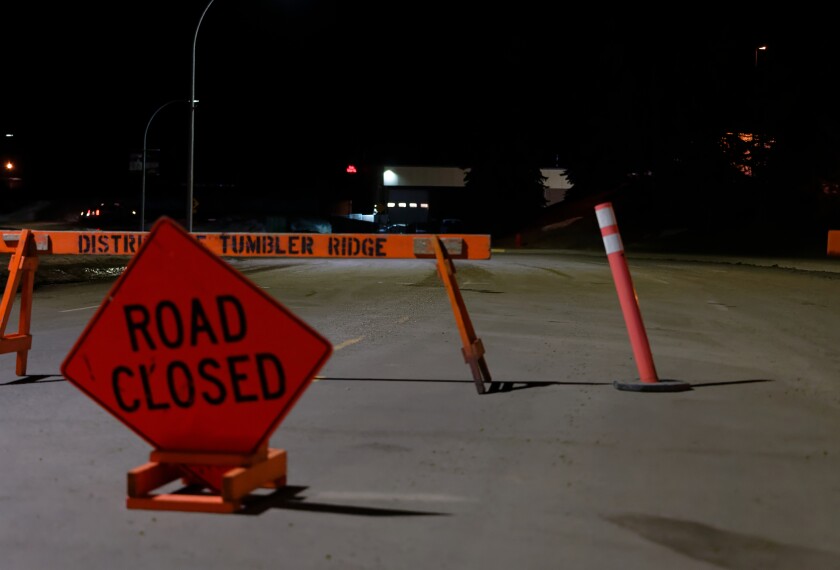
The road is blocked off before the Tumbler Ridge Secondary School, in Tumbler Ridge, B.C., Canada, on Wednesday, Feb. 11, 2026.
Jesse Boily/Canadian Press via AP
School Climate & Safety 4 Ways Schools Can Build a Stronger, Safer Climate
A principal, a student, and a researcher discuss what makes a positive school climate.
4 min read
A 5th grade math class takes place at Lafargue Elementary School in Effie, Louisiana, on Friday, August 22. The state has implemented new professional development requirements for math teachers in grades 4-8 to help improve student achievement and address learning gaps.
Research shows that a positive school climate serves as a protective factor for young people, improving students’ education outcomes and well-being during their academic careers and beyond. A student raises her hand during a 5th grade class in Effie, La., on Aug. 22, 2025.
Kathleen Flynn for Education Week
School Climate & Safety Schools Flag Safety Incidents As Driverless Cars Enter More Cities
Agencies are examining reports of Waymos illegally passing buses; in another case, one struck a student.
5 min read
In an aerial view, Waymo robotaxis sit parked at a Waymo facility on Dec. 8, 2025 , in San Francisco . Self-driving taxi company Waymo said it is voluntarily recalling software in its autonomous vehicles after Texas officials documented at least 19 incidents this school year in which the cars illegally passed stopped school buses, including while students were getting on or off.
Waymo self-driving taxis sit parked at a Waymo facility on Dec. 8, 2025, in San Francisco. Federal agencies are investigating after Austin, Texas, schools documented incidents in which the cars illegally passed stopped school buses. In a separate incident, a robotaxi struck a student at low speed as she ran across the street in front of her Santa Monica, Calif., elementary school.
Justin Sullivan/Getty Images via TNS
School Climate & Safety Informal Classroom Discipline Is Hard to Track, Raising Big Equity Concerns
Without adequate support, teachers might resort to these tactics to circumvent prohibitions on suspensions.
5 min read
Image of a student sitting outside of a doorway.
DigitalVision