School Climate & Safety Explainer

Class Size

By Education Week Staff — August 03, 2004 3 min read
  • Save to favorites
  • Print

Editor’s Note: This version was published in 2004. An updated version is available from 2011.

In recent years, reducing class size has gained increased prominence as a school-improvement strategy. Some 40 states now have class-size-reduction initiatives in place, and federal money is available for such efforts as well. The teachers’ unions, meanwhile, routinely tout class-size reduction as an alternative to private school vouchers.

Such goals led the federal government, in 2000, to create the highly touted federal class-size-reduction program, which gave states funding to recruit, hire, and train new teachers. Under the reauthorized Elementary and Secondary School Act—popularly known as “No Child Left Behind” Act of 2001—that program was consolidated into a more general teacher-quality block-grant program funded at $2.85 billion for 2002.

Research, for the most part, tends to support the belief in the benefits of small classes. While not all studies on the subject have shown that students learn more in smaller settings—and while many are still ongoing—most studies have found some benefits.

The biggest and most credible of them, a statewide study begun in Tennessee in the late 1970s, has even found that the learning gains students make in classes of 13 to 17 students persist long after the students move back into average-size classes. What’s more, the Tennessee researchers found, poor and African-American students appeared to reap the greatest learning gains in smaller classes. After kindergarten, the gains black students made in smaller classes were typically twice as large as those for whites.

Likewise, a 2001 evaluation by researchers at the Education Policy Studies Laboratory and the University of Wisconsin-Milwaukee found that a 5-year-old program of class-size reduction in Wisconsin has resulted in higher achievement for children living in poverty.

But, as school improvement ideas go, reducing class sizes is costlier than many others and more complicated than it appears on first blush.

With many communities already facing shortages of qualified teachers, one concern is that the press for quantity will come at the expense of quality, forcing schools and districts to hire underqualified or unprepared teachers.

California learned that lesson firsthand when the state undertook its own class-size-reduction initiative beginning in 1996. In the first year of implementation, more than a fifth of the new teachers hired in that state had only emergency credentials. Hit hardest were schools serving poor and minority students. And, in the hunt for new space, administrators found themselves carving classrooms out of broom closets and erecting portable classrooms on playgrounds.

California’s experience has some researchers wondering whether other improvement strategies, such as better professional development for teachers, might be more cost-effective. Indeed, as the economy tightened in 2001 and 2002, several California districts facing budget shorfalls were thinking about eliminating part or all of their class-size programs.

The California, Tennessee, and Wisconsin class-size-reduction efforts were all aimed at pupils in kindergarten through 3rd grade. Less is known about the effects of smaller classes on older students.

Researchers agree, however, that shrinking the number of students in a class does not automatically translate into better learning. To squeeze the most out of their new settings, teachers may need to alter their teaching practices, dropping lecture-style approaches and providing more frequent feedback and interaction. But studies so far show that many teachers teach smaller classes the same way they did larger ones.

Related Tags:

How to Cite This Article
Education Week Staff. (2004, August 3). Class Size. Education Week. Retrieved Month Day, Year from https://www.edweek.org/leadership/class-size/2004/08

Events

This content is provided by our sponsor. It is not written by and does not necessarily reflect the views of Education Week's editorial staff.
Sponsor
College & Workforce Readiness Webinar
From Exposure to Experience: Designing Accessible Work-Based Learning
Learn how schools can create meaningful experiences that help every student build skills, connections, and a clearer path to their future.
Content provided by Project Lead The Way
This content is provided by our sponsor. It is not written by and does not necessarily reflect the views of Education Week's editorial staff.
Sponsor
School & District Management Webinar
A Tale of Two School Districts: Forecasting Enrollment
Forecasting enrollment is hard. Here’s how two different districts are navigating times of change with data that considers the whole picture.
Content provided by Zonda Education
Reading & Literacy K-12 Essentials Forum Strategies to Create a Culture of Reading in Schools
Join this free virtual event to learn how teachers and school district leaders ensure students are reading enough.

EdWeek Top School Jobs

Teacher Jobs
Search over ten thousand teaching jobs nationwide — elementary, middle, high school and more.
View Jobs
Principal Jobs
Find hundreds of jobs for principals, assistant principals, and other school leadership roles.
View Jobs
Administrator Jobs
Over a thousand district-level jobs: superintendents, directors, more.
View Jobs
Support Staff Jobs
Search thousands of jobs, from paraprofessionals to counselors and more.
View Jobs

Read Next

School Climate & Safety Opinion Am I Brave Enough to Die for My Students?
An unspoken fear haunts educators in the era of school shootings. It’s time we talk about it.
Bridget Farr
•
4 min read
Illustration of a large silhouette of a teacher and a group of children on the right. A door with a shadowed figure peering through the window is in the left of the frame.
Illustration by Vanessa Solis/Education Week + Canva
School Climate & Safety A Shooting Strikes an Elementary School. Some Doubt Policy Change Will Follow
Tragedies like the one in Bend, Ore., draw public outcry, but typically not swift change on school safety.
5 min read
Children place flowers at a makeshift memorial outside Silver Rail Elementary in Bend, Ore., Friday, Oct. 16, 2026, a day after a deadly shooting.
Children place flowers at a makeshift memorial outside Silver Rail Elementary in Bend, Ore., Friday, Oct. 16, 2026, a day after a deadly shooting. The child victims, ages 5, 8, and 11, include the youngest person killed in a school shooting since Education Week began<a href="https://www.edweek.org/leadership/school-shootings-this-year-how-many-and-where/2026/01" target="_blank" link-data="{&quot;cms.site.owner&quot;:{&quot;_ref&quot;:&quot;00000173-0561-d1f0-a17f-adef4bee0000&quot;,&quot;_type&quot;:&quot;ae3387cc-b875-31b7-b82d-63fd8d758c20&quot;},&quot;cms.content.publishDate&quot;:1792177418426,&quot;cms.content.publishUser&quot;:{&quot;_ref&quot;:&quot;00000180-d7b2-d193-a1b2-dfbba3aa0001&quot;,&quot;_type&quot;:&quot;6aa69ae1-35be-30dc-87e9-410da9e1cdcc&quot;},&quot;cms.content.updateDate&quot;:1792177418426,&quot;cms.content.updateUser&quot;:{&quot;_ref&quot;:&quot;00000180-d7b2-d193-a1b2-dfbba3aa0001&quot;,&quot;_type&quot;:&quot;6aa69ae1-35be-30dc-87e9-410da9e1cdcc&quot;},&quot;link&quot;:{&quot;disableUtmTracking&quot;:false,&quot;target&quot;:&quot;NEW&quot;,&quot;attributes&quot;:[],&quot;url&quot;:&quot;https://www.edweek.org/leadership/school-shootings-this-year-how-many-and-where/2026/01&quot;,&quot;_id&quot;:&quot;000001a1-4619-d1d1-a3f3-f77b151b0000&quot;,&quot;_type&quot;:&quot;ff658216-e70f-39d0-b660-bdfe57a5599a&quot;},&quot;linkText&quot;:&quot; tracking these incidents&quot;,&quot;theme.brightspot-theme-default.:core:enhancement:Enhancement.hbs.enhancementAlignment&quot;:null,&quot;theme.brightspot-theme-default.:core:link:Link.hbs._template&quot;:null,&quot;theme.brightspot-theme-default.:core:link:Link.hbs.type&quot;:null,&quot;theme.brightspot-theme-default.:core:link:Link.hbs._preset&quot;:null,&quot;theme.brightspot-theme-default.:core:enhancement:Enhancement.hbs._preset&quot;:null,&quot;_id&quot;:&quot;000001a1-4619-d1d1-a3f3-f77b14b10001&quot;,&quot;_type&quot;:&quot;809caec9-30e2-3666-8b71-b32ddbffc288&quot;}"> </a>tracking those incidents eight years ago.
Joe Kline/AP
School Climate & Safety Three Children and Teacher Killed in Oregon Elementary School Shooting
Authorities in Bend, Ore., said the attacker gained entry by shooting through locked doors.
2 min read
Police tape is placed outside Silver Rail Elementary school following a shooting, on Oct. 15, 2026 in Bend, Ore.
Police tape is placed outside Silver Rail Elementary School following a shooting, on Oct. 15, 2026 in Bend, Ore. Authorities said an attacker shot through locked school doors to enter the building.
Joe Kline/AP
School Climate & Safety 4 Ways AI Data Centers Can Affect Schools
From health to productivity and finances, data centers could pose risks for students and schools.
3 min read
Carroll
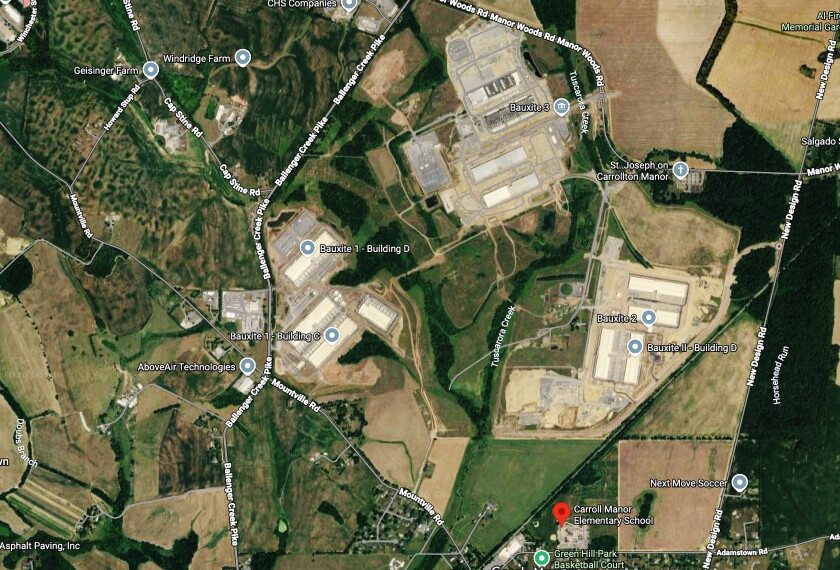
The Quantum Frederick Data Center Campus near the Carroll Manor Elementary School.
Map data ©2026 Google, Imagery ©2026