
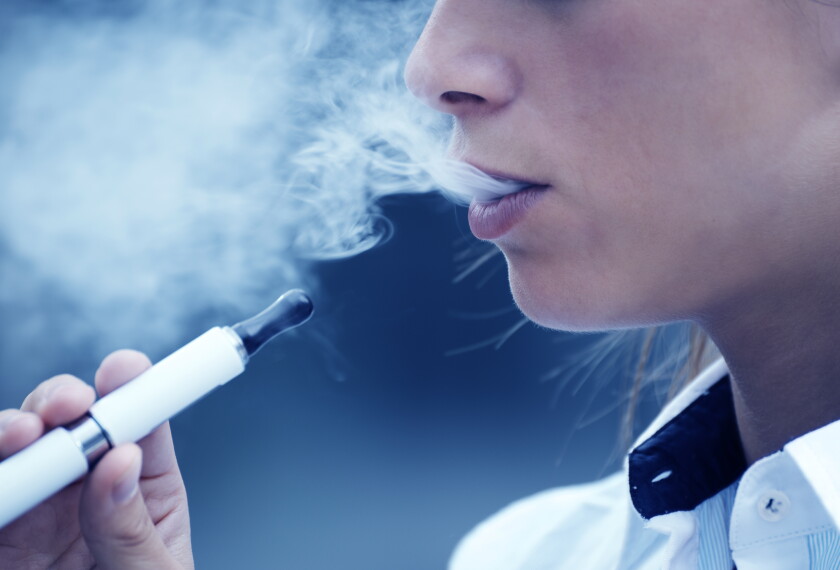
The vaping rate among middle and high school students is at its lowest level in a decade, according to new data from the National Youth Tobacco Survey.
The survey—from the U.S. Food and Drug Administration and the U.S. Centers for Disease Control and Prevention—found that 5.9 percent of middle and high school students overall reported in 2024 that they had used e-cigarettes in the past 30 days, compared with 7.7 percent in 2023 and 20 percent in 2019, according to the report.
Current e-cigarette use declined among high school students between 2023 (10 percent) and 2024 (7.8 percent), the report found. But there were no significant changes observed for e-cigarette use among middle school students.
The 2024 National Youth Tobacco Survey collected responses from a nationally representative sample of 29,861 middle and high school students from 283 schools between Jan. 22 and May 22.
“The continued decline in e-cigarette use among our nation’s youth is a monumental public health win,” said Brian King, the director of the FDA’s Center for Tobacco Products, in a press release. “But we can’t rest on our laurels, as there’s still more work to do to further reduce youth e-cigarette use.”
While some research suggests that e-cigarettes may not be as unhealthy as traditional, “combustible” cigarettes, they still have many toxic chemicals and metals in them. They also often have higher concentrations of nicotine than traditional cigarettes and present a hazard to young, developing brains, according to research.
Steps schools can take to curb vaping and improve student health
Vaping has proven to be especially difficult for educators to police as it’s relatively easy for students to hide. Schools have become increasingly creative and desperate as they work to curb the habit, from installing vapor-detecting devices in bathrooms to creating e-cigarette buy-back programs to suing e-cigarette makers.
The FDA and CDC stressed, in the report, the role schools have in preventing youth vaping and tobacco use.
Schools can take several steps to curb vaping among their students, according to advice that experts and school leaders have shared with Education Week. Those recommendations include:
- Have clear policies and plans. Schools should have clear and well-communicated policies about the consequences for using e-cigarettes on campuses. Schools should also have plans for screening students who are addicted to e-cigarettes and getting appropriate help for those students.
- Try to avoid the use of scare tactics or discipline. These approaches won’t work without an education component. Students tune out when they hear them.
- Design an educational approach. This should be broader than just educating students on the dangers of vaping (which surveys show many adolescents don’t know about). It should also employ elements of media literacy in which students are taught to see how advertising campaigns are trying to manipulate them in unhealthy ways.
- Include adults in anti-vaping efforts in meaningful ways. Focusing only on the kids and not involving parents, caregivers, teachers, principals, coaches, and even after-school providers will fail to have a meaningful impact on curbing adolescents’ vaping use.


