A few weeks ago, I received an urgent e-mail: The National Council of Teachers of English is looking for volunteers for an ad hoc task force whose charge is to gather evidence about why literature should continue to be taught in the 21st century.
Apparently, the worth of book reading had become an issue among the work groups that, behind closed doors, were writing the K-12 “common-core standards” that promise to shape curriculum in U.S. classrooms. Given that the Common Core State Standards Initiative is dominated by test-makers and politicians—representatives from the College Board, ACT, Achieve, the Council of Chief State School Officers, and the National Governors Association—I was dismayed, but not surprised, that the NCTE was finding it necessary to lobby on behalf of literature.
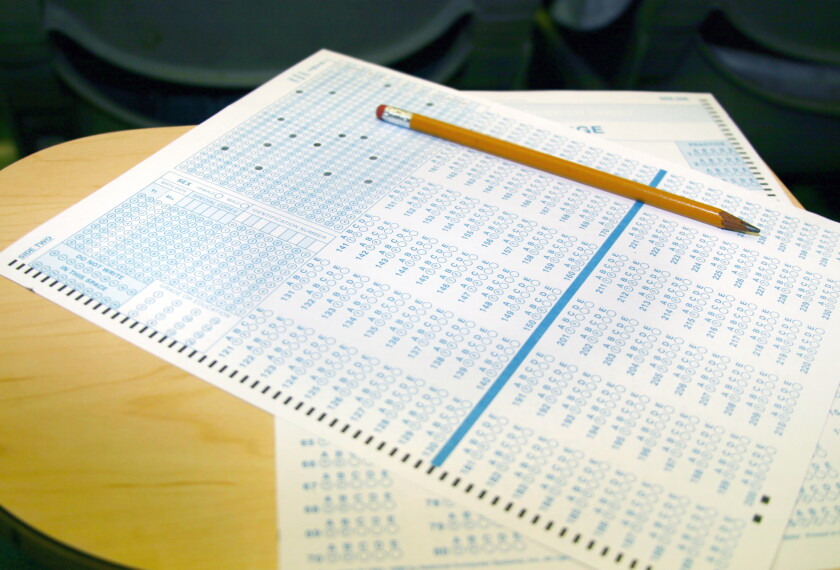
Drafts of the various standards reportedly have been undergoing significant revisions, and release of a version for public comment may be imminent. But regardless of the stage of the project, giving corporate interests a role in setting education policy is like letting foxes supervise the henhouse. These foxes are not vested in children’s reading books. They are interested in profitmaking—in selling prefab curricula, standards, and the diagnostic, formative, and summative tests that measure them.
The irony—and tragedy—is that book reading, which profits a reader, an author, and a democratic society, is also the single activity that consistently relates to proficiency in reading, according to the National Assessment of Educational Progress.
In 2007, fully 70 percent of U.S. 8th graders read below the proficient level on the NAEP exam. Our 13-year-olds aren’t reading well because they’re not reading enough: The National Endowment for the Arts has reported that only 30 percent of students in this age group read every day. And that’s where literature comes in—or should.
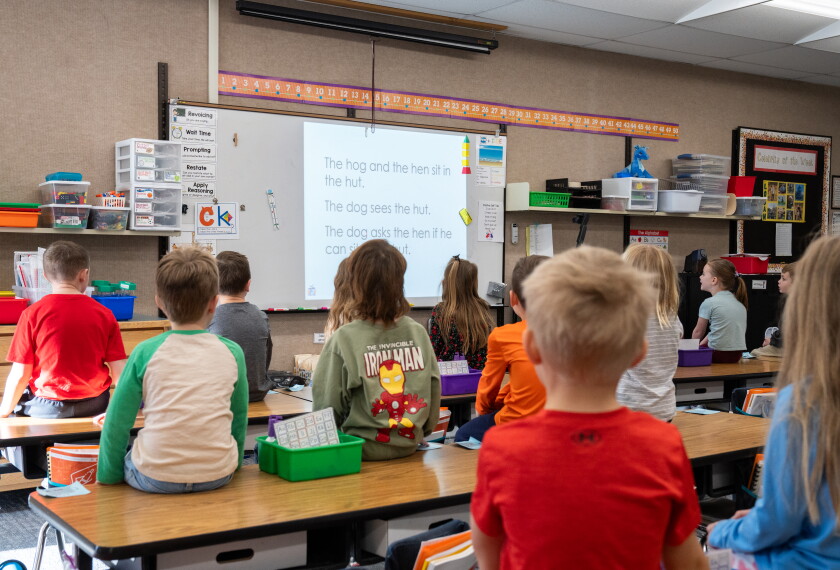
Each year, my 7th and 8th graders choose and read between 30 and 100 titles. They devour books because the classroom library is packed with intriguing stories by serious writers, because they have daily time to read in school, because I expect them to read at home every night, and because 35 years of experience has taught me that it’s my job to read, embrace, and recommend worthwhile young-adult literature to the young adults I teach.

My students range from dyslexics to speed readers to sophisticated young literary critics. The common denominator is that they like books. They find their interests, needs, struggles, and dreams spoken for in the crafted stories that fill their library. More importantly, they get to experience the interests, needs, struggles, and dreams of young people unlike themselves. At a critical juncture, they learn about a diversity of human experiences and begin to consider both what they care about and who they might dare to become.
But most importantly, from my perspective as the teacher responsible for their literacy, my students become strong readers. They build fluency, stamina, vocabulary, confidence, critical abilities, habits, tastes, and comprehension. No instructional shortcut, packaged curriculum, new technology, regimen of tests, or other variety of magical thinking can achieve this end.
It is frequent, voluminous book reading that makes readers. Knowledgeable English teachers have learned to fill their classrooms with well-crafted writing that appeals to and satisfies adolescents, provides rich, accessible examples of literary technique for students to notice and appreciate, and invites every student to want to enter a story and become lost there.
This wasn’t the case in the 1960s, when I was an adolescent and books for teenagers asked one of two questions: Will the mystery be solved before it’s too late? And, will she get to go to the prom? Readers of my generation will recall Trixie Belden, Cherry Ames, Nancy Drew, the Hardy Boys, and Seventeenth Summer.
Today, young readers with access to books and opportunities to read them can live vicariously, alongside three-dimensional characters close to their own age who inhabit compelling stories about growing up in every time, place, and circumstance, with themes that resonate in the real lives of adolescents: identity, conscience, peer pressure, social divisions, political strife, loneliness, friendship, change.
Concerned parents, teachers, and professional organizations need to lobby legislators and other policymakers to put children's and young-adult literature at the center of standards for the teaching of reading."
Critics from the canon-obsessed camp of Diane Ravitch and E.D. Hirsch Jr. are either unaware or dismissive of the glories of contemporary literature written for children and teenagers, but I can draw a straight line from particular authors of excellent young-adult fiction to particular authors of excellent fiction for adults. Students haunted by Copper Sun, Sharon Draper’s novel of slavery, are apt to move on to Toni Morrison. Hatchet, by Gary Paulsen, is a bridge to Jon Krakauer’s Into the Wild, which in turn is a bridge to Jack London. The narrative voice of E. Lockhart is a warm-up for Lorrie Moore. Adolescents who appreciate the dystopian worlds of Nancy Farmer, Michael Grant, and Patrick Ness look for Aldous Huxley, William Golding, and Margaret Atwood; and those who enjoy young-adult novels by Nick Hornby and Michael Chabon can anticipate adulthoods filled with books by Hornby and Chabon.
Frequent, voluminous reading of young-adult literature also provides the background and experience that enable some of my students to read classics—Pride and Prejudice, The Odyssey, All Quiet on the Western Front, Jane Eyre—with understanding and pleasure. But every student I teach learns to tell the difference between literary fiction and popular novels, something many adults never do.
The American Library Association recommends that each U.S. classroom have its own library, and that school libraries contain at least 20 age-appropriate titles per student. This is a standard worth adopting under the federal Literacy Education for All, Results for the Nation, or LEARN, Act now pending in Congress. So is regular, sustained time in school for students to choose, read, and fall in love with books.
The right books are out there. The supporting research is out there: Bernice E. Cullinan’s study, “Independent Reading and School Achievement,” funded by the U.S. Department of Education and available on the American Association of School Librarians’ Web site, marshals the evidence. And the will is there. Many teachers who recognize the power of stories to create readers are doing all they can to squeeze time for independent reading into mandated, proven-ineffective programs of instruction that perversely substitute activities, drills, textbooks, quizzes, and tests for engagement and experience.
Concerned parents, teachers, and professional organizations need to lobby legislators and other policymakers to put children’s and young-adult literature at the center of standards for the teaching of reading. The opportunity for every student to sit quietly and become immersed in an actual book may not be high-tech, instantly quantifiable, or lucrative for the College Board. It just happens to be the only way that anyone ever became a reader.