Education Funding

Session Over, Not Feuding, as S.C. Debates Funding

By Michele McNeil — June 09, 2009 1 min read
  • Save to favorites
  • Print

The following offers highlights of the recent legislative sessions. Precollegiate enrollment figures are based on fall 2008 data reported by state officials for public elementary and secondary schools. The figures for precollegiate education spending do not include federal flow-through funds, unless noted.

The fallout from the 2009 legislative session continues in state court, as Gov. Sanford and lawmakers battle over whether South Carolina will accept $700 million in federal stimulus money that would help pay teachers’ salaries and fund public safety.
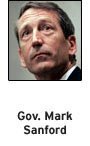
Gov. Jim Douglas
Republican
Senate:
19 Democrats
27 Republicans
House:
53 Democrats
71 Republicans
Enrollment:
668,700

Gov. Sanford does not want to accept the money from the State Fiscal Stabilization Fund, created under the American Recovery and Reinvestment Act, because he argues it’s one-time money that would contribute to long-term financial problems for the state. He tried, unsuccessfully, to get the Obama administration to let him use the money to pay off state debt instead. What’s more, Gov. Sanford argues that governors, by law, are the ones who must apply for the stabilization aid, so it’s ultimately his decision.

But the legislature, through its budget-making authority, wants to use the money to help balance the state budget, which stands at $5.7 billion for fiscal 2010 after lawmakers made $1 billion in cuts over the last several months. Gov. Sanford vetoed the stimulus-involved parts of the budget, but the legislature overturned the veto. The crux of the issue is whether the legislature can force the governor to accept the federal economic aid.

At stake for K-12 schools is about $185 million in stimulus dollars, with another $100 million for higher education. Even with the stimulus aid, spending on K-12 education would be $2.2 billion—a cut of about 8 percent—from last year’s $2.4 billion appropriation.

Related Tags:

A version of this article appeared in the June 10, 2009 edition of Education Week

Events

This content is provided by our sponsor. It is not written by and does not necessarily reflect the views of Education Week's editorial staff.
Sponsor
Special Education Webinar
Bridging the Math Gap: What’s New in Dyscalculia Identification, Instruction & State Action
Discover the latest dyscalculia research insights, state-level policy trends, and classroom strategies to make math more accessible for all.
Content provided by TouchMath
This content is provided by our sponsor. It is not written by and does not necessarily reflect the views of Education Week's editorial staff.
Sponsor
School Climate & Safety Webinar
Belonging as a Leadership Strategy for Today’s Schools
Belonging isn’t a slogan—it’s a leadership strategy. Learn what research shows actually works to improve attendance, culture, and learning.
Content provided by Harmony Academy
This content is provided by our sponsor. It is not written by and does not necessarily reflect the views of Education Week's editorial staff.
Sponsor
School & District Management Webinar
Too Many Initiatives, Not Enough Alignment: A Change Management Playbook for Leaders
Learn how leadership teams can increase alignment and evaluate every program, practice, and purchase against a clear strategic plan.
Content provided by Otus

EdWeek Top School Jobs

Teacher Jobs
Search over ten thousand teaching jobs nationwide — elementary, middle, high school and more.
View Jobs
Principal Jobs
Find hundreds of jobs for principals, assistant principals, and other school leadership roles.
View Jobs
Administrator Jobs
Over a thousand district-level jobs: superintendents, directors, more.
View Jobs
Support Staff Jobs
Search thousands of jobs, from paraprofessionals to counselors and more.
View Jobs

Read Next

Education Funding Trump Slashed Billions for Education in 2025. See Our List of Affected Grants
We've tabulated the grant programs that have had awards terminated over the past year. See our list.
8 min read
Photo collage of 3 photos. Clockwise from left: Scarlett Rasmussen, 8, tosses a ball with other classmates underneath a play structure during recess at Parkside Elementary School on May 17, 2023, in Grants Pass, Ore. Chelsea Rasmussen has fought for more than a year for her daughter, Scarlett, to attend full days at Parkside. A proposed ban on transgender athletes playing female school sports in Utah would affect transgender girls like this 12-year-old swimmer seen at a pool in Utah on Feb. 22, 2021. A Morris-Union Jointure Commission student is seen playing a racing game in the e-sports lab at Morris-Union Jointure Commission in Warren, N.J., on Jan. 15, 2025.
Federal education grant terminations and disruptions during the Trump administration's first year touched programs training teachers, expanding social services in schools, bolstering school mental health services, and more. Affected grants were spread across more than a dozen federal agencies.
Clockwise from left: Lindsey Wasson; Michelle Gustafson for Education Week
Education Funding Rebuking Trump, Congress Moves to Maintain Most Federal Education Funding
Funding for key programs like Title I and IDEA are on track to remain level year over year.
8 min read
Photo collage of U.S. Capitol building and currency.
iStock
Education Funding In Trump's First Year, At Least $12 Billion in School Funding Disruptions
The administration's cuts to schools came through the Education Department and other agencies.
9 min read
Education Funding Schools Brace for Mid-Year Cuts as 'Big, Beautiful Bill' Changes Begin
State decisions on incorporating federal tax cuts into their own tax codes could strain school budgets.
7 min read
President Donald Trump signs his signature bill of tax breaks and spending cuts at the White House on July 4, 2025, in Washington.
President Donald Trump signs his signature bill of tax breaks and spending cuts, the One Big Beautiful Bill Act, at the White House on July 4, 2025, in Washington. States are considering whether to incorporate the tax changes into their own tax codes, which will results in lower state revenue collections that could strain school budgets.
Evan Vucci/AP
