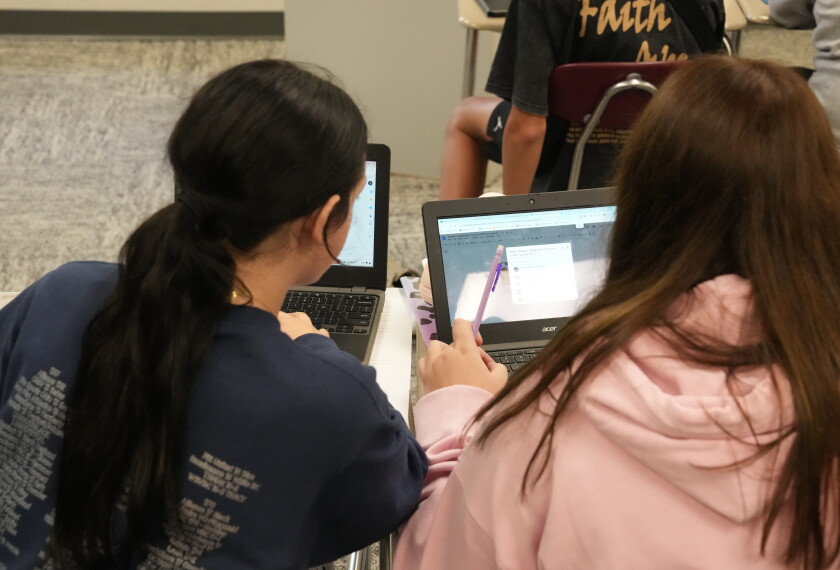
“Techlash"— the popular shorthand for the rising resistance to education technology—is emerging as a big theme at the ISTE Live 26 + ASCD annual conference.
In response, ISTE has teamed up with GreatSchools.org, a nonprofit organization that aims to provide information about schools in a parent-friendly format, to launch a “safe and purposeful” technology use pledge.
The goal: To help schools signal to parents and caregivers that they are thinking carefully about how to deploy digital tools to improve student outcomes as opposed to mindless screen time.
More than half of educators who work for public school districts—61%—say that most parents and caregivers feel there’s too much technology in schools, compared with 37% who say families feel the amount of technology in schools is “just right,” according to a survey of 596 district and school leaders and teachers conducted by the EdWeek Research Center in February and March.
And dozens of states considered laws this past legislative session limiting tech in schools.
The best way for educators to help parents and caregivers feel confident that students aren’t getting mindless screen time is to acknowledge that there may be a problem “instead of being defensive about it,” said Richard Culatta, ISTE’s CEO, in an interview.
“What the first thing schools need to do is just admit where they need to do some more work, right?” Culatta said. “They also need to recognize that their policies setting norms for how technology should be used are terrible in most cases. Most of them are written by lawyers in very legal language that no kid could understand.”
The new pledge created by ISTE and GreatSchools.org includes five recommendations for schools:
- Create clear and effective tech policies that spell out how they choose digital devices and use them in student learning. These should be written in age-appropriate, kid-friendly language.
- Train educators on safe and effective use of digital tools.
- Purchase technology that meets quality and safety standards, as opposed to embracing a slew of unvetted tools.
- Give students instruction in digital citizenship so they know how to use ed-tech tools ethically and safely.
- Actively engage families in figuring out how tech tools are—and are not— used in schools.
Schools that agree to the pledge receive a “safe and committed” technology badge to display publicly, including on their GreatSchools page.
There will be three levels of badges:
- Preliminary: For schools that agree to act on the suggestions in the pledge.
- Middle: For schools that say they have implemented the recommendations outlined in the pledge.
- Highest: For schools that have been certified by an outside organization as complying with the pledge.
ISTE and GreatSchools.org are still working on the process for approving schools for that third, highest level, Culatta said.
The pledge isn’t ISTE’s only response to techlash.
The organization has also provided educators with information on what the organization sees as evidence of ed tech’s effectiveness—when it is well designed and effectively implemented in schools—to share with parents and caregivers who question the research behind digital learning tools.