Ed-Tech Policy

People in the News

February 14, 2001 1 min read
  • Save to favorites
  • Print

The California Teachers Association has re-elected Wayne Johnson as its president. The state council of the 300,000-member cta voted unanimously last week to keep Mr. Johnson for a second two-year term.

Wayne Johnson

A high school social studies teacher in the Los Angeles schools, Mr. Johnson, 60, served as the association’s vice president before his initial election as president in 1999. The CTA, based in Burlingame, Calif., is an affiliate of the National Education Association, the nation’s largest teachers’ union.

Thomas P. Jandris

Thomas P. Jandris has been named the president and chief education officer of Education World Inc., a Princeton, N.J.-based Internet-resource center for K-12 educators. He started work in January and is responsible for promoting the company’s initiatives with education leaders. Mr. Jandris, 52, is also the director of state services for the Education Commission of the States, a Denver-based group that helps state leaders develop education policy. He plans to stay in both jobs.
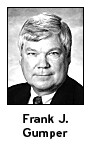
Frank J. Gumper

The Universal Service Administrative Co., based in Washington, has announced the re-election of its top two leaders this month. Frank J. Gumper, 58, and Cheryl L. Parrino, 47, were re-elected to their positions as the chairman of the board and the chief executive officer, respectively, by the USAC board of directors.

The USAC, a nonprofit organization, oversees the popular E-rate program, which helps schools get discounted rates for telecommunications services.

—Marianne Hurst

Related Tags:

Send contributions to People in the News, Education Week, 6935 Arlington Road, Suite 100, Bethesda, MD 20814; fax: (301) 280-3200; e-mail:mhurst@epe.org. Black-and-white or color photographs are welcome but cannot be returned.
A version of this article appeared in the February 14, 2001 edition of Education Week

Events

This content is provided by our sponsor. It is not written by and does not necessarily reflect the views of Education Week's editorial staff.
Sponsor
College & Workforce Readiness Webinar
Smarter Tools, Stronger Outcomes: Empowering CTE Educators With Future-Ready Solutions
Open doors to meaningful, hands-on careers with research-backed insights, ideas, and examples of successful CTE programs.
Content provided by Pearson
This content is provided by our sponsor. It is not written by and does not necessarily reflect the views of Education Week's editorial staff.
Sponsor
Reading & Literacy Webinar
Improve Reading Comprehension: Three Tools for Working Memory Challenges
Discover three working memory workarounds to help your students improve reading comprehension and empower them on their reading journey.
Content provided by Solution Tree
Recruitment & Retention Webinar EdRecruiter 2026 Survey Results: How School Districts are Finding and Keeping Talent
Discover the latest K-12 hiring trends from EdWeek’s nationwide survey of job seekers and district HR professionals.

EdWeek Top School Jobs

Teacher Jobs
Search over ten thousand teaching jobs nationwide — elementary, middle, high school and more.
View Jobs
Principal Jobs
Find hundreds of jobs for principals, assistant principals, and other school leadership roles.
View Jobs
Administrator Jobs
Over a thousand district-level jobs: superintendents, directors, more.
View Jobs
Support Staff Jobs
Search thousands of jobs, from paraprofessionals to counselors and more.
View Jobs

Read Next

Ed-Tech Policy How Schools Can Balance AI’s Promise and Its Pitfalls
Three educators share tips on how schools can navigate this fast-evolving technology.
3 min read
Robotic hand holding a notebook with flying from it books, letters and messages. Generated text, artificial intelligence tools concept.
DigitalVision Vectors/Getty
Ed-Tech Policy Q&A Why a Good Cellphone Policy Is About More Than Just Restrictions
At least 32 states and the District of Columbia require districts to restrict students' cellphone use.
5 min read
A student in Saxon Brown's 9th grade honors English class works on a timeline for an assignment on To Kill A Mockingbird, including drawing some of the characters from the book, at Bel Air High School in Bel Air, Md., on Jan. 25, 2024.
A student in a 9th grade honors English class uses a cellphone to work on a timeline for an assignment on <i>To Kill A Mockingbird</i>, including drawing some of the characters from the book, at Bel Air High School in Bel Air, Md., on Jan. 25, 2024. Most states have started requiring restrictions to students' access to their phones during the school day, but Maryland does not have statewide restrictions.
Jaclyn Borowski/Education Week
Ed-Tech Policy After FCC Cuts, This Nonprofit Keeps Schools’ Wi-Fi Connections Alive
Mission Telecom said it hopes other service providers follow its lead.
5 min read
Spencer Hollers works to equip Southside Independent School District buses with wifi on Aug. 13, 2020, in San Antonio, Texas. Southside will begin the year with remote teaching and will place the wifi-equipped buses around the school district to help students without access to the internet.
Spencer Hollers works to equip Southside Independent School District buses with Wi-Fi on Aug. 13, 2020, in San Antonio, Texas. Wi-Fi on school buses became E-rate-eligible in 2023 under the Biden administration, but in 2025 the Trump administration's FCC removed the service from the E-rate eligible services list.
Eric Gay/AP
Ed-Tech Policy Why Most Principals Say Cellphone Bans Improve School Climate
Nearly 3 in 4 principals believe banning cellphones has big upsides.
2 min read
Student Audreanna Johnson views her cell phone near a cell phone locker at Ronald McNair Sr. High School on Aug. 7, 2025, in Atlanta.
Student Audreanna Johnson views her phone near a cellphone locker at Ronald McNair Sr. High School in Atlanta on Aug. 7, 2025. Principals say cellphone bans are improving student behavior, according to a RAND study.
Mike Stewart/AP
