
Classroom Technology Report Roundup

Research Report: Education Technology

By Lauraine Genota — September 25, 2018 1 min read
  • Save to favorites
  • Print

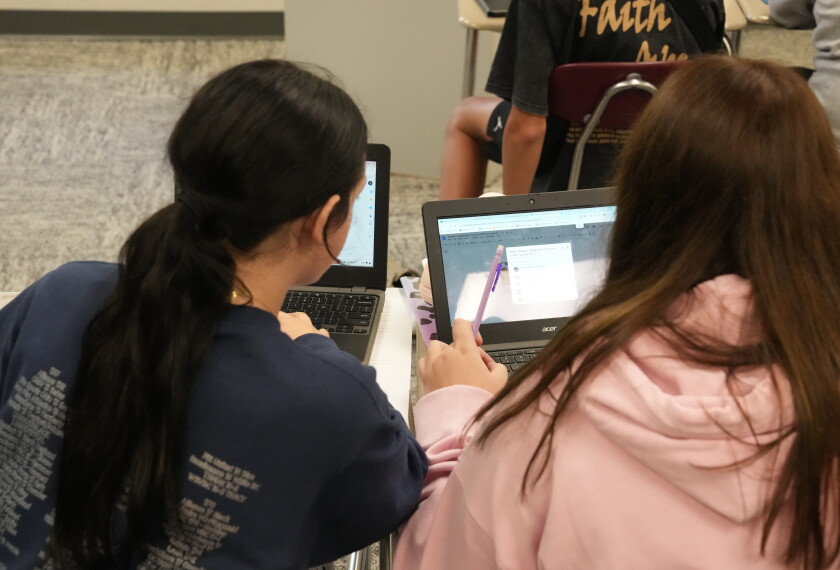
The lack of access to technology and internet connectivity at home is especially severe among poor, rural, and minority students, according to a new survey from ACT’s nonprofit Center for Equity in Learning.

Based on a random sample of 7,000 students who took the ACT in 2017, the survey finds 14 percent of students have access to only one device at home, and 85 percent of those students are classified as “underserved"—defined in the report as economically disadvantaged, first-generation college students or people of color. By contrast, only 5 percent of students whose families make at least $100,000 a year and 7 percent of those whose parents have college degrees reported having a single device.

The report also finds more than half of students with only one device at home said it was a smartphone.
A version of this article appeared in the September 26, 2018 edition of Education Week as Education Technology

Events

Student Well-Being & Movement K-12 Essentials Forum How Schools Are Teaching Students Life Skills
Join this free virtual event to explore creative ways schools have found to seamlessly integrate teaching life skills into the school day.
This content is provided by our sponsor. It is not written by and does not necessarily reflect the views of Education Week's editorial staff.
Sponsor
Special Education Webinar
Bridging the Math Gap: What’s New in Dyscalculia Identification, Instruction & State Action
Discover the latest dyscalculia research insights, state-level policy trends, and classroom strategies to make math more accessible for all.
Content provided by TouchMath
This content is provided by our sponsor. It is not written by and does not necessarily reflect the views of Education Week's editorial staff.
Sponsor
School & District Management Webinar
Too Many Initiatives, Not Enough Alignment: A Change Management Playbook for Leaders
Learn how leadership teams can increase alignment and evaluate every program, practice, and purchase against a clear strategic plan.
Content provided by Otus

EdWeek Top School Jobs

Teacher Jobs
Search over ten thousand teaching jobs nationwide — elementary, middle, high school and more.
View Jobs
Principal Jobs
Find hundreds of jobs for principals, assistant principals, and other school leadership roles.
View Jobs
Administrator Jobs
Over a thousand district-level jobs: superintendents, directors, more.
View Jobs
Support Staff Jobs
Search thousands of jobs, from paraprofessionals to counselors and more.
View Jobs

Read Next

Classroom Technology What's Worse for Students: A Boring Worksheet or Ineffective Ed Tech?
Some parents and policymakers are growing skeptical of the value of education technology.
5 min read
Amelia Vance, the founder & president of the Public Interest Privacy Center, leads a discussion on Feb. 10, 2026, at George Washington University law school in Washington, D.C. about problems in providing clear information about digital learning tools to educators and families. Panelists included Meg Jones, a professor at Georgetown, and Sara Collins, the director of government affairs at Public Knowledge, a nonprofit organization.
Amelia Vance, at left, the founder and president of the Public Interest Privacy Center, leads a discussion on Feb. 10, 2026, at George Washington University law school in Washington. The panel discussed problems schools are having providing clear information to parents and educators about the digital learning tools students are using. <br/>
Alyson Klein/Education Week
Classroom Technology How These Elementary Schools Are Teaching Students Good Digital Habits
Two schools are trying to instill smart tech practices in even the youngest learners.
4 min read
A vector silhouette illustration of a young boy using electronic devices in various poses including laying down and using a tablet, crouched and using a smart phone, and standing taking a selfie. A multi-coloured wave pattern is the background.
DigitalVision Vectors
Classroom Technology More States Are Pairing Cellphone Bans With Media Literacy Instruction
Students need to develop the skills to critically analyze the content they view on their phones.
2 min read
Hand holding sieve to filter truth from lies, facts from fakes. Concept of media literacy, fake news detection, and critical thinking in digital age.
iStock/Getty
Classroom Technology How Do Teens Feel About Cellphone Bans? You Might Be Surprised
A survey by the Pew Research Center provides a window into what students think of cellphone bans.
4 min read
Group of students holding cell phones in their hands.
iStock/Getty
