As complaints about Virginia’s demanding high-stakes tests continued to boil in classrooms across the state last week, the state board of education adopted plans that it hopes will help reduce some of that grumbling to a simmer.
|
The board last week unanimously passed a measure aimed at delivering unofficial test scores to schools on an accelerated basis, and allowing them to administer the examinations later in the school year. Currently, the state requires that its Standards of Learning tests be given between three and six weeks before the end of the school calendar.
Many schools choose to give tests on the early side to allow for getting scores back from the state in time to determine which students must attend summer school. Some schools also use the scores as incentives for students. If students pass the SOL test in history, for example, a school may exempt them from the final exam in that class.
By providing unofficial scores to schools within a week instead of two weeks after the tests are given, state officials reason, the state will enable schools to schedule tests later and thus have more time to teach material needed for the all- important exams.
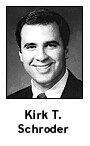
“The resolution clearly puts the ball in the hands of school [districts] to determine when students take the tests,” Kirk T. Schroder, the state board president, said after the vote last week.
By 2004, Virginia students must pass a series of tests in grades 3, 5 , 8, and high school that are based on the learning standards to earn their diplomas. By 2007, 70 percent of students must pass the standards-based exams for their school to earn state accreditation. Currently, 78 percent of schools in the state have failed to reach that mark.
Substitutes to Test
That failure rate haunts state Delegate James H. Dillard, a Republican who co-chairs Virginia’s House education committee. “My views are that if things were to go as they are now, we could well be facing a situation where 25 percent of our seniors would not graduate. And nobody is going to let that happen,” he said.
Mr. Dillard and other lawmakers argue that while the board of education’s adjustments to the testing system are welcome, they are insufficient to fix the program’s problems. Mr. Dillard and other House committee members are now sorting through proposed legislation that would abandon the SOL exams as the determining factor in whether students graduate. The proposals are expected to be considered by the legislature after it convenes next month. The House education committee decided recently to convene a special panel of experts to review the various pieces of legislation dealing with the controversial exams. The panel will issue its recommendations to the committee in the next month. The decision to form the special panel came days after a public hearing last month that drew crowds of parents and educators urging lawmakers to back away from heavy emphasis on the SOL exams.
Proposals for dramatic revisions in the testing program would likely face rough sailing, however, given the strong support it enjoys from GOP Gov. James S. Gilmore III and many members of the Republican- dominated legislature.
Still, one bill Mr. Dillard supports would allow students to use their classroom grades to bolster their test scores. For instance, if students earned an A in a course, they could add 20 points to their test scores in that subject, while a B in the course would be worth an extra 10 points on the test.
“People say, ‘Don’t water down the system.’ But parents and educators feel that having one test to decide whether you graduate is not reasonable, and there should be some alternatives,” Mr. Dillard said last week. Not every child is a good test-taker, he added.
|
Mr. Schroder, the board president, said the state already offers students many substitutes for the current battery of statewide tests. Students can use scores on 40 other exams, including Advanced Placement or International Baccalaureate tests, to earn their diplomas. He added that blending grades and SOL scores is a tricky business, because an A in one classroom may be B or C in another.
“We are not willing to compromise on the fundamental notion that a student must demonstrate knowledge of course material,” Mr. Schroder said. “Is it more important to get a diploma or to know whether they can read or write or function in society when they graduate?”
Tests Called ‘Solid’
State leaders also cited a report last month from an independent panel of testing experts that found the SOL tests to be a “solid” and reliable gauge of students’ performance.
Mr. Schroder urged patience, predicting that students would continue to make the steady progress needed to hit the mark by the 2004 deadline. “This [reform effort] is akin to lifting off an aircraft carrier,” he said. “It doesn’t turn on a dime; it moves slowly.”


