Reading & Literacy Report Roundup

Summer Reading

By Hannah Rose Sacks — April 03, 2012 1 min read
  • Save to favorites
  • Print

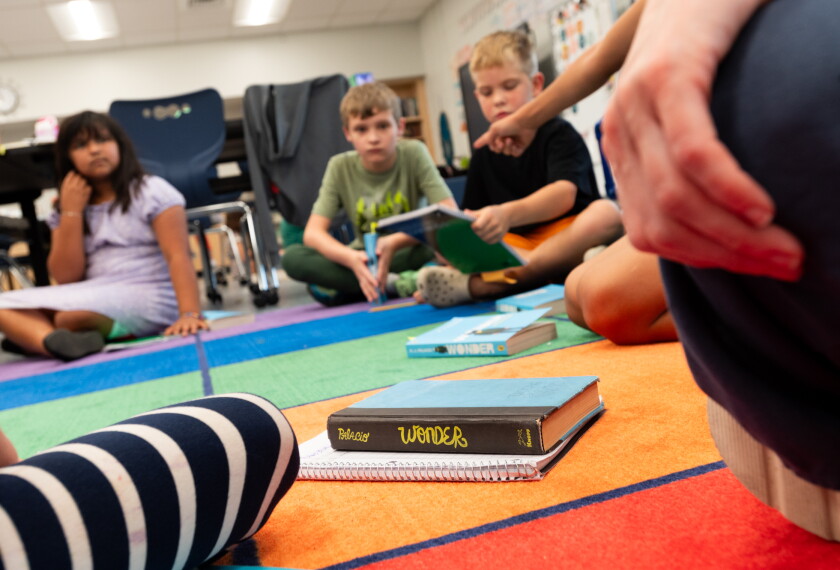
A federal study has found no learning gains from a summer reading program that provided books to students, but little else.

The report, by the Institute of Education Sciences, explores whether fall reading-comprehension scores could be improved through a summer reading initiative for economically disadvantaged children with below-average reading skills. The randomized, controlled study involved 1,571 students in 112 schools during the summer between 3rd and 4th grades. Students received eight books appropriate to their reading levels and their interests.

Unlike some other summer reading efforts, though, this one offered no interventions beyond six postcard reminders throughout the summer. The aim was to learn if the program could close reading gaps without additional strain on parent and teacher resources.

The lack of improvement in the fall led the authors to suggest that other factors, such as personalized teacher encouragement, may be key to summer book programs.

Related Tags:

A version of this article appeared in the April 04, 2012 edition of Education Week as Summer Reading

Events

Classroom Technology Live Online Discussion A Seat at the Table: The Rewiring of Childhood With Jonathan Haidt
Jonathan Haidt, Catherine Price, and Adam Swinyard join Peter DeWitt on how to get students off devices and back to the basics of childhood.
Professional Development K-12 Essentials Forum Getting Professional Development to Stick
Join this free virtual event to explore best practices, funding, format, and timing for teacher and principal PD.
This content is provided by our sponsor. It is not written by and does not necessarily reflect the views of Education Week's editorial staff.
Sponsor
College & Workforce Readiness Webinar
The Road to Opportunity: Making CTE Accessible for All
The most valuable CTE happens off campus. For too many students, transportation is the barrier that keeps opportunity out of reach.
Content provided by HopSkipDrive

EdWeek Top School Jobs

Teacher Jobs
Search over ten thousand teaching jobs nationwide — elementary, middle, high school and more.
View Jobs
Principal Jobs
Find hundreds of jobs for principals, assistant principals, and other school leadership roles.
View Jobs
Administrator Jobs
Over a thousand district-level jobs: superintendents, directors, more.
View Jobs
Support Staff Jobs
Search thousands of jobs, from paraprofessionals to counselors and more.
View Jobs

Read Next

Reading & Literacy Even in Math, Teachers See a Chance to Boost Students' Reading Skills
Minnesota middle school teachers spread foundational literacy skills across academic classes.
6 min read
Image of polynomial math problems. Overlay of words include: Polymorphic, polygon, polyhedron, polynomial.
Collage by Education Week + Canva
Reading & Literacy How Family Reading Time Can Help Older Students Thrive
EdWeek readers offer suggestions about how to get older students reading more.
1 min read
Students follow along in their copies of “Among the Hidden” by Margaret Peterson Haddix in a seventh grade reading class at in Bow, N.H., on Oct. 29, 2025.
Seventh graders follow along in their copies of <i>Among the Hidden</i> by Margaret Peterson Haddix in a reading class at in Bow, N.H., on Oct. 29, 2025.
Sophie Park for Education Week
Reading & Literacy 14-Year-Old Bounces Back, Dominates Spell-Off to Win the National Scripps Bee
The teenager from California who missed his school bee last year set a spell-off record Thursday night.
5 min read
Surrounded by family and friends, Shrey Parikh, 14, of Rancho Cucamonga, Calif., holds his trophy after winning the 2026 Scripps National Spelling Bee at DAR Constitution Hall, Thursday, May 28, 2026, in Washington.
Allison Robbert/AP
Reading & Literacy Letter to the Editor Classic Literature Has Value in English Classes
A letter to the editor pushes back on the argument that classic literature is boring.
1 min read
Education Week opinion letters submissions
Gwen Keraval for Education Week