Technology provides enhanced solutions to many challenges in life—including that of group travel. Jennifer Williams, a literacy specialist at Calliope Global; adjunct professor at Saint Leo University; and board member of the International Literacy Association (ILA), shares tools to make trip planning for groups of teachers a breeze. For those of you planning student travel, many of these tools are also relevant.
By guest blogger Jennifer Williams
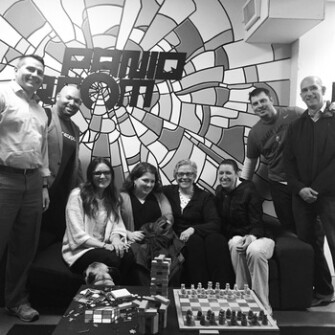
In this digital age, new technologies are allowing educators to cross beyond the boundaries of school walls to develop professional learning networks around the world. Teachers working as part of these global networks are beginning to recognize the extraordinary power in participating in collaborative in-person travel experiences. Joining together in global study trips, teams of educators are planning travel for purposes such as examining problems of global significance, exploring new cultures or educational practices, or attending professional summits, conferences, or consortiums. Advanced tech tools are allowing learning teams to not only plan trips, but to work together during all stages of travel to effectively share and communicate. The following tips and tools are offered to guide and assist you and your learning team to plan and carry out a successful experience.
Scheduling & Meeting
In preparation for travel, many teams find value in meeting in advance through scheduled video-conferenced sessions. As your team members may be in different time zones, you can use Doodle, a user-friendly website for scheduling and selecting meeting times. After you have identified the best time for the team, you can select your videoconferencing platform. With an emphasis on ease of use and also transparency of sharing, more and more options are available for global teams to come together synchronously for planning meetings.
Beyond Google Hangout and Skype, Blue Jeans, Fuze, and Blab join the list of cloud-based videoconferencing tools available for teams for online conversations. Different from traditional travel planning with one leader creating a master schedule for the trip, in collaborative travel all participants can be invited to create the itinerary. Web-based tools such as Sched allow teams to work together to organically create an event schedule and sync up details. With Sched, travel becomes social as participants can create profile pages, connect social media accounts, and personalize schedules.
Collaborative Creation of Content
With many study trips, educators seek to deeply and thoughtfully examine issues, phenomena, or problems within education. Aligned with the purpose of the experience, essential questions can provide logical frameworks for exploration. Participants then can intentionally identify a specific lens from which to view issues and cultural experiences. Shared perspectives, assumptions, field notes, and reflective stories can be compiled with use of collaboration tools.
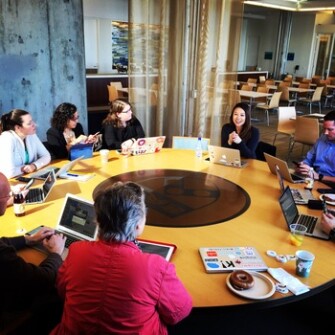
Documentation of thought and experience then serves as a “digital artifact” for sharing across platforms and professional networks. This “share with the world” modeling of transparent communication allows an opportunity for all to benefit from the learning with concepts and content extended for deeper understandings. Teams together can examine collaboration tools to determine an appropriate match to the learning and sharing objectives.
The Google suite of tools, including options such as Forms, Docs, Hangout, provides a comprehensive solution for learning teams. Slack is another free communication tool that allows teams to seamlessly work together online. Providing both a web-based platform and a native app, Slack allows users to create “Channels” for groups to logically share and index information and files. Users can also send notifications to the group or to individuals. In essence, integrated solutions such as Google and Slack are enabling teams to increase workflow and organization of thought and conversation without the need to fill email inboxes.
Travel
The moment has finally arrived, and it is time for the travel to begin! With both small and large groups, there are numerous apps to connect study trip participants with each other and with learning. Be sure to decide on a group hashtag for referencing throughout the trip. With use of social media platforms, such as Twitter, Facebook, and Instagram, members of the travel team can connect with photos, videos, and links. Swarm is a fun social location app that enables team members to “check in” as they reach destinations. To keep participants updated on events, itinerary announcements, or schedule changes, teams can be organized in a Remind community for simple and convenient group messaging. The Voxer app is a popular communication option combining the power of live voice with text, video, and photo sharing. Voxer provides walkie-talkie-like functionality and syncs across all devices, including smartwatches.
Reflection & Extension
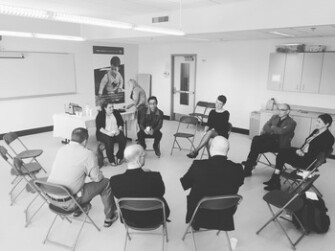
The sharing and learning doesn’t need to end as participants say goodbye. Continued conversations allow for important reflection and extension of thought. As participants return home and look to apply newly acquired knowledge, invite them to document and share thoughts in the form of blogging or other visible thinking routines, such as videojournaling, sketchnoting, other creative forms of expression. Medium, Weebly, Paper 53, and Book Creator all offer platforms for documenting experience that can be shared via email or on social media with use of the study trip hashtag. With new perspectives and understandings of the world, participants can seek out opportunities to share experiences and learning with other educators in the form of professional sharing. Local professional conferences, online conferences (including Global Education Conference and K12 Online Conference), webinars, and Edcamps all provide rich opportunities for globally minded thought and experience to spread.
Grab Your PLN, Your Passport, and Pack those Bags
Armed with toolkits of collaboration options for planning and travel, learning teams are well equipped to design immersive experiences that can be not only valuable professionally, but also life-changing. Participatory learning activities, such as global study trips, can empower educators to take control of their own professional development and guide their own growth. So, grab your PLN, your passport, and pack your bags! It is time for a Globetrotting Learning Experience!
You can connect with Jennifer and Heather on Twitter.
Ideas for this post grew from experience in the MCiLab #PennSV16 Study Trip where Jennifer joined members of her PLN in an immersive week exploring Silicon Valley edtech startup companies and model schools.
All photos courtesy of the author from her trip.