When the National Museum of the American Indian opens to the public this week, Carole L. Whelan stands ready to soak up knowledge that she can almost immediately pass on to her students.
After all, some of Ms. Whelan’s students—51 5th graders from the James F. Oyster Bilingual Elementary School in Washington—were invited along with her to receive a tour of the museum on opening day, Sept. 21, and to attend the opening ceremony.

The festivities in the nation’s capital were scheduled to include a procession of thousands of Native Americans and to kick off a six-day festival on the National Mall celebrating tribal cultures through food, dancing, and storytelling.
Ms. Whelan, an art teacher at the public Oyster School, said she couldn’t wait to find answers to some of the questions she’s had over the years in teaching her pupils about the handiwork of Native Americans: “How did they weave this? How did they stitch this? How did they carve this?”
Reaching out to teachers who want to enrich their lessons about the country’s native people is a high priority of the Smithsonian Institution’s newest museum, education staff members for the museum said last week.
Some programs for teachers—such as seminars planned by the museum and state humanities councils—won’t begin before next summer. But by opening day, the facility was to have posted materials for teachers and school children on its Web site.
Education Outreach
The K-12 online resources include lists of books about native people, instructional posters centered on classroom lessons, and a five-page teaching guide, “A Native Place,” that was jointly developed by the museum and the educational publisher Scho lastic Inc. to mark the opening of the museum.
In addition, the museum plans to mail every middle school in the country a packet introducing teachers and students to the museum. Every school within a 75-mile radius of the museum also will be mailed a visitor’s guide.
The guide describes some of the inaugural exhibits that will feature approximately 7,400 items out of a collection of some 800,000 archaeological and ethnographic objects from native peoples of the Western Hemisphere. One of the exhibits, “Our Universes: Traditional Knowledge Shapes Our World,” explores ceremonies such as the Day of the Dead in Mexico.
Native Americans familiar with the museum said it would have an impact on education about American Indians in two important ways. First, the museum is unusual because its mission is to show the history and culture of Native Americans through their perspective, not that of white Americans, they said. Second, the museum is intended to show that Indian communities were not only something in the past, but rather that they are vibrant today.
“This museum works very hard to help native people voice their thoughts and opinions,” said Helen Maynor Scheirbeck, the assistant director for public programs for the museum and a member of the Lumbee tribe of North Carolina. “What we will be doing is telling educational stories through a tribal perspective.”
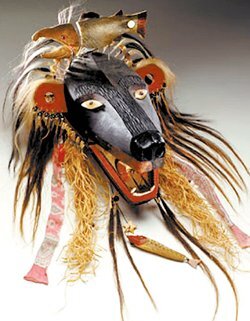
The museum has hired 10 cultural interpreters from a number of tribes—including the Hopi, Lummi, Navajo, Shawnee, and Pumunkey—to talk with visitors. “Our educational thrust will be showing what native people do today,” Ms. Scheirbeck said.
Cindy La Marr, the president of the National Indian Education Association and a member of the Pit River and Paiute tribes, said she considers the museum’s opening “a historical time.”
On a professional level, she hopes that a couple of her organization’s activities get extra attention because they will coincide with the museum’s opening. For instance, the day after the opening, the association is to host a briefing on Capitol Hill about issues in American Indian education.
On a personal level, Ms. La Marr is looking forward to joining the procession of Native Americans, along with her two children and one grandson, on opening day.
She’s heard criticism from a few Native Americans that the museum should have gone further to tell about the genocide of native people by European settlers. But she received an advance tour of the museum and approves of its approach.
“This is a valued effort and long overdue,” she said. “It’s a beginning point in which people can find out more accurate information about native people.”


