The mathematics instructional programs judged to be the best by a federal panel of experts may be scarce in California’s classrooms over the next six years.
Of the six K-8 math programs lauded last year by the U.S. Department of Education’s panel, only two have been submitted to committees that will determine which textbooks the Golden State’s K-8 schools will be allowed to buy with state textbook funds.
One publisher whose materials were deemed “exemplary” by the federal panel said he withdrew from consideration in California because the state’s new skills-based curriculum guidelines differ from his products’ approach. Many of his colleagues who won plaudits from the panel decided against even submitting their materials, he added.
|
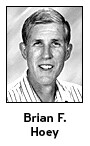
“Why would I want to submit my books when [decisionmakers] are on record as opposing them?” asked Brian F. Hoey, the publisher of CPM Educational Program, which sells the College Preparatory Mathematics Program. “The deck is stacked against any math program that isn’t in a traditional format.”
California is adopting a new list of materials that will match the standards the state adopted in 1998. The criteria used to evaluate books this year reflect a shift in the standards away from conceptual understanding of mathematics and real-life problem-solving skills—two themes of the 1989 standards published by the National Council of Teachers of Mathematics.
Instead, the new curriculum frameworks favor a traditional instructional approach that reinforces basic skills and repeated practice of math functions.
Limited Options?
One mathematician who helped write the new frameworks and is reviewing the textbooks says that the state is looking for products that can document success in raising student achievement and challenge students to solve problems using commonly accepted approaches.
“If test scores in these programs don’t go up, California isn’t interested,” said R. James Milgram, a professor of mathematics at Stanford University.
Mr. Milgram was one of nine members of the California review committee who signed an open letter to U.S. Secretary of Education Richard W. Riley saying the federal panel’s selections differed with the “mainstream views of practicing mathematicians and scientists.” (“Academics Urge Riley To Reconsider Math Endorsements,” Nov. 24, 1999.)
The letter cited critical evaluations of the Core-Plus Mathematics Project and Connected Mathematics—two programs declared “exemplary” by the federal panel but whose publishers chose not to enter the California textbook sweepstakes.
|
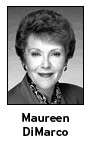
Some bidders say California’s approach is fair because it reflects the content of the state’s standards."If you look at the criteria established for this adoption and compare that to the ones [the expert panel] looked at, they’re diametrically opposed,” said Maureen DiMarco, the vice president of educational and governmental affairs for the Houghton Mifflin Co. and a secretary of education under former California Gov. Pete Wilson, a Republican. “Those programs in general would not meet [the criteria]. It is a waste of money to submit a book.”
Houghton Mifflin submitted three programs for consideration. The Boston-based company publishes one under its own imprint; two are products of its subsidiary McDougal Littell Inc.
But those who advocate the NCTM’s approach of teaching the underlying concepts of math say that the makeup of the panels evaluating the textbooks almost guarantees the state’s schools will be limited in what they can offer their students.
As a result of the textbook adoption, “I don’t think California children will be given a full range of options,” said Ruth Cossey, a professor of education at Mills College in Oakland and the president of the California Mathematics Council, which includes teachers, administrators, and college professors.
Then There Were Two
Of the 15 programs that are undergoing evaluations by the California curriculum- and textbook-review commission, only Everyday Mathematics and Carnegie Learning’s Cognitive Tutor won laudatory reviews from the federal panel.
While most observers say that the publishers of the so-called reform programs were wise to sit out the current process, one of Everyday Learning’s authors says his books have a chance to win the endorsement of the state school board. It is scheduled to vote on the review panel’s recommendations in January.
“We’ve tried to reach out to some of these folks ... and tried to educate them about what we’re all about, and I think it’s paying off,” said Andrew C. Isaacs, an author of the Everyday Mathematics series, which is a project of the University of Chicago School Mathematics Project and published by the McGraw-Hill Cos.
Mr. Isaacs calls the review from the commission’s content-review panel a “pretty fair analysis” of Everyday Mathematics.
But the public debate wasn’t as kind to the Cognitive Tutor algebra program, Ms. Cossey said. The ultimate test will be if either of the two NCTM-style programs submitted is adopted, she said.
“Some of the stronger [NCTM-oriented] curricula should get through in a fair process,” Ms. Cossey said. “They get the coverage of the content standards, but they also have good pedagogy.”
Pot of Gold
The conventional wisdom is that textbook publishers must win the California state board’s endorsement to market a successful product both within the state and nationwide. The state allocates $131 million a year for K-8 textbooks. Schools must spend 70 percent of their state money on titles from the approved list.
Curriculum materials approved by the state board in January will be on the state’s list until 2007. The board will review titles again in 2003 and add new ones to the list.
The state board is planning to approve books for its new reading standards and curriculum in 2002. Since California’s new reading standards shifted away from whole-language, or literature-based, instruction and toward more phonics instruction, the adoption of reading books is bound to create similar divisions.
The College Preparatory Math products published by Mr. Hoey were created at the University of California, Davis, in the mid-1990s, after the state board of education’s last math-textbook adoption in 1994.
Mr. Hoey said he has sold 40,000 copies of College Preparatory Math’s middle school book, most of them in California.
Still, he said, it’s difficult to reach many schools without the state’s seal of approval. “A lot of places won’t look at us because we’re not on the list,” he said.
While College Preparatory Math is counting on grassroots efforts to keep its products in the schools, Mr. Isaacs of Everyday Mathematics thinks that many of the mathematicians who have controlled the debate in the past four years are starting to soften their hard-line stance on how the subject should be taught. “They’re starting to step back from their overcorrection [toward basic skills],” he said. “It’s not ‘my way or the highway’ anymore.”


