

In the last six months of 2022, districts across the country banned or temporarily removed more books from classroom or library shelves than during any prior period, further escalating book bans that have targeted books about LGBTQ+ characters, and race and racism.
That’s according to a new report by PEN America, a free speech advocacy organization that tracks book bans. The report looked at book bans or challenges from July to December 2022, which included the start of the 2022-23 school year.
Book bans and challenges increased by 28 percent in that time over early 2022, the report found. That means the bans increased from 1,149 in January to July 2022 to 1,477 individual bans in the late summer and the fall semester. The 1,477 bans affected 874 unique titles, the report found.
Overall, the report concluded that the last six months of 2022 continued the trend of book banning that started about two years ago, with no indication that the surge in banning books is nearing its end.
Since July 2021, when PEN America started tracking book bans, the organization has recorded more than 4,000 instances of banned books that affect more than 2,200 unique titles. From June 2021 to December 2022, book bans took place in 182 districts in 32 states. Those districts enroll millions of students, the report said.
“It looks like we’re averaging 100 books a month being censored from our classrooms,” said Kasey Meehan, PEN America’s Freedom to Read program director. “So it’s just really alarming.”
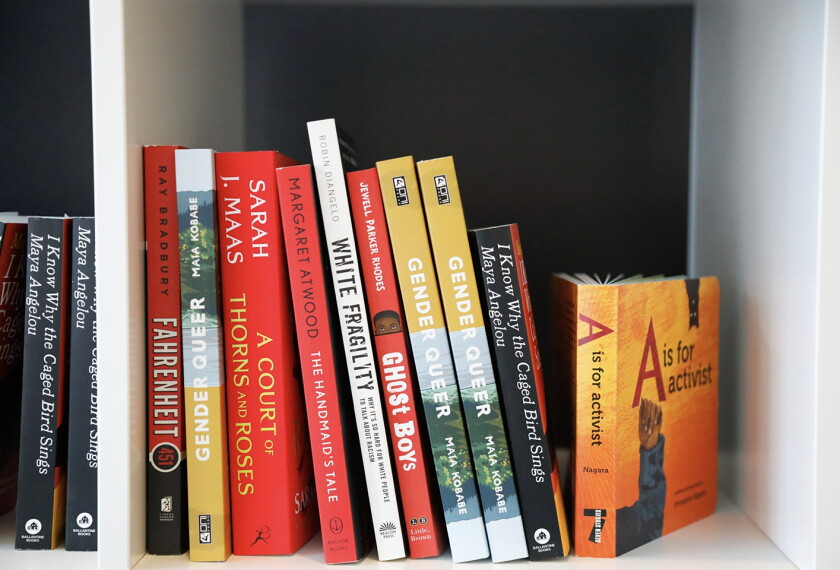
PEN America records book bans through publicly available data on district or school websites, news sources, public records requests, and school board minutes, meaning the actual number of books banned is likely higher.
During the first semester of the 2022-23 school year, 74 percent of the 1,477 bans were connected to organized efforts by advocacy groups, elected officials, or enacted legislation, the report said. For example, 20 percent of book bans in the latter half of 2022, amounting to about 294 books, were banned due to the influence of organized advocacy groups.
The most influential of these groups, Moms for Liberty, was connected to 58 percent of all advocacy-led book bans around the country, or about 170 books. Those bans took place in six districts across North Dakota, South Carolina, Pennsylvania, and Florida, according to the PEN America report.
“Sexualizing young children is wrong,” said Moms for Liberty Co-Founders Tiffany Justice and Tina Descovich in a statement released in response to the report. “No amount of so-called ‘reports’ from PEN America will make child pornography acceptable to the majority of parents in America.
“That is why parents in our organization and even those parents outside of Moms for Liberty continue to fight to protect children from pornography in school.”
Books are labeled pornographic or indecent
In 2022, the reasoning provided by organizations and individuals to challenge a book increasingly revolved around what the bans’ proponents described as inappropriate, pornographic, or indecent content, the report found.
But because it’s unclear what books can fall under those labels, confusion can ensue, leading districts to pull books to err on the side of caution.
For example, at a press conference last month, Florida’s commissioner of education Manny Diaz said, “Pornography is absolutely prohibited from our school libraries.”
“Removing clear instances of pornography and sexually explicit materials, often within arm’s reach of our youngest kids, is not book banning, it’s protecting our children from harmful materials.”
This framing has become an increasing focus of activists and politicians to justify removing books that do not fit the legal and colloquial definitions of “pornography,” the report says.
The topics that banned books contain are evolving
A lot of books challenged in districts across the country still contain the themes from previous months, but books about new topics are also now being challenged, the report found.
Forty-four percent of banned books this semester included themes or instances of violence, and physical abuse. Those include titles that have episodes of violence or physical abuse as a component of the plot or a discussion within the book. Meanwhile, 38 percent included themes about health and well-being for students—for example, mental health, bullying, suicide, and substance abuse—as well as books that discuss sexual well-being and puberty. About 260 books, or 30 percent, include themes of grief or death, like a character dying, and another 30 percent include characters of color or discuss race and racism.

About 26 percent have LGBTQ+ characters or themes. Of those books, 68 titles are about transgender characters. Finally, 24 percent of banned books from fall 2022 detail sexual experiences between characters, and 17 percent mention teen pregnancy, abortion, or sexual assault.
“The target and the focus of the book ban movement is to continue to suppress stories and identities about LGBTQ+ individuals and people of color,” Meehan. “And in doing so, I think we also are seeing a wider swath of titles and content areas being affected.”
The states with most banned books
Between July and December 2022, 66 districts in 21 states banned or temporarily removed at least one book, according to the report. The state with the most districts pulling books from library shelves was Florida, with 13 districts, followed by 12 districts in Missouri, seven Texas districts, and five districts each in South Carolina and Michigan.
Texas had the most individual book bans with 438 from July to December 2022, followed by 357 in Florida, 315 in Missouri, and over 100 bans each in Utah and South Carolina.
A number of these states have laws on the books that ban discussion on certain “divisive” topics in classrooms.


