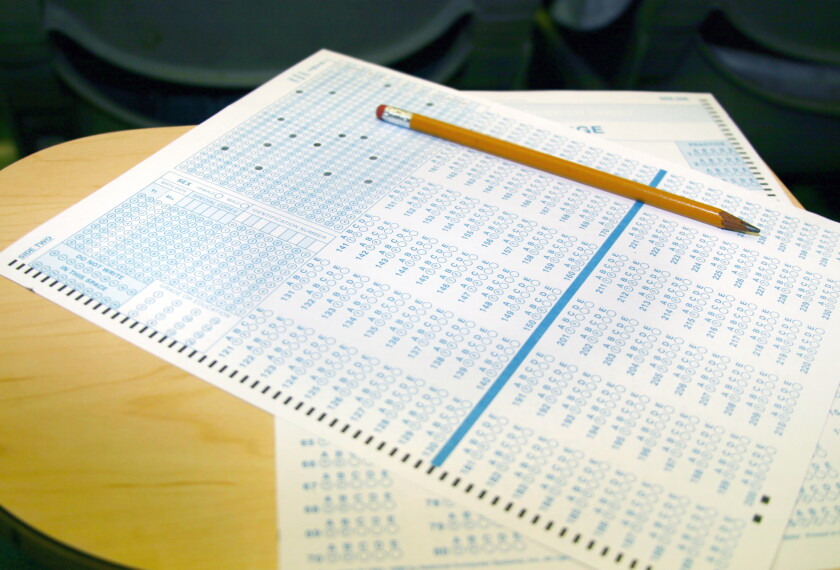
The two states that bore the brunt of Hurricane Katrina have started easing their K-12 testing and accountability policies to help students and districts recovering from the storm.
In Louisiana, the state board of education voted last week to waive a state policy that would have required this year’s 4th and 8th graders to pass state tests before moving to the next grade. But the board decided to keep the high school exit exam as a requirement for the class of 2006.
In Mississippi, the legislature was on the verge late last week of giving the state school board the authority to halt the state accountability system in districts affected by Katrina.
While both moves were intended to ease the burden of state testing on those affected most by the devastating hurricane, policymakers in both states said the one-year changes aren’t diminishing their commitment to improving student achievement.
“We must do what’s best for the children of our state, and that’s why we will continue testing this year, but with consideration for the difficult things children are experiencing,” Louisiana Superintendent of Education Cecil J. Picard said in a Sept. 27 statement, after the state board approved the policy for the 2005-06 school year.
On the federal level, meanwhile, U.S. Secretary of Education Margaret Spellings announced new measures last week that could give hurricane-affected schools and districts some relief from the accountability provisions of the No Child Left Behind Act. (“Schools Get NCLB Relief From Storms,” this issue.)
Short-Term Fixes
In its emergency meeting Sept. 27, the Louisiana board of elementary and secondary education decided to keep all of the state’s accountability requirements for districts intact for the 2005-06 school year. The only rule it relaxed is its policy against social promotion, which requires 4th and 8th graders to pass reading and mathematics tests before being promoted for the 2006-07 school year. The change is effective for the current school year.
The rule applies throughout the state, including in rural areas hit more recently by Hurricane Rita.
The board also approved a plan that will allow Louisiana high school students to earn a diploma from the state even if they complete their education in another state. To do so, they would need to complete Louisiana’s course requirements for graduation and pass Louisiana’s exit exam.
In addition, the board gave Mr. Picard the authority to approve districts’ revised calendars that fall short of the state’s mandated school-attendance time as a result of Hurricanes Katrina and Rita.
In Mississippi, lawmakers opened a special session Sept. 27 with the chief aim of revitalizing the hurricane-shattered casino industry in the area along the Gulf Coast, but they took up the school accountability bill at the request of state education officials.
Attendance Waivers
The Mississippi legislature had nearly completed work on a bill late last week that would give the state school board the power to decide which districts damaged by Hurricane Katrina would not be rated under the state accountability system this school year.
While all districts would be expected to participate in the state’s assessment program, Jason S. Dean, the education adviser to Mississippi Gov. Haley Barbour, said the state board could decide not to publish the district’s state accountability score, which can range from 1 to 5.
The Mississippi Department of Education also asked that the legislature suspend the agency’s line-item budget to allow for more spending flexibility, as many districts are seeking financial aid from the state to help them reopen schools.
The lawmakers also passed a resolution supporting the state’s request for federal disaster aid, which includes a call for more than $1.8 billion for Mississippi districts hit by Hurricane Katrina and those that have enrolled students displaced by the storm. (“Louisiana, Mississippi Lawmakers to Weigh Revenue Needs,” Sept. 28, 2005)
Lawmakers vowed to keep last week’s session brief, and state officials warned that the legislature would most likely need to return to deal with other education policy issues.
In a memo to Gov. Barbour’s office last week, state education officials said that coastal school districts might need the authority to set higher property-tax rates than state law currently allows.
Separately, the Mississippi state school board was scheduled to meet Oct. 5 on the Gulf Coast to visit schools damaged or destroyed by hurricane winds and floodwaters, said Joy Milam, a spokeswoman for the state department of education.
The board was prepared to consider waivers of the number of required school days in coastal districts, she added.