Bucking pressure from a downturn in the nation’s economy that has chilled school spending in a number of states, Pennsylvania is forging ahead with its largest K-12 education increase in at least two decades.
The $9.6 billion for elementary and secondary education in the fiscal year that began July 1 includes a 5.5 percent hike in basic funds for schools. Even more important, say state education officials and advocacy organizations, is a new law aimed at assuring more funding equity between school districts.
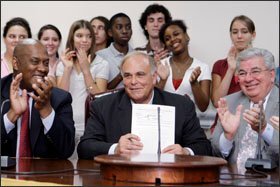
Under the new formula, some districts this year could receive as much as a 20 percent increase in funding, said Gerald L. Zahorchak, Pennsylvania’s secretary of education, in a telephone interview last week. The law assures that no school district will get less than a 3 percent boost.
“The formula change is the most dramatic thing that has happened in my 30 years of being an educator here in Pennsylvania,” said Mr. Zahorchak, who oversees an education system that serves 1.8 million students. “It levels the playing field.”
The new formula, supported by both the governor and overwhelmingly by legislators, provides extra money for school districts based on such factors as the number of low-income students or English-language learners and the wealth of the community.
Under the previous school funding system, said James P. Testerman, the president of the Pennsylvania State Education Association, an affiliate of the National Education Association, “you found your urban centers spending less money on education because they had fewer resources.”
The teachers’ union is one of 25 organizations that in January formed the Pennsylvania School Funding Campaign, which supports increased K-12 spending and improvments in how the money is given out.
Calls for Change
The new funding formula is based on recommendations in a cost study done by the legislature last year. That study estimated that Pennsylvania was $4 billion short of what it should be spending each year on K-12 education.
Mr. Testerman said that while the $275 million increase in basic K-12 funding approved for this fiscal year represents progress toward closing the gap, his organization had hoped that the hike would be closer to a half billion dollars.
State officials, meanwhile, say that when increases in education-related programs from other parts of the budget are figured in, Pennsylvania actually will boost funding for prekindergarten through high school by $305 million over the previous fiscal year.
The budget bill signed July 4 by Gov. Edward G. Rendell includes an additional $17 million for special education, and an increase of $11 million for an early-childhood program.
At the same time, however, funding for a program that provides classroom technology and professional development was reduced by $45 million.
The state’s new general fund budget is $28.3 billion, up from $27.2 billion the previous year.
“Economically, we are doing very well compared to other states,” said Barry Ciccocioppo, a spokesman for Gov. Rendell, a Democrat. “The national economy is starting to affect Pennsylvania’s economy but not to the extent of other states.”
Mr. Ciccocioppo said the enacted budget is about $72.4 million less than what the governor had first proposed. The new budget includes an economic stimulus package intended to create jobs through investments in repairing bridges and the state’s water and sewer infrastructure.
Ron Cowell, the president of the Harrisburg, Pa.-based Education Policy and Leadership Center, a member of the coalition that pushed for changes in school funding, said that while the state made “enormous progress” this year, it did not improve how it pays for special education.
The funding formula continues to be based on the average percentage of students with disabilities statewide rather than on actual enrollment of such students in individual districts or the actual costs of providing services, he said.
Concerns Remain
Among the organizations in the coalition, Mr. Cowell said, “there is a unanimous view that special education needs to be addressed during this coming year” to better reflect the actual costs at the district level.
Shannan B. Guthrie, a spokeswoman for a regional education service agency that assists 22 school districts in or near the Pennsylvania cities of Lebanon and Lancaster, said districts feel the strain of paying for the lion’s share of the cost of special education.
“The amount of money that is available isn’t keeping pace with the real cost of educating those students,” she said.
David R. Baldinger, a spokesman for the Pennsylvania Coalition of Taxpayer Associations, said the 29 organizations in his coalition believe the new funding formula gives short shrift to the needs of rural districts.
Coalition members believe changes in the formula do nothing to address the main concern of the coalition: The state uses property taxes to pay for education. The coalition’s alternative plan calls for the state to broaden the base for sales taxes to include taxes on services, such as haircuts and oil changes, and to raise personal-income taxes to pay for education, among other actions.


