The following is a summary of fiscal 2001 state budgets for schools and highlights of final education-related action in legislatures. The figures for the state budget and for precollegiate education spending include money for state education administration, but not federal, flow-through dollars. Percentage increases are based on rounded numbers, and estimated enrollment reflects the state’s projected public school enrollment for 2000-01, unless otherwise noted. Depending on the state, figures may or may not include prekindergarten spending and enrollment.

|
Nevada
Governor: Kenny Guinn (R)
FY 2001 state budget: $5.46 billion
FY 2001 K-12 budget: $708.87 million
FY 2000 K-12 budget: $683.05 million
Percent change K-12 budget: +3.8 percent
Estimated K-12 enrollment: 330,100
Highlights:
- For second year of its biennial budget, state has set aside $3.3 million to help schools with large numbers of students needing remedial instruction. Schools may apply for money if 40 percent of their students in 4th, 8th, or 10th grades scored in bottom quarter on nationally normed tests. They may use money to implement any of 28 state-approved improvement programs, such as Success for All.
- For second year, Nevada will use $40 million of its share in the states’ tobacco settlement for a program that provides college scholarships of up to $2,500 a year to high school students who maintain B averages in their core subjects.
- In first year of biennium, state set aside $500,000 for a pilot alternative program for disruptive students at eight schools. In coming year, state education department will spend up to $10,000 to evaluate program.
- State last fall set up four regional professional-development centers, operating on about $3.4 million a year, to help train teachers in its new academic standards.
South Dakota
Governor: William J. Janklow (R)
FY 2001 state budget: $794.4 million
FY 2001 K-12 budget: $306.57 million
FY 2000 K-12 budget: $289.93 million
Percent change K-12 budget: +5.7 percent
Estimated enrollment: 134,300

Highlights:
|
- Districts will be barred from transferring money, except for federal funds, from their general-fund accounts to capital-outlay accounts, under a law enacted at governor’s urging.
- Budget sets aside $1.1 million for new program to enhance reading education in 1st and 2nd grades; $500,000 for developing and administering standards-based, criterion-referenced tests; and $56,000 to split the cost with local districts of $2,000 stipends to be given annually for five years to teachers who are certified by National Board for Professional Teaching Standards.
- Schools can display Ten Commandments along with other documents deemed to be of historical, legal, or cultural significance, under new law.
- New law requires background checks, including fingerprint and federal records checks for all newly hired school district personnel.
- All children entering schools or early-childhood-education programs will have to be vaccinated against chicken pox, under legislation approved this year.

|
Texas
Governor: George W. Bush (R)
FY 2001 state budget: $34.9 billion
FY 2001 pre-K-12 budget: $11.65 billion
FY 2000 pre-K-12 budget: $11.41 billion
Percent change pre-K-12 budget: +2.1 percent
Estimated pre-K-12 enrollment: 4 million
Highlights:
Figures are for second year of biennial budget. New programs to help districts add or expand full-day kindergarten and train teachers to help lagging students began this fiscal year.
- Minimal adjustments are expected to education budget in coming fiscal year.

|
West Virginia
Governor: Cecil H. Underwood (R)
FY 2001 state budget: $4.5 billion
FY 2001 K-12 budget: $1.47 billion
FY 2000 K-12 budget: $1.47 billion
Percent change K-12 budget: 0 percent
Estimated K-12 enrollment: 285,000
Highlights:
- Education budget holds virtually steady, as overall state budget climbs by only about $50 million.
- For third year in a row, lawmakers approved a $756 annual pay increase for all teachers and other school and government employees.
- Some $20 million from lottery proceeds will go to continue a multiyear effort to improve technology in elementary and secondary schools.
- Legislature budgeted $1 million for a pilot program pushed by governor to raise quality and availability of prekindergarten programs. Also approved six-year, $76 million reform package for higher education.
|
Wisconsin
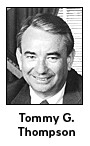
Governor: Tommy G. Thompson
FY 2001 state budget: $16.30 billion
FY 2001 K-12 budget: $7.40 million
FY 2000 K-12 budget: $7.03 million
Percent change K-12 budget: +5.3 percent
Estimated enrollment: 880,000
Highlights:
- In second year of biennial budget, state will spend $61.2 million to expand a class-size-reduction program in grades K-3 in 78 impoverished schools. Under plan, student-to-teacher ratio will drop to 15-to-1 as grade levels are phased into program, which cost state $18.4 million in fiscal 2000.
- Lawmakers approved spending $4 million last October to develop a high school graduation test, which will be one of four means used to determine whether students should receive diplomas. Exams will be given to students in grades 11 and 12 starting in 2003-04 school year.
- Some $100.5 million is earmarked for integrating technology into each of state’s 426 school districts in fiscal 2001. Funds are being used to wire schools for Internet and provide professional development for teachers. Roughly $73.3 million was spent in fiscal 2000.


