States State of the States

Community Colleges a Focus in Wyoming

By Katie Ash — January 23, 2007 1 min read
  • Save to favorites
  • Print

Wyoming

In a speech that called on Wyoming residents to look beyond their own counties, school districts, and political parties and to concentrate on the state first, Gov. Dave Freudenthal, a Democrat, this month encouraged the legislature to take “a hard look at community colleges” because of their importance in building up the workforce.

The newly re-elected governor proposed in November to spend $28 million for four community college capital-construction projects. In his Jan. 10 State of the State speech to a joint session of lawmakers, Gov. Freudenthal said that community colleges should be “the primary delivery entity” for workforce training in Wyoming and said that the money he is proposing would be “tied directly to the question of workforce development.”
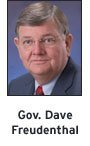
Gov. Dave Freudenthal

He warned against a push by the gas and oil industries for the state to set up technical colleges, calling the idea “illogical, inefficient, and … a burden for others going forward.”

Mr. Freudenthal also drew attention to debates in the 2006 legislative session debates over child care. He cited the importance of child-care facilities to K-12 education and sought to reassure Wyoming residents that the state is “not out to raise people’s kids as a matter of state policy.” Instead, the state aims to “create an environment in which child care can be successfully delivered to the broadest number of citizens in the state,” he said.

“It is good for the families. It is good for the children. And it is good for the economy of this state,” the governor said.

Read a complete transcript of Gov. David Freudenthal’s 2007 State of the State address. Posted by Wyoming’s Office of the Governor.

Related Tags:

A version of this article appeared in the January 24, 2007 edition of Education Week

Events

This content is provided by our sponsor. It is not written by and does not necessarily reflect the views of Education Week's editorial staff.
Sponsor
Artificial Intelligence Webinar
Managing AI in Schools: Practical Strategies for Districts
How should districts govern AI in schools? Learn practical strategies for policies, safety, transparency, and responsible adoption.
Content provided by Lightspeed Systems
This content is provided by our sponsor. It is not written by and does not necessarily reflect the views of Education Week's editorial staff.
Sponsor
Recruitment & Retention Webinar
K-12 Lens 2026: What New Staffing Data Reveals About District Operations
Explore national survey findings and hear how districts are navigating staffing changes that affect daily operations, workload, and planning.
Content provided by Frontline Education
Education Funding Webinar Congress Approved Next Year’s Federal School Funding. What’s Next?
Congress passed the budget, but uncertainty remains. Experts explain what districts should expect from federal education policy next.

EdWeek Top School Jobs

Teacher Jobs
Search over ten thousand teaching jobs nationwide — elementary, middle, high school and more.
View Jobs
Principal Jobs
Find hundreds of jobs for principals, assistant principals, and other school leadership roles.
View Jobs
Administrator Jobs
Over a thousand district-level jobs: superintendents, directors, more.
View Jobs
Support Staff Jobs
Search thousands of jobs, from paraprofessionals to counselors and more.
View Jobs

Read Next

States Heritage Foundation Targets Undocumented Students’ Access to Free Education
The conservative group put forward Project 2025, which has shaped Trump administration policy.
3 min read
An American flag is seen upside down at the conservative Heritage Foundation in Washington, May 31, 2024.
An American flag hangs upside down at the conservative Heritage Foundation in Washington, May 31, 2024. The think tank has called on states to enact legislation that would limit undocumented students' access to free, public education.
Jose Luis Magana/AP
States 75,000 Undocumented Students Graduate High School Each Year. What Happens Next?
A new analysis estimates 90,000 undocumented students reach the end of high school each year.
3 min read
Caps and gowns of many students were adorned with stickers that read, "WE STAND TOGETHER" or "ESTAMOS UNIDOS".A graduation ceremony proceeds at Francis T. Maloney High School in Meriden, CT. on June 10, 2025. A student who would have been walking in the ceremony and his father were detained by federal immigration officers just days before.
Caps and gowns at the June 10, 2025, graduation at Francis T. Maloney High School in Meriden, Conn., bore stickers reading “WE STAND TOGETHER” and “ESTAMOS UNIDOS” after a graduating student and his father were detained by federal immigration officers days before the ceremony. A new analysis reveals both progress and a persistent gap, presenting an opportunity for schools to close the gap of undocumented students not graduating.
Tyler Russell/Connecticut Public via Getty Images
States Scroll With Caution: Another State Requires Social Media Warning Labels
Backers of New York's law, including Gov. Kathy Hochul, have likened tech's addictiveness to tobacco.
4 min read
The Instagram logo is seen on a cell phone, Oct. 14, 2022, in Boston.
The Instagram logo is seen on a cell phone. New York is the third state, after California and Minnesota, to pass a law requiring social media warning labels.
Michael Dwyer/AP
States States Are Banning Book Bans. Will It Work?
Approved legislation aims to stop school libraries from removing books for partisan reasons.
5 min read
Amanda Darrow, director of youth, family and education programs at the Utah Pride Center, poses with books that have been the subject of complaints from parents in Salt Lake City on Dec. 16, 2021. The wave of attempted book banning and restrictions continues to intensify, the American Library Association reported Friday. Numbers for 2022 already approach last year's totals, which were the highest in decades.
Eight states have passed legislation restricting school officials from pulling books out of school libraries for partisan or ideological reasons. In the past five years, many such challenges have focused on books about race or LGBTQ+ people. Amanda Darrow, the director of youth, family and education programs at the Utah Pride Center, poses with books that have been the subject of complaints from parents in Salt Lake City on Dec. 16, 2021. (Utah is not one of the eight states.)
Rick Bowmer/AP
