Federal

Additional Entrants Join Presidential Race

By Lauren Camera & Andrew Ujifusa — June 09, 2015 3 min read
  • Save to favorites
  • Print

Former R.I. Gov. Lincoln Chafee (D)

Former R.I. Gov. Lincoln Chafee (D)

Lincoln Chafee, who served as a U.S. senator from Rhode Island and later as the state’s governor, announced June 3 that he would seek the Democratic Party’s 2016 presidential nomination.

Mr. Chafee was a Republican when he served in the U.S. Senate, from 1999 until 2007, the year he left the party. He took office as governor of Rhode Island in 2011 as an Independent, and switched affiliation to become a Democrat in 2013. He did not seek re-election to that office, and his term ended this past January.

As governor, Mr. Chafee oversaw the rollout of the state’s $75 million federal Race to the Top grant and a $50 million grant specifically for early-learning programs. He has been supportive of the Obama administration’s education agenda.

–Lauren Camera

U.S. Sen. Lindsey Graham (R)
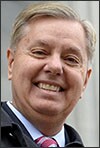
U.S. Sen. Lindsey Graham (R)

Sen. Lindsey Graham of South Carolina, who last week joined the race for the 2016 Republican presidential nomination, has pushed for a scaled-back federal role in education over the course two decades in Congress, most recently with a legislative proposal that takes aim at the Obama administration’s involvement with the Common Core State Standards.

Mr. Graham, who was elected to the U.S. Senate in 2002, joined the U.S. House of Representatives in 1995 and was on the education committee that tried to dismantle the federal Department of Education or merge it with the Department of Labor.

In the House, Mr. Graham was a key player among a group of GOP members of Congress that helped delay a proposed national testing plan being pushed by President Bill Clinton’s administration. In addition, Mr. Graham was involved in the negotiations on a final version of the No Child Left Behind Act.

–Lauren Camera

Former Md. Gov. Martin O’Malley (D)
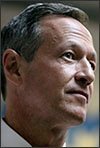
Former Md. Gov. Martin O’Malley (D)

Former Gov. Martin O’Malley, who tossed his hat into the ring for the 2016 Democratic presidential nomination May 30, spent time on a range of education issues as Maryland’s chief executive from 2007 to 2015, and before that as Baltimore’s mayor, starting in 1999.

As mayor, Mr. O’Malley led a campaign to make hiring youths a priority. He led Baltimore at a time when the city’s then-90,000-student school system was undergoing radical restructuring that included a $42 million loan to avert a financial meltdown. And in 2010, the National Education Association gave him its annual America’s Greatest Education Governor Award for his increases in K-12 education spending and school construction funds, and the creation of an independent labor board to handle bargaining disputes.

But the early years of his governorship were largely overshadowed by policy battles with then-state Superintendent of Schools Nancy S. Grasmick. In Maryland, the education chief is appointed by the state board of education.

–Lauren Camera

Former Texas Gov. Rick Perry (R)

Former Texas Gov. Rick Perry (R)

Former Gov. Rick Perry, who touted the Lone Star State’s graduation rate during his tenure and opposed the Common Core State Standards, announced June 4 that he will seek the GOP nomination for president in 2016.

Mr. Perry, who served as governor of Texas from 2000 to 2015, also sought the GOP nomination in 2012. He has opposed various elements of federal education policy—including the No Child Left Behind Act and the Race to the Top competitive-grant program—for applying, in his view, too many conditions to funding. In 2010, he fought Democrats in Congress over the use of the $10 billion Education Jobs Fund, and has called for the U.S. Department of Education to be eliminated.

At some points during his tenure, Mr. Perry supported increased education funding; in 2007, for example, he supported a $80 million hike for the state’s pre-K program, as well as an $11.9 billion increase for public schools over the 2007-08 two-year budget cycle. However, the state cut school funding by $5.4 billion in 2011 in the wake of the recession. Those budget reductions have since been the subject of a lawsuit that is now before the Texas Supreme Court.

Mr. Perry is also a supporter of charter schools and private school choice.

–Andrew Ujifusa

A version of this article appeared in the June 10, 2015 edition of Education Week as Additional Entrants Join Presidential Race

Events

Student Well-Being & Movement K-12 Essentials Forum How Schools Are Teaching Students Life Skills
Join this free virtual event to explore creative ways schools have found to seamlessly integrate teaching life skills into the school day.
This content is provided by our sponsor. It is not written by and does not necessarily reflect the views of Education Week's editorial staff.
Sponsor
Special Education Webinar
Bridging the Math Gap: What’s New in Dyscalculia Identification, Instruction & State Action
Discover the latest dyscalculia research insights, state-level policy trends, and classroom strategies to make math more accessible for all.
Content provided by TouchMath
This content is provided by our sponsor. It is not written by and does not necessarily reflect the views of Education Week's editorial staff.
Sponsor
School & District Management Webinar
Too Many Initiatives, Not Enough Alignment: A Change Management Playbook for Leaders
Learn how leadership teams can increase alignment and evaluate every program, practice, and purchase against a clear strategic plan.
Content provided by Otus

EdWeek Top School Jobs

Teacher Jobs
Search over ten thousand teaching jobs nationwide — elementary, middle, high school and more.
View Jobs
Principal Jobs
Find hundreds of jobs for principals, assistant principals, and other school leadership roles.
View Jobs
Administrator Jobs
Over a thousand district-level jobs: superintendents, directors, more.
View Jobs
Support Staff Jobs
Search thousands of jobs, from paraprofessionals to counselors and more.
View Jobs

Read Next

Federal New Trump Admin. Guidance Says Teachers Can Pray With Students
The president said the guidance for public schools would ensure "total protection" for school prayer.
3 min read
MADISON, AL - MARCH 29: Bob Jones High School football players touch the people near them during a prayer after morning workouts and before the rest of the school day on March 29, 2024, in Madison, AL. Head football coach Kelvis White and his brother follow in the footsteps of their father, who was also a football coach. As sports in the United States deals with polarization, Coach White and Bob Jones High School form a classic tale of team, unity, and brotherhood. (Photo by Jahi Chikwendiu/The Washington Post via Getty Images)
Football players at Bob Jones High School in Madison, Ala., pray after morning workouts before the rest of the school day on March 29, 2024. New guidance from the U.S. Department of Education says students and educators can pray at school, as long as the prayer isn't school-sponsored and disruptive to school and classroom activities, and students aren't coerced to participate.
Jahi Chikwendiu/Washington Post via Getty Images
Federal Ed. Dept. Paid Civil Rights Staffers Up to $38 Million as It Tried to Lay Them Off
A report from Congress' watchdog looks into the Trump Admin.'s efforts to downsize the Education Department.
5 min read
Commuters walk past the headquarters of the U.S. Department of Eduction, which were ordered closed for the day for what officials described as security reasons amid large-scale layoffs, on March 12, 2025, in Washington.
The U.S. Department of Education spent up to $38 million last year to pay civil rights staffers who remained on administrative leave while the agency tried to lay them off.
Mark Schiefelbein/AP
Federal Quiz Quiz Yourself: How Polarized Do You Think Educators Are?
The EdWeek Research Center examined the degree to which K-12 educators are split along partisan lines. Quiz yourself and see the results.
1 min read
Federal Could Another Federal Shutdown Affect Education? What We Know
After federal agents shot a Minneapolis man on Saturday, Democrats are now pulling support for a spending bill due by Friday.
5 min read
The US Capitol is seen on Jan. 22, 2026, in Washington. Another federal shutdown that could impact education looms and could begin as soon as this weekend.
The U.S. Capitol is seen on Jan. 22, 2026, in Washington. Another federal shutdown that could affect education looms if senators don't pass a funding bill by this weekend.
Mariam Zuhaib/AP
