Tobacco use among the nation’s secondary school students is down, a new federal survey finds.
But the drop comes mostly among high school students, whose tobacco use has been declining since the pandemic. Younger students have begun to take up the drug again.
Some 2.8 million secondary students reported currently using tobacco in 2023, according to the National Youth Tobacco Use survey. That’s 1 in 10 middle and high school students, but it represents a significant drop from 3.08 million young tobacco users in 2022.
The nationally representative survey, conducted by the U.S. Food and Drug Administration and the Centers for Disease Control and Prevention, finds that in 2023, 12.6 percent of students in grades 9-12 reported using tobacco in the last 30 days, down from 16.5 percent of high schoolers in 2022.
Tobacco habits among older and younger students have diverged since 2019. While initially plummeting for all secondary students during widescale pandemic lockdowns, younger students have begun returning to tobacco use, vaping in particular.
Linda Richter, the senior vice president for prevention research and analysis at the nonprofit Partnership to End Addiction, said she wasn’t surprised by the decline in tobacco use among older students.
Older teens today entered adolescence during a wave of anti-vaping legislation and research sparked in part by a 2019 outbreak of severe respiratory illnesses—including hospitalizations and deaths—among middle and high school students exposed to e-cigarettes.
Then, during the pandemic, “the closing of schools and stay-at-home orders that followed reduced kids’ vaping, as they were now away from their friends and under the watchful eyes of their parents,” Richter said, noting that research early in the pandemic suggested vaping could increase the risk of contracting COVID and having more severe respiratory problems for the infected.
But younger students may not have received as much exposure to anti-vaping messages, finds Bebi Davis, the vice principal of Kawānanakoa Middle School in Hawaii. “It’s become a middle school trend,” Davis said.
Davis has seen a rise in vaping, particularly among younger girls. “I feel like everything happens at the middle school, because the kids’ bodies are still developing, their brains are still developing, but they’re not making the best judgment calls yet,” she said. “They want to try everything in the world and they don’t understand what everything in the world does to them.”
It can be difficult for teachers and administrators to keep on top of changing tobacco technologies, too. When students first started using vape sticks, teachers mistook them for pens, Davis said. Now, they can spot e-cigarette devices, but last week, staff at Kawānanakoa found what looked at first like candy but turned out to be oral tobacco pouches.
“The kids are sometimes two steps ahead of where we are in terms of what’s available [for tobacco] in the stores,” she said.
Rising use among girls
In both middle and high school, girls are significantly more likely than boys to have ever used tobacco—particularly electronic and traditional cigarettes—a trend that continues from 2022.
Richter said rates of drug use across a variety of substances are rising for girls while those among boys are steady or declining. But, “there are unique factors related to vaping that might explain its higher prevalence among girls,” she said. “The marketing of vaping, like cigarette marketing in years past, heavily targets females through its ads and messages that associate nicotine use with glamour, fashion, sophistication, and being thin or controlling one’s appetite.”
The annual federal, in-school surveys asked more than 22,000 students in grades 6–8 (for middle school results) and 9–12 (for high school results )about their use of several different kinds of tobacco products. The data show most students who use any tobacco use more than one kind, including cigarettes, chewing tobacco, hookah pipes, and cigars.
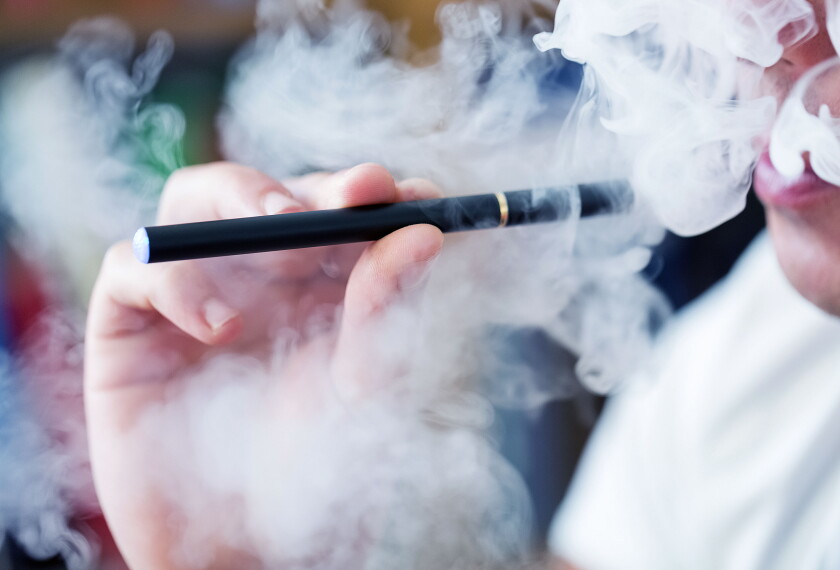
For the last decade, electronic cigarettes have been the most common form of tobacco for both older and younger students. In 2023, 2.13 million, or nearly 8 percent of secondary students, said they had vaped in the last 30 days.
Public-health experts have warned the fruity and candy flavors that are common among e-cigarettes may draw more younger students. The survey finds nearly 9 in 10 students who actively vape use flavored e-cigarettes, and nearly 6 in 10 students use “ice” or “iced” flavors.
Studies find e-cigarettes just as harmful and addictive as other forms of tobacco, and the federal data show nearly 1 in 3 students who actively vape do so daily or nearly every day.
A majority of states have sued e-cigarette manufacturers for illegally marketing their products and selling to minors. While several lawsuits are ongoing, the Juul e-cigarette company paid $480 million to settle 34 state lawsuits in 2021 and 2022, and a California judge approved a $255 million class action settlement in January.
“The decline in e-cigarette use among high school students shows great progress, but our work is far from over,” says Deirdre Lawrence Kittner, the director of the CDC’s Office on Smoking and Health, in a statement on the data. “Findings from this report underscore the threat that commercial tobacco product use poses to the health of our nation’s youth. It is imperative that we prevent youth from starting to use tobacco and help those who use tobacco to quit.”
That means doing more than just confiscating tobacco products and disciplining students caught using them, the CDC recommends.
Schools should move away from “scare tactics, threats, and simplistic ‘just say no’ messages” to combat tobacco use, Richter said. More effective strategies, she said, are to:
- Teach students research-based information on the physiological effects of nicotine products;
- Acknowledge and affirm why these products might be appealing to young people;
- Offer healthier alternatives to address stress or anxiety;
- Help students become media-savvy about the way tobacco companies try to influence them; and
- Include parents in the conversation so that they can support the messages students receive at school.
In Hawaii, Kawānanakoa Middle School overhauled its approach to tobacco prevention after realizing “the punitive approach, the consequence approach hasn’t really been working,” Davis, the vice principal, said. “If you suspend them and send them home, they just have more time to vape at home.”
Instead, this year, the school partnered with nurses to increase vaping education. Instead of suspension, when a student is caught with a vaping device or other tobacco product, the student and a parent or guardian must attend three, 50-minute sessions with a nurse to discuss medical problems and other tobacco hazards. The student then makes a plan with family and school officials to stop tobacco use and develop healthy habits.
This week, for example, Davis met with an 8th grader and his grandfather after the boy had been caught with an e-cigarette several times. The boy’s grandfather shared his own challenges with trying to quit tobacco.
“A lot of times kids are in denial,” Davis said. “They’re like, ‘We’re not hooked. We just do it for fun.’ They don’t realize they’re already addicted to these things and hiding it from their parents. And most times, parents don’t know these things are happening.”
So far, Davis said, the conversation approach has been “working wonders; 90 percent of the time, if a student has that [anti-vaping] conversation, I don’t see them back in here again.”