School Climate & Safety

Students Take a Stand Against Cyberbullying

By Michelle R. Davis — February 04, 2011 2 min read
  • Save to favorites
  • Print

High school student Annabel C. was in middle school when she began receiving taunting, hurtful instant messages from an anonymous harasser when she was on her computer. After some sleuthing, the New Rochelle, N.Y., student realized that the instant messages were actually being written by someone she considered a friend.

“I was obviously hurt,” says Annabel, now a junior at the private Ursuline School. “I couldn’t understand why someone would send those messages, but it was worse to find out it was a friend.”

Instead of responding online, she says, she approached the student in person, asked her to stop, and told her they were no longer friends. But she also emphasized they weren’t enemies either. The online taunting stopped.

That experience, in part, prompted her to join her school’s Teenangels group when she was a sophomore. The program, created in 1999 by Parry Aftab, a cyberbullying expert who founded the nonprofit Internet-safety group WiredSafety, has 16 chapters around the country. The school’s Teenangels program has a policy that permits students to provide only their first names and the initials of their last names to the news media.

Teenangels trains middle and high school students on Internet safety, privacy, and security, and counsels them on how to deal with and prevent cyberbullying. The students then give presentations to other students, as well as to parents and other adults.

“Getting kids involved and getting their help to support policies to prevent cyberbullying is crucial,” Aftab says. “Kids respond when they’re part of it instead of having it shoved down their throats.”

Clearly, there’s a need for more education about cyberbullying, experts contend. According to a 2010 report on cyberbullying research from the Pew Research Center’s Internet and American Life Project, up to a third of teenagers say they have experienced some form of online harassment, and 26 percent say they have experienced harassment through voice or text messages on their cellphones.

Online harassment has an emotional impact, says Sameer Hinduja, the co-director of the Cyberbullying Research Center, based in Jupiter, Fla., and an associate professor of criminology and criminal justice at Florida Atlantic University in Fort Lauderdale. Hinduja’s research has shown that cyberbullying is related to low self-esteem, suicidal thoughts, anger, frustration, substance abuse, and delinquency in the victims.

Michael Nehring, a sophomore at New Jersey’s Ridgewood High School who was a Teenangel during middle school (his high school does not have a chapter), says he joined the group after reading about teen suicides related to cyberbullying. He also was growing concerned about sexting—a practice in which students send sexually explicit photos of themselves via cellphone.

Watching some of his friends get bullied in both real life and cyberspace made him feel even more strongly that he needed to take a stand.

“You can’t hide from cyberbullying,” Nehring says.
A version of this article appeared in the February 09, 2011 edition of Digital Directions as Teens Take a Stand to Change Behavior

Events

This content is provided by our sponsor. It is not written by and does not necessarily reflect the views of Education Week's editorial staff.
Sponsor
School Climate & Safety Webinar
There But Not Present: Rethinking Student Engagement
Learn how to recognize the early signs of disengagement and what the behavioral science reveals about which interventions actually work.
Content provided by Frontline Education
Teacher Preparation Webinar What Teacher Education Should Look Like in the Age of AI
Explore the current trends around the use of AI in teacher preparation and continuing education with data from the EdWeek Research Center.
English Learners Webinar How Can School Districts Better Support English Learners With Disabilities?
Join this webinar to hear recent findings from the EdWeek Research Center and discover practical strategies for improvement.

EdWeek Top School Jobs

Teacher Jobs
Search over ten thousand teaching jobs nationwide — elementary, middle, high school and more.
View Jobs
Principal Jobs
Find hundreds of jobs for principals, assistant principals, and other school leadership roles.
View Jobs
Administrator Jobs
Over a thousand district-level jobs: superintendents, directors, more.
View Jobs
Support Staff Jobs
Search thousands of jobs, from paraprofessionals to counselors and more.
View Jobs

Read Next

School Climate & Safety 4 Ways AI Data Centers Can Affect Schools
From health to productivity and finances, data centers could pose risks for students and schools.
3 min read
Carroll
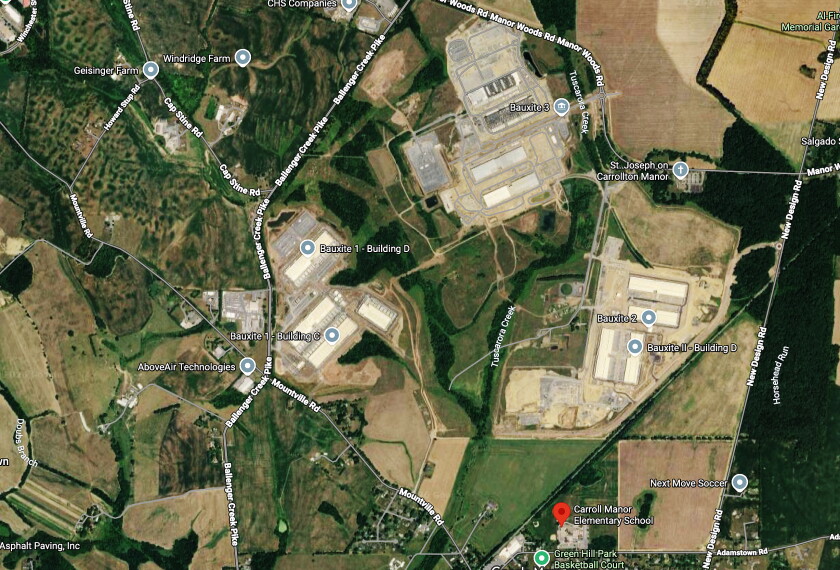
The Quantum Frederick Data Center Campus near the Carroll Manor Elementary School.
Map data ©2026 Google, Imagery ©2026
School Climate & Safety For Students Walking to School, the Route Can Be Deadly. What Can Make It Safer?
School districts, including New York City, have rolled out a number of strategies to reduce risks.
5 min read
A student leaving Greenspun Junior High School in Henderson, Nev., enters a car in the travel lane of Valle Verde Drive on Sept. 14, 2022. Pedestrian fatalities near schools are most likely to occur in the early morning and early evening hours, federal data show.
Rachel Aston/Las Vegas Review-Journal via TNS
School Climate & Safety Opinion It's 3 p.m. Do You Know What Teens Are Doing?
A veteran school reformer is focused on how teens are spending their time after the school day ends.
•
5 min read
The United States Capitol building as a bookcase filled with red, white, and blue policy books in a Washington DC landscape.
Luca D'Urbino for Education Week
School Climate & Safety How Extreme Weather Threatens Student Learning and Academic Progress
Too-hot classrooms put the brain in "survival management mode," one expert said.
5 min read
Many Philadelphia schools lack adequate electrical service to support effective whole-school air conditioning on Sept. 8, 2023. Bayard Taylor, in Hunting Park , has window units but they do not cool the whole building.
Window air conditioning units at Bayard Taylor School in Philadelpia, pictured here on Sept. 8, 2023, do not cool the whole building. High classroom temperatures can make it harder for students to learn and perform well on tests, a new report outlines.
Elizabeth Robertson/The Philadelphia Inquirer via TNS
