
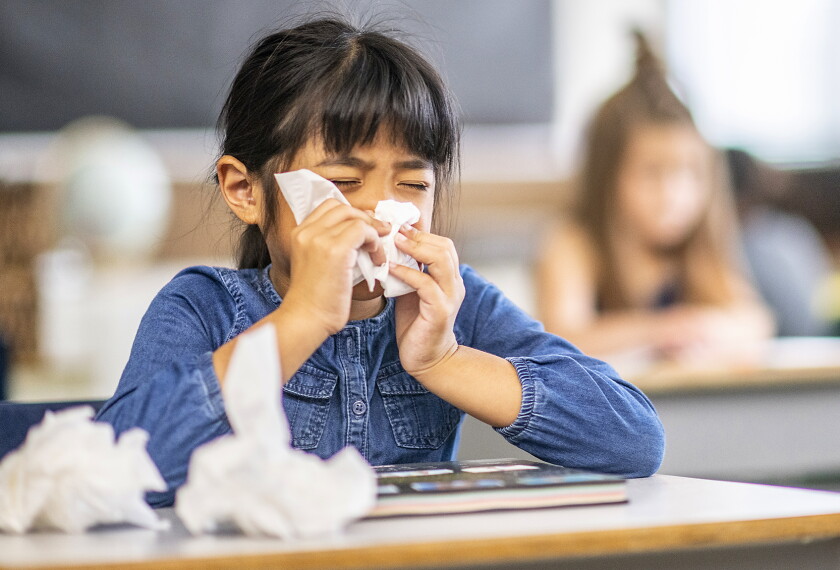
Dozens of districts have had to temporarily close schools to stop the spread of common respiratory illnesses that are spreading at unusually high levels this winter.
Even when schools haven’t closed, more and more students have reported to the nurse’s office or not attended school because of fevers, aches, pains, and trouble breathing. Those are all hallmark symptoms of the flu, a disease with “very high” activity in 45 states this season, which is by some measures the most intense flu season in 15 years.
In some cases, such a large number of students and staff have fallen ill that entire schools have had to close or switch to virtual learning for several days.
It’s a complex decision for district leaders, who understand the value of instruction time in students’ academic progress, especially in recent years as achievement scores on standardized assessments have continued to slide. But they also know that schools are hotbeds for disease, and can serve as key transmission locations throughout the entire community if not addressed.
In late January, the Godley Independent School District in Texas reported “about 650 students out with the flu,” prompting the district of fewer than 3,000 students to shut down for multiple days to allow time for recovery and to sanitize buildings and buses.
While an extreme example, the Godley district is far from alone.
The trend has stretched across the country as respiratory illnesses have reached full force, including in Ohio; Iowa, where one school reported an absence rate of nearly 25 percent; and Teneessee, where a handful of districts had to close last week.
Some schools that have closed switched to virtual classes temporarily to avoid fully missing instructional time.
“This flu season seems to be hitting a bit harder than it did last year,” said Kate King, president of the National Association of School Nurses and a school nurse in Columbus, Ohio.
Schools should encourage vaccinations and remind families about health guidelines
The Centers for Disease Control and Prevention estimates that there have been at least 24 million illnesses, 310,000 hospitalizations, and 13,000 deaths from flu so far this season, which runs through the fall and winter and typically peaks between December and February. Fifty-seven of the deaths have been among children, including 10 during the week that ended Feb. 7, according to the most recent CDC data.
One likely factor contributing to the increase in flu cases is that there has been a decline in flu vaccinations this season compared to the last, King said, citing CDC data. Many recorded cases have been confirmed to be the same variant that a flu vaccine protects against, she added.
There’s still time to get the vaccine, she said, and schools can help by setting up vaccination clinics on site through partnerships with the local health department or health care providers. Those clinics could be open to students and their families, staff, and the broader community to help keep infections down, King said.
It’s especially useful for students and staff, who can just walk down to the cafeteria or gymnasium during a break in their day, get their vaccination, and go back to class without missing important instructional time.
“It’s important to think about how we can help people get those vaccines without interrupting too much of their lives,” King said. “Then people are more likely to do it, and if we can get those vaccination rates up, that’s great.”
Schools can also send reminders to parents via email or newsletters about when it’s necessary to keep kids home from school—if they have a fever, vomit, or have diarrhea, among other symptoms—and remind them it’s important to not send their children in if they have symptoms of contagious illnesses, King said.
Parents oftentimes aren’t sure when it’s OK to keep their children home, especially if symptoms are mild, and “feel a lot of pressure” to make sure their kids are at school as often as possible, King said.
Schools should develop and frequently share clear guidelines with parents, especially during cold and flu season, she said.
“We want children to be in school when possible, but we also want to encourage parents to keep their children home when they’re sick so they don’t affect other people at school,” King said.
Teachers are getting sick, too
It’s not just students feeling the heat of a nasty flu season—teachers and other school staff are taking a hit, too.
In Ohio, the Clark-Shawnee Local School District closed all of its buildings one day due to illnesses that prevented them from maintaining sufficient staffing, local news outlets reported. One school in Tennessee cited difficulties getting substitutes for sick staff members as a reason for closing for four days earlier this month.
It’s no surprise—experts say teachers are both uniquely vulnerable to, and can have more resilience to, seasonal bugs. Teachers face a mountain of stress, which can reduce their immune system’s ability to ward off illnesses, and they’re exposed to all kinds of bugs in the classroom.
Compared to other professions, teachers are more likely to work through illness—and many teachers also say they don’t feel empowered to take their available sick leave.
Experts say teachers should ensure their routine vaccinations remain up to date and take a little extra time to clean frequently touched surfaces in their classrooms.


