Opinion
School Climate & Safety Opinion

Fix School Discipline to Fix Inequity

By Peggy Lehner — May 31, 2017 2 min read
  • Save to favorites
  • Print

The difference between equity and equality is something that more states are paying attention to when making decisions about school funding. But equity should not be limited to funding alone. While school funders at state and local levels need to attend to the additional cost of educating at-risk children, it is often not a lack of money that puts a child living in poverty at risk. Instead, it is the factors that so often accompany poverty—including the use of drugs, exposure to violence, sustained hunger, and parental stress—that make our state’s low-income children especially vulnerable.

Fix School Discipline to Fix Inequity: Before tackling bigger K-12 challenges, states must address unfair suspension rates, writes Peggy Lehner, a Republican state senator from Ohio.

Merely providing additional money for these children will not sufficiently address the inequities they face in the classroom. The bottom line for solving inequity comes down to the actions of adults in the classroom and the schoolhouse. Classroom teachers need to have a working understanding of the signs of emotional trauma in their students, along with the tools to help children cope.

Evidence that too many of our teachers are not adequately prepared for this challenge can be found in the frighteningly high rates of suspension and expulsion among the impoverished children in my state of Ohio. According to our analysis of Ohio Department of Education data, in the 2015-16 school year, an estimated 36,000 suspensions and 200 expulsions were handed out to the state’s public elementary-school children under the age of 8. Of these, more than 17,000 out-of-school suspensions and 160 expulsions in preschool through 3rd grade were related to disobedient or disruptive behavior. What’s more, 88 percent of those children who were suspended were economically disadvantaged, and 76 percent were minority students.

Ensuring equity means treating children according to their needs, not merely treating all children equally. Behaviors that might be unacceptable in one child can be a thinly veiled cry for help in another. Teachers should not deal with misbehavior by doling out a standard punishment.

Our schools of education need to do a better job instructing preservice teachers about social-emotional learning, cultural diversity, trauma-informed instruction, and strategies for de-escalating poor behavior. High-quality professional development around these topics for longtime educators is critical. These tactics will help teachers work with administrators and policymakers to create a school culture that not only lays out expected behavior in clear terms, but also provides its students with the emotional supports they need to be successful, such as mental-health services and positive behavioral intervention.

I am working with educators in Ohio on drafting future legislation to ban suspensions and expulsions statewide for children age 8 and under, except if students threaten to harm themselves or their classmates. It is my hope that this reduction in suspensions promotes more affirming and constructive methods of discipline and keeps more students—who need our help, not our punishment—in the classroom.
Related Tags:

A version of this article appeared in the May 30, 2017 edition of Education Week as Money Doesn’t Ensure Equity

Events

This content is provided by our sponsor. It is not written by and does not necessarily reflect the views of Education Week's editorial staff.
Sponsor
Special Education Webinar
Bridging the Math Gap: What’s New in Dyscalculia Identification, Instruction & State Action
Discover the latest dyscalculia research insights, state-level policy trends, and classroom strategies to make math more accessible for all.
Content provided by TouchMath
This content is provided by our sponsor. It is not written by and does not necessarily reflect the views of Education Week's editorial staff.
Sponsor
School Climate & Safety Webinar
Belonging as a Leadership Strategy for Today’s Schools
Belongingisn’ta slogan—it’sa leadership strategy. Learn what research shows actually works to improve attendance, culture, and learning.
Content provided by Harmony Academy
This content is provided by our sponsor. It is not written by and does not necessarily reflect the views of Education Week's editorial staff.
Sponsor
School & District Management Webinar
Too Many Initiatives, Not Enough Alignment: A Change Management Playbook for Leaders
Learn how leadership teams can increase alignment and evaluate every program, practice, and purchase against a clear strategic plan.
Content provided by Otus

EdWeek Top School Jobs

Teacher Jobs
Search over ten thousand teaching jobs nationwide — elementary, middle, high school and more.
View Jobs
Principal Jobs
Find hundreds of jobs for principals, assistant principals, and other school leadership roles.
View Jobs
Administrator Jobs
Over a thousand district-level jobs: superintendents, directors, more.
View Jobs
Support Staff Jobs
Search thousands of jobs, from paraprofessionals to counselors and more.
View Jobs

Read Next

School Climate & Safety Shootings at School and Home in British Columbia, Canada, Leave 10 Dead Including Suspect
Canadian Prime Minister Mark Carney said he grieved with families "whose lives have been changed irreversibly today."
3 min read
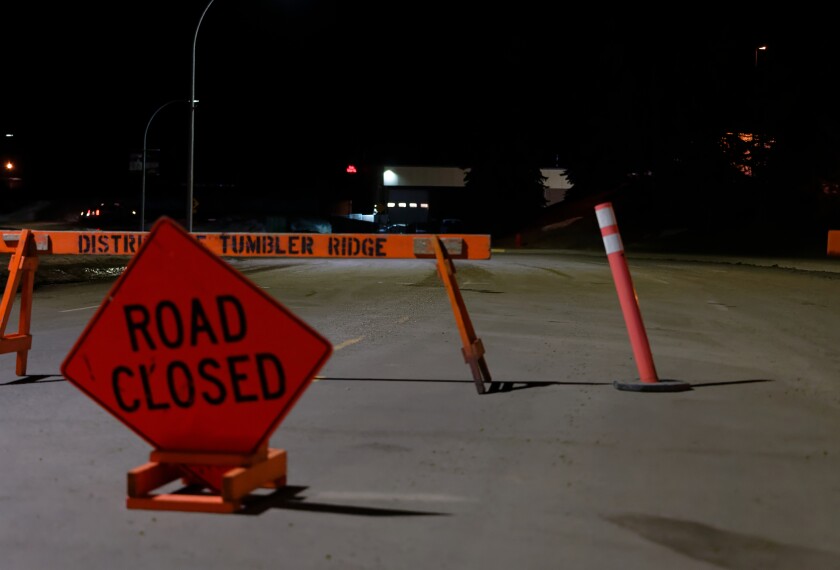
The road is blocked off before the Tumbler Ridge Secondary School, in Tumbler Ridge, B.C., Canada, on Wednesday, Feb. 11, 2026.
Jesse Boily/Canadian Press via AP
School Climate & Safety 4 Ways Schools Can Build a Stronger, Safer Climate
A principal, a student, and a researcher discuss what makes a positive school climate.
4 min read
A 5th grade math class takes place at Lafargue Elementary School in Effie, Louisiana, on Friday, August 22. The state has implemented new professional development requirements for math teachers in grades 4-8 to help improve student achievement and address learning gaps.
Research shows that a positive school climate serves as a protective factor for young people, improving students’ education outcomes and well-being during their academic careers and beyond. A student raises her hand during a 5th grade class in Effie, La., on Aug. 22, 2025.
Kathleen Flynn for Education Week
School Climate & Safety Schools Flag Safety Incidents As Driverless Cars Enter More Cities
Agencies are examining reports of Waymos illegally passing buses; in another case, one struck a student.
5 min read
In an aerial view, Waymo robotaxis sit parked at a Waymo facility on Dec. 8, 2025 , in San Francisco . Self-driving taxi company Waymo said it is voluntarily recalling software in its autonomous vehicles after Texas officials documented at least 19 incidents this school year in which the cars illegally passed stopped school buses, including while students were getting on or off.
Waymo self-driving taxis sit parked at a Waymo facility on Dec. 8, 2025, in San Francisco. Federal agencies are investigating after Austin, Texas, schools documented incidents in which the cars illegally passed stopped school buses. In a separate incident, a robotaxi struck a student at low speed as she ran across the street in front of her Santa Monica, Calif., elementary school.
Justin Sullivan/Getty Images via TNS
School Climate & Safety Informal Classroom Discipline Is Hard to Track, Raising Big Equity Concerns
Without adequate support, teachers might resort to these tactics to circumvent prohibitions on suspensions.
5 min read
Image of a student sitting outside of a doorway.
DigitalVision