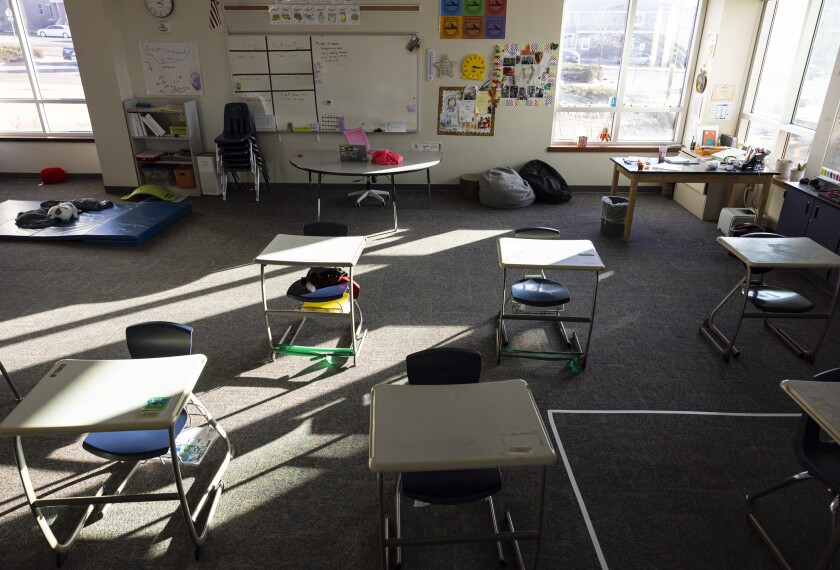
Alarmed by stubborn patterns of persistent student absences, state lawmakers have introduced dozens of bills aiming to make school attendance a priority.
Legislators from both parties in 20 states have filed 49 bills related to school attendance and chronic absenteeism in their current legislative sessions, according to a new tracker by FutureEd, a think tank at Georgetown University.
If passed, those bills would bring consistency to how schools define and count absences, improve statewide data tracking, and help identify promising practices for improving attendance.
“The pandemic is a big reason” for state efforts, said Bella DiMarco, a senior policy analyst at FutureEd who compiled the tracker. “We saw these rates skyrocket, and that created urgency.”
Under the most common definition, a student is deemed chronically absent if they miss at least 10 percent of school days, even if those absences are excused for reasons like illness or bereavement. Rates of chronic absenteeism surged from 15 percent in 2018-19 to 28 percent in 2021-22, according to a FutureEd analysis.
Rates are improving, but they remain above pre-pandemic levels. Thirty-six states and the District of Columbia have reported 2023-24 data, with a combined chronic absenteeism rate of 23 percent, FutureEd found.
“It isn’t just about whether a student is in a seat,” Virginia state Rep. Jackie Glass, a Democrat, said during a Jan. 28 House education committee meeting. “It’s one of the most critical indicators of academic success, intervention needs, and even economic mobility.”
Bills would improve data, responses to absenteeism
A bill Glass sponsored—the only one in the FutureEd tracker to be enacted so far—requires schools to collect consistent daily student attendance under regulations set by the state’s board of education. She originally proposed an additional requirement that schools input attendance data in a uniform computer system, but fellow lawmakers said that would create an unfunded mandate for schools.
Glass told colleagues she’s concerned that schools use varying approaches to reporting attendance, making it difficult to identify patterns and solutions.
Researchers have flagged that problem nationwide. While most states have set clear definitions for chronic absenteeism in the last 10 years, there’s far less consistency about what counts as a single day’s absence.
Twelve states leave that decision up to local discretion, according to a 2023 analysis by Attendance Works, an organization that works with schools and policy makers to document and improve attendance. That means some districts in those states might count attendance once in the morning, while others might count students as absent if they miss more than a half a day of classes.
Other bills in the FutureEd tracker would also address how attendance and absenteeism are defined and reported.
- A bill in Indiana would require the state’s department of education to make recommendations about how absences are counted and how school-based attendance teams should intervene.
- Bills in Indiana and Virginia would exclude some excused absences, like those related to chronic illnesses or disabilities, from counting toward chronic absenteeism.
- Bills in Florida, Georgia, and Indiana would prohibit schools from using exclusionary discipline, like suspensions, to punish students for unexcused absences.
- Legislation in Indiana, Georgia, and Washington would require training and recommendations for early-warning systems and tiered interventions that allow schools to address student absences before they snowball into a bigger problem. Experts recommend such data-driven approaches that emphasize prevention over punishment.
Some states propose a more novel approach that is less supported by research. A Utah bill would create a pilot program to reward families for good attendance with state-provided contributions to 529 college savings accounts. A Hawaii lawmaker has proposed a pilot program to reward elementary school students with ice cream parties for good attendance. And in Minnesota, lawmakers are weighing a bill that would provide $250,000 for a marketing campaign on the importance of coming to school.
Some state lawmakers have proposed stricter consequences for absences and truancy, DiMarco noted. A New Mexico bill would allow courts to impose fines or jail time for parents if their children are persistently absent.
Eleven of the 49 bills in the FutureEd tracker have been approved by at least one legislative chamber.