Responding to recent news stories about star college athletes with fraudulent or sketchy high school qualifications, the National Collegiate Athletic Association is sharpening its scrutiny of high school programs that are not under the purview of accreditation agencies or other authorities.
Steps announced April 27 by the Indianapolis-based governing body for intercollegiate sports include a review of “nontraditional” high schools, including some charter schools and schools that operate only online, and closer scrutiny of the records of high school students who make dramatic academic improvement over a short period.
“We’re less concerned about the method of delivery. … We’re really concerned about the level of teaching,” Kevin C. Lennon, the NCAA’s vice president for membership services, said in an interview. “When you have students not going to class at all and earning grades, that’s something you have to shut down.”
NCAA President Myles Brand has said recently that fraud in high school records is increasing. He also said that there would be “no amnesty” for current high school seniors from the association’s stricter scrutiny of questionable schools.
But Mr. Lennon clarified that the NCAA is not going to be targeting schools that are simply low-performing.
“We’re not going to be worried about a high school that currently meets state requirements, has oversight at the state level, or is approved by a regional accrediting agency,” he said.
Oversight Issues
Media reports in recent months found that several preparatory high schools that are primarily attended by athletes operate with little or no oversight from accreditation agencies, state departments of education, or school districts.
One school examined by The New York Times, University High School, was an unaccredited correspondence program based in Miami that reportedly had no classes or teachers, yet awarded high grades to high school athletes who enrolled in the program as seniors and went on to play college sports. The school has closed since the story was published in November.
University High and other schools about which questions have been raised offered courses that were approved by the NCAA Clearinghouse for determining student-athletes’ initial eligibility to play college sports and receive athletic scholarships from NCAA Division I and II institutions.
One action approved late last month by the committees of college presidents and chancellors for the NCAA’s Division I and II institutions is a request for information to more than 40 schools that are not accredited or subject to oversight by school districts.
Schools that do not meet the association’s standards may be removed from its list of providers of courses that qualify high school applicants for initial athletic eligibility. Before that step, however, the schools would be entitled to defend themselves in an appeals process.
Test-Score Reporting
Among the red flags that will now draw increased scrutiny to schools from the NCAA: students completing in one semester an “abnormally large number of classes,” Mr. Lennon said; a school allowing students to take courses simultaneously that normally are sequential, such as Algebra 1 and 2; a school offering a diploma for a flat fee; or one offering many more courses than the size of its faculty would warrant.
Mr. Lennon added that the NCAA contacted three schools in January and February after revelations in the news media, primarily The New York Times and The Washington Post, and when the schools did not respond, the association removed their courses from its list.
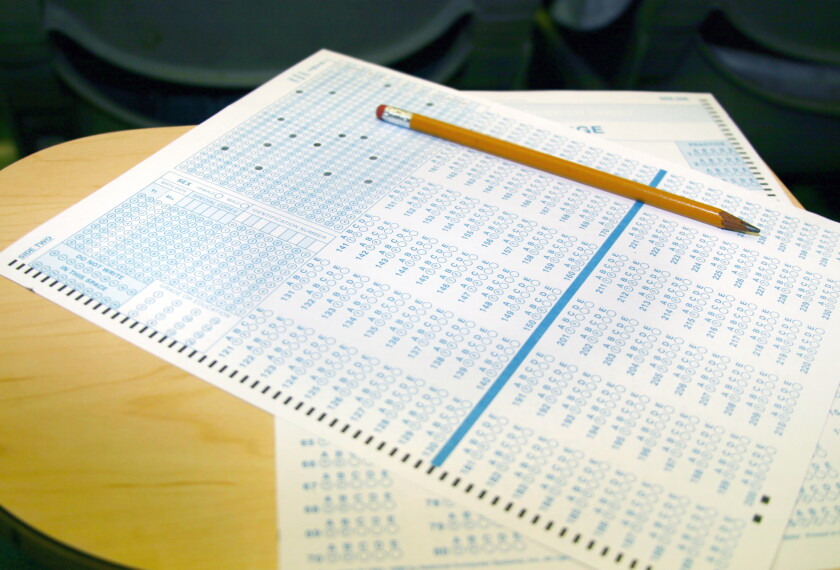
Another way that the NCAA plans to tighten its procedures is by only receiving the ACT or SAT scores of athletes directly from the test agencies. Eligibility requires a minimum score on one of those college-entrance tests. In recent years, the association clearinghouse has accepted handwritten scores from school personnel, Mr. Lennon said.
Mr. Lennon emphasized, however, that admissions offices and accrediting agencies also need to help address bogus high school credentials, a problem that goes beyond eligibility for college athletics. High schools can help by counseling their athletes to avoid shopping among schools as a remedy for poor grades, he said.