A proposed revision of the school accreditation system in Michigan has sparked statewide objections from educators, who fear that schools with good overall records will be tagged with negative labels.
|
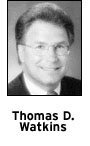
In response, the new state schools superintendent, Thomas D. Watkins, who started his job last month in the midst of the controversy, has pledged to delay release of the accreditation standings until he has heard from state education leaders and others.
An underlying theme of the criticism is that the accreditation plan should not depend so heavily on results from the state’s tests in reading, mathematics, and science.
Rumblings against the proposed system became louder last month when the Detroit News calculated that about 17 percent of the state’s 660 high schools—and 40 percent of those in the Detroit area—would be labeled “not accredited” under the new system.
State education officials cautioned that the newspaper’s projections relied on data that had not been thoroughly checked, but they acknowledged that under the proposed system, around 900 of Michigan’s roughly 2,850 schools would move from “interim” status to “not accredited—interim status.”
At the same time, Deputy Superintendent Michael Roy Williamson pointed out, as many as 1,900 schools would be “accredited” under the proposed system, while last year only 337 schools earned that label.
“The key misinterpretation is that districts will lose accreditation,” Mr. Williamson said. “The vast majority of schools will look better than they looked under the old system.”
Fears of Failure
Critics contend, however, that schools that previously held “interim” status could be said to “lose accreditation” or “fail” if they moved to the “not accredited” list, even though the new rating system also includes the lower category of “unaccredited.”
Schools would be deemed “unaccredited” under the proposed system if fewer than 25 percent of their students passed the Michigan Educational Assessment Program tests in two out of the three subjects.
The proposed system “appears to lump everybody together as failures if they don’t meet the criteria,” said Sharon L. Gire, the vice president of the state board of education, who added that she has been baffled by the system’s complications.
The new accreditation list can be issued with the approval of the state superintendent, according to Mr. Williamson, although not all school board members are sure that is the case. In the meantime, the Michigan Department of Education does not intend to issue a list based on the old criteria.
A particular problem, Ms. Gire said, is that schools would be labeled as “not accredited” if they failed to get at least 80 percent of their students to take the voluntary tests. The required participation rate would rise to 90 percent next year.
Margaret Trimer-Hartley, a spokeswoman for the Michigan Education Association, an affiliate of the National Education Association, said schools are concerned that the labels would be hard to shake, even though new accreditation standings are to be issued each year.
“We have to be very careful with what we put out for public consumption on this report card,” she said.
Ms. Trimer-Hartley argued, moreover, that the premise of the accreditation system is flawed.
“We fear that if we use the MEAP and the state tests alone,” she said, “that is not an accurate picture of where Michigan schools and students are.”
Technically, other factors, such as a school improvement plan, are taken into consideration in determining a school’s accreditation status. But a school cannot win accreditation if it does not meet the testing requirements.
The MEA and three other statewide education groups threatened last month to sue state education officials if the plan went forward.
The groups cited a state law that says accreditation must not be based solely on pupil test performance.
But Ms. Trimer-Hartley said the groups were encouraged by Mr. Watkins’ response and now hope that “a lawsuit will not be necessary.”
Mr. Watkins, for his part, said he would consider changes to the proposed system. “If there’s a better mousetrap that someone’s got to get us [to improve], I’m willing to hear that,” the new schools chief said. But, he added, “lowering the bar is not acceptable.”