Chicago Study: Students Rise to Challenging Assignments: Give students demanding work and they will rise to the challenge. It’s a sentiment that’s almost a given in the nationwide campaign to raise academic standards.
Now a study offers some hard evidence that students indeed produce better work--at least in reading and mathematics--when teachers ask for it. As part of an ongoing study of Chicago schools that won improvement grants from the Annenberg Foundation, researchers from the Consortium on Chicago School Research two years ago began analyzing classroom assignments and student work at 12 elementary schools.
At each school, the investigators asked two teachers each in grades 3, 6, and 8 to provide examples of assignments they had given that they considered to be typical or challenging. The teachers also provided samples of student work, particularly assignments produced in response to the tasks that they considered challenging. In all, the research team collected more than 1,400 pieces of work by the end of the 1996-97 school year.
The investigators also trained teachers from nonparticipating schools to evaluate and score the assignments and work samples by levels of intellectual rigor. To be considered challenging, for example, an assignment had to require students to “construct knowledge’’ by interpreting, analyzing, or synthesizing information and then elaborating on their conclusions. The tasks also had to connect in some way with students’ lives beyond school.
One such task asked 6th graders to write a fable illustrating a moral. The tale also had to use two animal characters and feature dialogue.
For a more typical task, a teacher might model on the blackboard how to diagram sentences and then ask students to diagram five sentences on their own.
|
The scorers also evaluated the student work on a scale similar to the one used for classroom assignments.
The bad news, the researchers concluded after all the samples were analyzed, was that too few of the assignments offered students any degree of challenge. More than 70 percent of the tasks presented students with either “no challenge” or “minimal challenge,” the evaluators concluded.
The good news was that the more challenging assignments tended to result in higher- quality work.
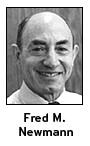
“Even though you might expect that relationship, in Chicago we found that if you compare the lowest-scoring task with the highest-scoring task, you find a difference of something like 50 percentile points,’' said Fred M. Newmann, a professor emeritus of education at the University of Wisconsin-Madison. He conducted the study with consortium researchers Anthony S. Bryk and Gudelia Lopez.
Information on the report, “The Quality of Intellectual Work in Chicago Schools: A Baseline Report,’' is available online at www.consortium- chicago.org/Html_web_store_3.0/Html/intellect_desc.html.
Where Are the Men?: Men are becoming an endangered species on college campuses, according to an Iowa researcher.
Thomas G. Mortenson says women are now graduating from high school, enrolling in college, and earning bachelor’s degrees in greater numbers than their once-dominant male counterparts. The shift is especially troubling, he says, because U.S. Census data show that, in the under- 30 population, males outnumber females.

“If the trend since 1970 continues,” he writes in the August issue of The College Board Review, “the last male to be awarded a bachelor’s degree will receive it in the spring of 2067.’'
Mr. Mortenson is a senior scholar at the Center for the Study of Opportunity in Higher Education, located in Washington, and the longtime publisher of an Iowa City-based higher education newsletter, Postsecondary Education Opportunity. He said he stumbled upon the shifting gender gap in higher education while tracking women’s progress in that world.
But the trend is one with roots that extend far beyond higher education. For example, more boys are growing up in female-headed households where they have no male role models. In K-12 classrooms, more than three-fourths of all teachers are women. Boys lag behind girls on reading tests, and disproportionate numbers of boys end up in special education.

|
After they grow up and graduate, men vote and take part in other civic activities at lower rates than women do. Men’s participation in the labor force, in fact, has been declining since World War II, Mr. Mortenson writes.
“The world is changing in two major ways that work to the disadvantage of males and the advantage of females,’' Mr. Mortenson said in an interview. One change is the shift from a goods- producing economy to a service- and information-based economy that may favor women’s traditional strong points.
The other change is the move toward urbanization--another arena that favors communication skills over physical strength.
“Men are no longer needed for their traditional roles of fighting off the saber-toothed tiger at the cave door,” he said. “The question is: What does education need to do to prepare males for the way the world has evolved?’'
More information on Mr. Mortenson’s research is available at: www.postsecondary.org/guyprob lem.htm.
Vouchers and Equity: Guaranteeing all students an equitable and an adequate education has been a focus of school finance lawsuits throughout the 1990s. Now, an economist and a legal scholar have joined forces to offer an unconventional approach to meeting that challenge. Their solution? Vouchers.
In a new report, Michael Heise, a law professor at Case Western University in Cleveland, and Thomas Nechyba, an associate professor of economics at Duke University in Durham, N.C, suggest that vouchers might level the playing field for schools. The greater choices made available to parents by the publicly funded tuition aid for private schools, they argue, could cause a rise in property values and average incomes in poorer communities and a drop in those figures for wealthier neighborhoods.
“When families purchase or rent houses in high-quality public school districts, they implicitly pay a premium for those schools that the market has integrated into housing prices,’' they write. Vouchers, they argue, could provide families “with opportunities to send their children to better schools without forcing them to pay the high costs of housing associated with living in a good public school district.”
That could allow families to “migrate from high-income, high-quality public school districts to lower-income, voucher districts,’' they say. With higher property values and a smaller school population, the authors reason, the poorer districts might be able to spend more per pupil.
The researchers used a mathematical model to simulate how different types of voucher programs might work in the New York City schools. They estimate that even a voucher as small as $2,500 that is targeted only to students in communities with failing schools could prompt up to 14 percent of children to switch from public to private schools. And that would be enough, they predict, to disrupt property values.
That theory drew sharp criticism, however, from the National Education Association, which opposes vouchers. “If people in wealthy neighborhoods thought vouchers would lower their property values, that would be the end of vouchers,” said Steven K. Wollmer, a spokesmen for the Washington-based teachers’ union. “Poor, inner-city neighborhoods just don’t have the amenities to attract middle-class suburbanites.”
“School Finance Reform: A Case for Vouchers,’' was released last month by the Manhattan Institute, a think tank based in New York City. The full report can be viewed at the institute’s Web site at www.manhattan- institute.org/html/cr_9.htm.
Research vs. Diversity: Can a publicly funded laboratory school select students according to race? A panel of federal circuit court judges answered with a yes earlier this fall.
The judges from the U.S. Court of Appeals for the 9th Circuit ruled that, to carry out a credible research program, a laboratory elementary school run by the University of California, Los Angeles, could assemble a student body that reflects the ethnic diversity of the surrounding area. The September decision grew out of a lawsuit filed by the father of a 3rd grader who was denied admission to the Corinne A. Seeds Elementary School. Keeley Tatsuyo Hunter had identified herself as Caucasian and Japanese on an application form.
Competition for admission to the K-6 school is intense, with 700 students vying for 50 openings each year, according to Deborah Stipek, the school’s director. But, while many university lab schools have evolved into private schools for faculty children, the UCLA elementary school has stuck close to its research orientation.
“The school’s purpose is to develop innovative educational practices that are relevant to urban schools that have ethnically diverse populations,’' said Ms. Stipek, who is also an education professor at the university.
The appellate panel, in its majority opinion, agreed. The judges said the selection procedures benefited the state’s compelling interest in “providing effective education to its diverse, multiethnic, public school population.”
The plaintiffs, however, maintained that the school’s selection practices violated their constitutional right to equal protection of the law. They have vowed to carry their legal battle to a state court, where they will argue that the school’s selection practices violate Proposition 209, the 1996 California law that barred most racial preferences in public agencies and institutions.
--Debra Viadero
INTERESTING IDEAS? Send suggestions for possible research stories to Debra Viadero at Education Week, 6935 Arlington Road, Suite 100, Bethesda, MD 20814; e-mail: dviadero@epe.org
Research coverage is underwritten in part by a grant from the Spencer Foundation.



