Four years ago, the then-International Society for Technology in Education, better known as ISTE, announced a merger with the former Association for Supervision and Curriculum Development, or ASCD, one of the oldest and largest K-12 professional development associations.
Since then, the combined organization—temporarily called ISTE+ASCD—has “co-located” its mega conferences and sought to define its mission as a centralized resource for educators navigating teaching and learning in the digital age.
Its leaders promised to eventually unveil a new, permanent moniker.
At the kickoff of the organization’s ISTELive 26 + ASCD Annual Conference held in Orlando, Fla., between June 28 to July 1, CEO Richard Culatta revealed that ISTE+ASCD will become … ISTE.
The twist: The acronym will now stand for the International Society for Transforming Education.
The new name comes at a moment when schools are grappling with a gamechanging technological twist—generative artificial intelligence—which purports to personalize lessons for struggling students but can also serve as an uncredited ghostwriter for would-be cheaters and opens the doors for massive student-data privacy problems.
We are in a moment where we need to transform learning. We can’t just keep doing the things that we used to do.
It also comes as school districts around the country are rethinking their use of technology in response to clamorous criticism from parents and caregivers, as well as bipartisan political pushback to a perceived increase in student screen time.
Join us at ISTE+ASCD
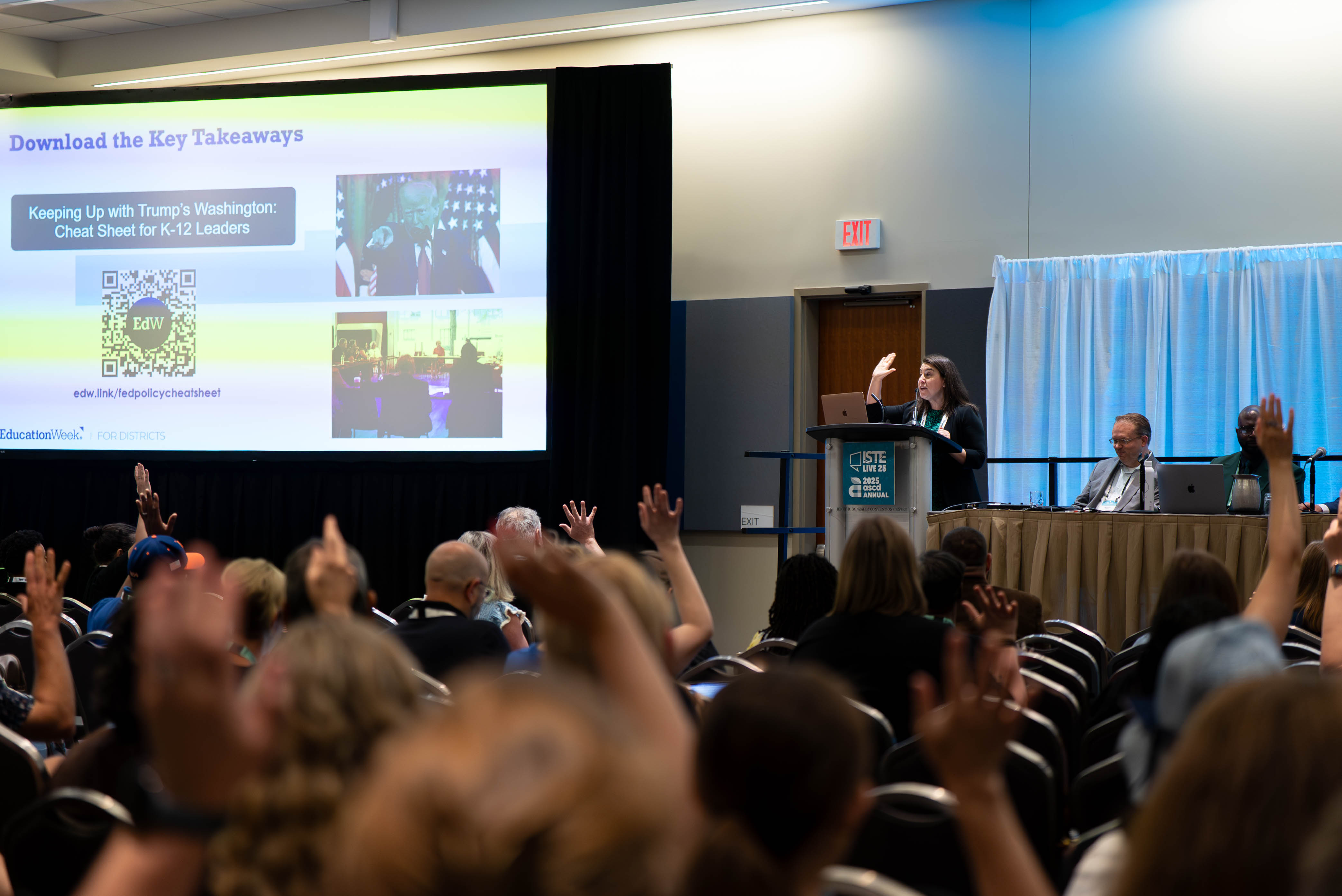
Heading to Orlando for the ISTE/ASCD conference? Be sure to attend The Ed-Tech Backlash Is Here. How Should District Leaders Respond? on Monday, June 29, 1-2 pm ET. Join EdWeek Assistant Editor Alyson Klein, EdWeek Research Center Director Holly Kurtz, and a panel of district leaders to understand what’s fueling the ed-tech pushback, get practical takeaways on how to respond to community concerns about screen time, and more.
Join us >“ISTE was never really about the technology. We were about accelerating innovation,” Culatta said in an interview before the conference. “ASCD was never about supervision and curriculum development. It was about transforming learning through providing good supports to school leaders.
“Both organizations, legacy organizations, had names that were about what they did. We are now shifting to a name that describes why we do it. So that’s the key shift, and I hope I think it will really resonate with people.”
Why add the word transforming?
Culatta explained: “We are in a moment where we need to transform learning.We can’t just keep doing the things that we used to do. We can’t do assessment the way we used to do assessment. We can’t do teaching the way we do teaching. We have to be very thoughtful about pushing the boundaries more. We’re really worried there isn’t enough of a drive to really rethink and reimagine some key parts of learning, and that’s what we do.”
Why the long wait for the big reveal?
“We got some really good advice early on, which was, you don’t make a name and then become what the name is, you become what you want to be, and then you rename” your organization based on that, Culatta said.