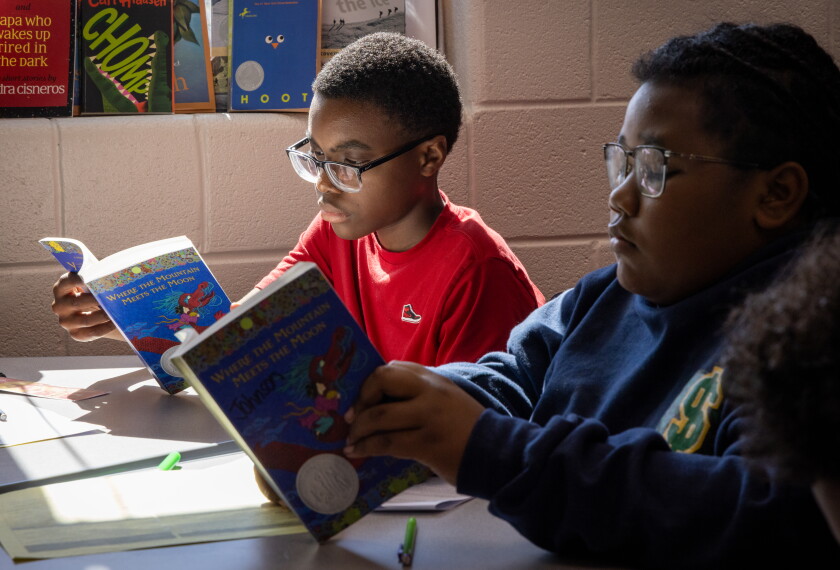
Instead of wringing our hands over dismal reading scores and professors’ complaints that students can’t or won’t read by the time they get to college, we need to do something about the problem. How about getting back to teaching whole books?
Over the past decade, instruction has focused on teaching reading skills with short excerpts. The idea seemed promising. Demonstrate strategies that approximate what proficient readers do on a small piece of text like the ones students meet on an assessment and assume they will emerge competent readers.
As stagnant National Assessment of Educational Progress reading scores demonstrate, the approach hasn’t worked. Why not? Too much practice with strategies and not enough reading. A recent RAND Corp. survey reports that roughly 60% of middle and high school teachers assign three books or fewer in a school year. Three books a year does not a reader make, particularly if those books are classic texts like Julius Caesar or The Scarlet Letter that intimidate many young readers.
The most alarming finding in the study is that teachers in schools serving large populations of students from low-income families are less likely to assign whole books than those who work in more affluent communities. Scandalous.
It’s time to bring back books, but we also need to rethink what it means to teach a work of literature. No more spending eight weeks of class on a single novel; no more reading the whole book aloud to 10th graders. We need fewer quizzes and maybe even less annotating.
Instead teachers and school leaders can:
- Make time and space inside the school day for reading. This might require scheduling extended time in English/language arts classes.
- Provide easy access to a wide range of books and encourage reading beyond the school day. Invest in classroom libraries full of contemporary titles. Invite students to take books home over school breaks.
- Allow for student choice in what they read (and show them how to choose). Talk with students about how they can select a book to read. Is it an author they liked, a genre they enjoy, a compelling cover?
- Articulate to students what the classics have to teach us. Draw connections between the themes in the books we teach and the issues students care about—for example, how we all have great expectations like Charles Dickens’ Pip or how we are all on a journey to self-discovery like Odysseus.
- Talk about the books you are reading. Students need to hear teachers, administrators, and librarians talk about how they select, and sometimes reject, their next book.
- Make classwide conversations about books a daily occurrence. Explore how to make literature circles and Socratic seminars successful classroom routines.
- Help students set their own reading goals. Invite students to keep a list of books they have read along with a list of books that they look forward to reading.
- Create a summer reading program that students want to participate in. Include students on the committee that designs the program. When students take part in decisionmaking, they become invested in its success.
I would be a fool to pretend that turning the page on how we grow readers will be easy. But excuses like identifying students as “pandemic babies” or blaming social media are just that, excuses for inaction. After 30-plus years teaching English in middle and high school, I can say with confidence that there have never been any good old days when students all brought their books to class having done the homework reading. Disaffection for schoolwork is not new.
What is new is the cognitive impatience that so many young people exhibit. Hours scrolling—skimming and scanning—on a cellphone has atrophied the reading muscles. Rather than giving in to a gamification of curriculum, we need to dig in and show students how persevering through a whole book can help build their stamina for thinking through complex arguments. Books teach readers to suspend judgment and wait for further developments. They are unique vehicles for exploring what has been, what is, and what could be.
Like Herman Melville’s Bartleby the scrivener, far too many students today would simply prefer not to read. We need to be the adults who know better. Together, teachers, administrators, and policymakers can make schools intellectually stimulating environments where every child feels that they belong.