
Schools would continue to be reimbursed for Medicaid services, and many would receive payments for diminished timber revenues, under a supplemental-spending bill approved by the Senate.
The $212 billion measure, which was primarily to provide additional funding for the wars in Iraq and Afghanistan, passed May 22 on a vote of 75-22. It would also offer generous college-access benefits to veterans of the two wars. The House a week earlier approved its own fiscal 2008 supplemental-spending measure, which included the veterans’ and Medicaid provisions. (“Spending Bills Would Permit Medicaid Reimbursements,” May 21, 2008.)
The Senate bill would provide a one-year extension of the Secure Rural Schools and Community Self-Determination Act of 2000, a program that gives federal aid to make up for diminished timber revenues in counties that are home to national forests, at a cost of about $400 million.
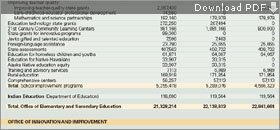
Selected programs in the Department of Education and other agencies
The House did not include the war funding in its bill, but it is expected to approve such spending when the chamber reconsiders the bill, likely early this month. The future of the rural schools program is less clear.
The White House has threatened a presidential veto of both the House and Senate supplemental-spending bills, in part because they contain “excessive domestic spending,” according to a statement released May 20 by the Office of Management and Budget.
Both the House and Senate measures include a new “GI Bill,” offering beefed-up education benefits for veterans who have served on active duty for three to 36 months since the Sept. 11, 2001, terrorist attacks. Benefits would be linked to the amount of time served.
The bill would cover veterans’ tuition payments, up to the cost of the most expensive public college in a veteran’s state, plus a monthly stipend, based on the cost of living in his or her area. And it would offer incentives to help more-expensive private colleges make up the cost difference, by matching scholarships offered by those institutions. The program would cost about $52 billion over 10 years.
McCain Alternative
During the floor debate, Sen. Jim Webb, D-Va., who championed the program along with Sen. John W. Warner, R-Va., addressed critics who say it would be too expensive.
“This is a bill that closely resembles the benefits that we gave to our returning veterans in World War II—a series of educational benefits which leveled the playing field in America and allowed those who served a first-class opportunity to move into the future,” Sen. Webb said on May 20. “We owe these young men and women who have been serving since 9/11 no less. We owe them no less. This is emphatically a cost of war.”
The House measure includes similar language, but also would add a funding mechanism—a tax on individuals making more than $500,000 a year, or $1 million for couples. The language was added to gain the support of conservative Democrats. The Senate measure does not include a similar tax hike.
Some GOP senators opposed the bill, saying they worried it could make it harder to retain members of the armed forces. Sen. John McCain of Arizona, the presumptive Republican presidential nominee, along with Sens. Richard M. Burr of North Carolina and Lindsey Graham of South Carolina, introduced an alternative bill that would have increased veterans’ education benefits from $1,100 to $1,500 a month. Those who served for more than 12 months would be eligible for education benefits of up to $2,000 a month.
“Men and women who have served their country deserve the best education benefits we are able to give them,” Sen. McCain said in a statement. The McCain language was never voted on.
Medicaid Reimbursement
And under the Senate and House bills, the federal government would have to continue reimbursing schools for administrative and most student-transportation costs covered by Medicaid until at least next spring, despite a Bush administration directive that sought to halt the practice.
In December, the Centers for Medicare and Medicaid Services, an arm of the Department of Health and Human Services, issued a final rule that sought to eliminate the reimbursements that school districts receive for certain administrative and transportation expenses from the Medicaid program. Districts receive such payments to cover the cost of transporting some students in special education, for instance. (“U.S. to Trim School Medicaid Payments After Freeze,” Jan. 9, 2008.)
But, also in December, Congress approved legislation that keeps any school-related changes to Medicaid from taking effect until July 1. The spending bills would extend the moratorium on changes to the school reimbursements until April 1 of next year.
By that point, lawmakers who support the moratorium hope they can negotiate potential changes with the next administration—or just leave the reimbursement program in place, lobbyists said.


