Education Funding

Session Over, Not Feuding, as S.C. Debates Funding

By Michele McNeil — June 09, 2009 1 min read
  • Save to favorites
  • Print

The following offers highlights of the recent legislative sessions. Precollegiate enrollment figures are based on fall 2008 data reported by state officials for public elementary and secondary schools. The figures for precollegiate education spending do not include federal flow-through funds, unless noted.

The fallout from the 2009 legislative session continues in state court, as Gov. Sanford and lawmakers battle over whether South Carolina will accept $700 million in federal stimulus money that would help pay teachers’ salaries and fund public safety.
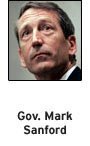
Gov. Jim Douglas
Republican
Senate:
19 Democrats
27 Republicans
House:
53 Democrats
71 Republicans
Enrollment:
668,700

Gov. Sanford does not want to accept the money from the State Fiscal Stabilization Fund, created under the American Recovery and Reinvestment Act, because he argues it’s one-time money that would contribute to long-term financial problems for the state. He tried, unsuccessfully, to get the Obama administration to let him use the money to pay off state debt instead. What’s more, Gov. Sanford argues that governors, by law, are the ones who must apply for the stabilization aid, so it’s ultimately his decision.

But the legislature, through its budget-making authority, wants to use the money to help balance the state budget, which stands at $5.7 billion for fiscal 2010 after lawmakers made $1 billion in cuts over the last several months. Gov. Sanford vetoed the stimulus-involved parts of the budget, but the legislature overturned the veto. The crux of the issue is whether the legislature can force the governor to accept the federal economic aid.

At stake for K-12 schools is about $185 million in stimulus dollars, with another $100 million for higher education. Even with the stimulus aid, spending on K-12 education would be $2.2 billion—a cut of about 8 percent—from last year’s $2.4 billion appropriation.

Related Tags:

A version of this article appeared in the June 10, 2009 edition of Education Week

Events

Jobs Regional K-12 Virtual Career Fair: DMV
Find teaching jobs and K-12 education jubs at the EdWeek Top School Jobs virtual career fair.
This content is provided by our sponsor. It is not written by and does not necessarily reflect the views of Education Week's editorial staff.
Sponsor
College & Workforce Readiness Webinar
Blueprints for the Future: Engineering Classrooms That Prepare Students for Careers
Explore how to build career-ready engineering programs in your high school with hands-on, real-world learning strategies.
Content provided by Project Lead The Way
This content is provided by our sponsor. It is not written by and does not necessarily reflect the views of Education Week's editorial staff.
Sponsor
School Climate & Safety Webinar
Cardiac Emergency Response Plans: What Schools Need Now
Sudden cardiac arrest can happen at school. Learn why CERPs matter, what’srequired, and how districts can prepare to save lives.
Content provided by American Heart Association

EdWeek Top School Jobs

Teacher Jobs
Search over ten thousand teaching jobs nationwide — elementary, middle, high school and more.
View Jobs
Principal Jobs
Find hundreds of jobs for principals, assistant principals, and other school leadership roles.
View Jobs
Administrator Jobs
Over a thousand district-level jobs: superintendents, directors, more.
View Jobs
Support Staff Jobs
Search thousands of jobs, from paraprofessionals to counselors and more.
View Jobs

Read Next

Education Funding A School Wants a Tornado Shelter. A Federal Grant Keeps Getting in the Way
The district still can't spend a FEMA grant it was originally awarded in 2022.
9 min read
FemaGrant Maiorella 02
A new gym under construction in Wisconsin's Cuba City school district, pictured April 16, 2026, would have also served as a tornado shelter, thanks to an $8.8 million FEMA grant. But nearly four years after it was awarded the grant, the district still doesn't have the money.
Arthur Maiorella for Education Week
Education Funding Trump Sidestepped Congress on More Than $1 Billion in Ed. Spending Last Year
Newly published documents show how the Ed. Dept. departed from Congress' plans.
13 min read
The likeness of George Washington is seen on a U.S. one dollar bill, March 13, 2023, in Marple Township, Pa. The nonpartisan Congressional Budget Office says it expects the federal government will be awash in debt over the next 30 years.
Newly published budget documents show the U.S. Department of Education, in the first year of President Donald Trump's second term, took roughly $1 billion Congress appropriated for specific education programs and spent it differently than how lawmakers intended—or didn't spend it all.
Matt Slocum/AP
Education Funding Federal Funds for Schools Will Still Flow Through Ed. Dept. System—For Now
The Trump administration has been touting its transfer of K-12 programs to the Labor Department.
5 min read
Remaining letters on the Department of Education on Wednesday, March 18, 2026, in Washington.
Remaining letters on the U.S. Department of Education building in Washington on Wednesday, March 18, 2026. Despite the agency's efforts to shift management of many of its programs to the U.S. Department of Labor, key K-12 funds will continue to flow through the Education Department's grants system this summer.
Allison Robbert/AP
Education Funding Trump's Budget Proposes Billions in K-12 Cuts. Will They Happen?
Trump is proposing level funding for Title I, a modest boost for special education, and major cuts elsewhere.
6 min read
A third-grade teacher at the Mountain View Elementary School's Global Immersion Academy in Morganton, N.C. works with her students in the Spanish portion of the program. With the inaugural class of the Global Immersion Academy (GIA) at at the school entering fourth grade this year, Burke County Public Schools is seeing more signs of success for its dual language program.
A teacher in a North Carolina dual-language program works with her students. In his latest budget proposal, President Donald Trump once again proposes to eliminate the $890 million fund that pays for supplemental services for English learners. Schools can use Title III funds for costs tied to dual-language programs that educate English learners.
Jason Koon/The News-Herald via AP
