—Bob Soule´
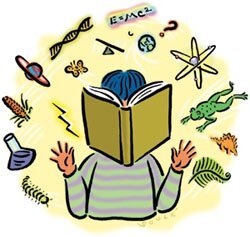
In his January State of the Union Address, President Bush put math and science at the forefront of America’s education agenda. This coincides with the federal No Child Left Behind Act’s requirement that every state begin testing children in science, starting with the 2007-08 school year. Even without that federal mandate, the inclusion of science in the test-and-accountability system would be inevitable.
For decades, civic, business, and scientific leaders across party lines have decried the science education crisis, blaming it for weakening our national security and spurring the loss of American jobs to overseas competitors (most recently, China and India). Three pragmatic questions are left unanswered in the knee-jerk responses to this perceived crisis: What science are we teaching, how should we test it, and when is science education ever good enough?
The science we are supposed to teach is codified in the lengthy documents that make up each state’s science standards. However, in late 2005, the Thomas B. Fordham Institute issued its “State of State Science Standards” report, giving nearly two-thirds of the states a grade of C or below for their science standards. The main criticisms included unusable documents, unrealistic coverage, unscientific content, and confusing teaching recommendations. One need not agree with this particular report. But no studies of states’ science standards, regardless of the reviewers’ perspectives, have ever given a majority of the states A grades. Shouldn’t the standards themselves be held accountable before we attempt to develop accountability systems based on them?
Before we declare two-thirds of our children to be failing in science, maybe we should establish a realistic baseline by administering NAEP test items to today’s educated and productive adults.
Even assuming that states make serious efforts to fix science standards before 2007, we still have to design valid science tests to go with the standards. There are many technical issues at play in test design, but one challenge is more obvious and critical than all others: how to create a science test that is not, in essence, a reading exam with a new name. Unlike mathematics, which has its own universal language of symbols and numbers, most science subjects rely heavily on verbose descriptions and specialized vocabulary. To address this issue, psychologists who study children’s scientific reasoning, like myself, have made accommodations—by reading instructions aloud to children, giving them objects to manipulate, and asking them to explain their answers verbally or pictorially.
These techniques are not new, but they are much too expensive to administer to every child in every state. Without them, however, the high proportions of schools and students that have already failed on reading tests have little chance of succeeding on science tests. Why waste money testing science if the test merely reaffirms failing scores in reading?
The urgency for science tests is bolstered by the National Assessment of Educational Progress, often called “the nation’s report card.” NAEP science tests have consistently concluded that fewer than one-third of our 4th, 8th, and 12th graders were “proficient” in science. Yet before we readily accept and lament our science-achievement woes, we need to ask what proficiency is. Should 8th graders know some, or all, of the periodic table? Some, or all, of the planets in the solar system? Some, or all, of the kingdoms, phyla, classes, and orders of the classification system? The “mile-wide, inch-deep” curriculum in K-12 education has been decried for decades, yet every subset of scientists remains adamant that its topic be included in a nontrivial way in the curriculum, thereby creating a “mile-wide and mile-deep” science expectation. More science content seems like better science for the committees of business leaders, professional scientists, and science educators—those who set the standards and the test-proficiency bars.
This is folly. In science, as in many other areas of education, we must distinguish between what we want and what we need. I may want a supersize, all-terrain SUV, but I only need a compact car to take my daughter to preschool and myself to work. Likewise, the “Hummer” science curriculum we want for K-12 education includes much more content knowledge than most educated and productive Americans can recall. The 1996 NAEP, for example, asked 8th graders to identify the two most common elements in Earth’s crust. I gave that same question to a nonrandom sample of science and engineering majors at Carnegie Mellon University (one of the world’s best science and engineering universities), and they did not know the answer. Before we declare two-thirds of our children to be failing in science, maybe we should establish a realistic baseline by administering NAEP test items to today’s educated and productive adults.
For our country as a whole, and a citizenry consisting mainly of people who are not professional scientists, we need to balance our appetite for more science with other competing education priorities. We can set a more realistic expectation by examining our science achievement in an international context, through studies like the Trends in International Mathematics and Science Study, or TIMSS. As with the NAEP tests, TIMSS results are often interpreted as alarming and dismal evidence of our inadequate science education, particularly when compared against Asian competitors’ like Japan and South Korea. We neglect to consider that the average scores of our white students were at par with the averages of the homogeneous Asian countries, and that American students attending relatively affluent schools (with fewer than a quarter of students eligible for free or reduced-price lunches) outperformed Japanese students attending comparable schools there. Based on TIMSS results, the science gaps between races and economic classes within America are three times the gap between U.S. and Japanese students.
For our country as a whole we need to balance our appetite for more science with other competing education priorities.
If we truly want knowledge of science for all Americans, we should be worrying more about closing the scoring gaps within America than the one overseas. If our domestic science gaps closed today, our science scores would easily surge ahead of our Asian competitors’. Treating science education as a nationwide pandemic misplaces our priorities and resources, by both failing to recognize the world-class science education we are already providing and shifting the focus away from the urgent need to better serve minority children and children of all races attending less-affluent schools.
Science testing can be a part of the right solution to improve our nation’s science education, but it is being rushed into our schools in an indiscriminate fashion and on a timeline detached from the realities in America’s education system. There are unexamined but critical gaps in research, practice, and public debate about what the goals, tests, and success criteria should be for our children’s science education. There is a tendency to treat all science-test news as bad news, without recognizing our successes to better focus on our remaining challenges.
Under these conditions, haste in science testing makes waste. Holding off the nationwide science tests for just a year or two could redirect a tremendous amount of federal, state, and local resources to the task of seeking the right solutions for the right students at the right time.


