Recently, Sharon Davison, kindergarten teacher at Allen Brook School in Williston, Vermont, traveled to Peru with a group of 30 American public school educators through the NEA Foundation’s Global Learning Fellowship. They visited museums, markets, and ancient Inca sites, but more importantly, they had the opportunity to engage in deep dialogue with Peruvian educators and students and broaden their perceptions of the world. She shares what she learned below.
By guest blogger Sharon Davison
“I think you travel to search and you come back home to find yourself there.”
― Chimamanda Ngozi Adichie
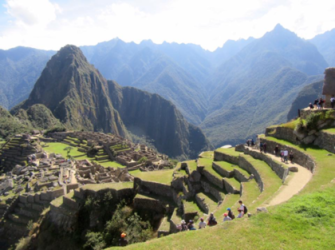
We’ve reached the Machu Picchu ridge, our guide says, so now we can take off our blindfolds. I blink in the sunlight as I tug the cloth away from my eyes. Then my gaze falls on the vista before me and I forget the sun, the hike, the long days of travel and thin mountain air. I even, for a moment, forget how to breathe.
My Global Learning Fellowship began with a year of global lesson planning and thinking about how to engage my kindergarten students’ curiosity about the world. In my classroom, I have always worked to use technology—Skype, Twitter, Kidblog, and much more—to share my students’ ideas and make connections with others around the world. Interacting with my fellow educators from around the U.S. helped me think about global learning from the perspectives of teachers of different grades and schools, and by summer, I was bursting with excitement as well as nerves for all that I would learn and share with my colleagues in Peru, in my first trip out of the US.
Despite my trepidation, I knew as soon as I got off the plane in Lima that this would be an amazing experience. In addition to experiencing a new place and a new culture and leaving my comfort zone, the conversations that surrounded me were full of the rich words of not only the Spanish language, but also of the native Quechua and Aymara.
Connecting as Educators
During our trip, we had the opportunity to visit local schools, including Lima’s Colegio Mayor Secundario Presidente del Peru and a village school located on the outskirts of Cusco. From these school visits, we learned that many of the concerns that we have in the U.S. are similar to those of Peruvian educators. We’re both concerned about having enough teachers in the right places to help students achieve. As I learned from the teachers I spoke with, schools in the poor, rural areas of Peru struggle to find teachers, while wealthier schools attract many applicants, similar to the situation here.
We also see the need to consider each student as whole and individual, but face restrictions from the systems in which we work. Peru has a national curriculum that educators must use for student learning plans, while I myself have struggled to balance personalizing instruction with maintaining mandated standards. But each day, we give our very best to our students no matter what limitations we contend with behind the scenes.

Even through our limited Spanish and difficulties in communicating with the teachers we met, we managed to find connection in our identity as educators. Body language and voice inflection reminded us of our calling and that teaching isn’t what we do, it’s who we are. Joy and purpose are a universal language.
While we shared common concerns about resources and materials, the struggles of the schools in the rural Peruvian villages were on a different scale than those I’m used to in Vermont—they work with students whose engagement with school revolves around the crop calendar and in schools that lack basic supplies.
It’s customary for guests to bring a gift for their hosts. And from a group of educators, what better gift than books? After learning that many classrooms didn’t have enough books for all their students to enjoy, we decided to raise money to bring hundreds of books to share the joy of reading with the Peruvian students.
Applying Lessons Learned
Now, halfway through the school year, I’m continuing to think about:
- Privilege: Being a teacher is a privilege and an honor. Teaching is about offering hope all day long and being available to encourage, create, and design learning opportunities that have an impact. It is also about creating a global learning culture where all learners can connect, take risks, and share their voices.
- Relationships: Relationships matter. The schools we visited had strong connections with their students and their families. The school was not an isolated institution but an extension of the greater community.
- Conversations: Conversations allow us to share voices and celebrate diverse ideas. I believe in connecting globally because we have so much to learn from each other. I constantly seek ways to change the dynamic in my kindergarten classroom to ensure that I am not dominating the discussion and that my students have the opportunity to analyze, synthesize, evaluate, and think critically.
While in Peru, I met amazing people who were passionate about their culture, their country, and their future. I learned that whatever our differences, we have the same goal: providing an excellent education for all children. I continue to think about what it truly means to be a globally competent teacher, and how that informs my curriculum and instruction.
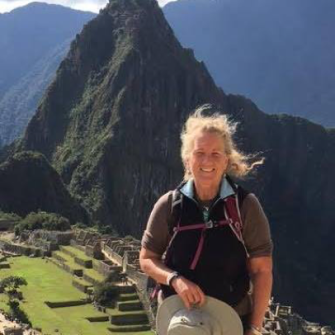
Removing that blindfold at Machu Picchu opened my eyes to an awe-inspiring view. This experience, as a whole, removed another blindfold and allowed me to know what it is to see the world from a new perspective. Even after more than 30 years in the classroom, years devoted to teaching students to think globally, I can truly say that my first international travel experience changed my life.
I stand on that ridge in the Andes and look out over the incredible beauty before me. Now, I truly and deeply understand, for the first time, why we travel. In this moment, the lesson plans, the discussions, the school visits, crystallize into amazement at all the world has to offer. Tears of wonder stream down my cheeks, and I know I’ll remember this moment, this trip, this program, for the rest of my life.
I’m so grateful to be able to share this sense of wonder with my kindergarten students as they learn how vast and amazing the world we live in is. There are many opportunities for educators to venture out of their classrooms and explore the world. If you want to embark on a similar professional development journey, I highly recommend the NEA Foundation’s Global Learning Fellowship—accepting applications now through February 28th.
Connect with Sharon, Heather, the NEA Foundation, and the Center for Global Education on Twitter.
Images courtesy of the author.


