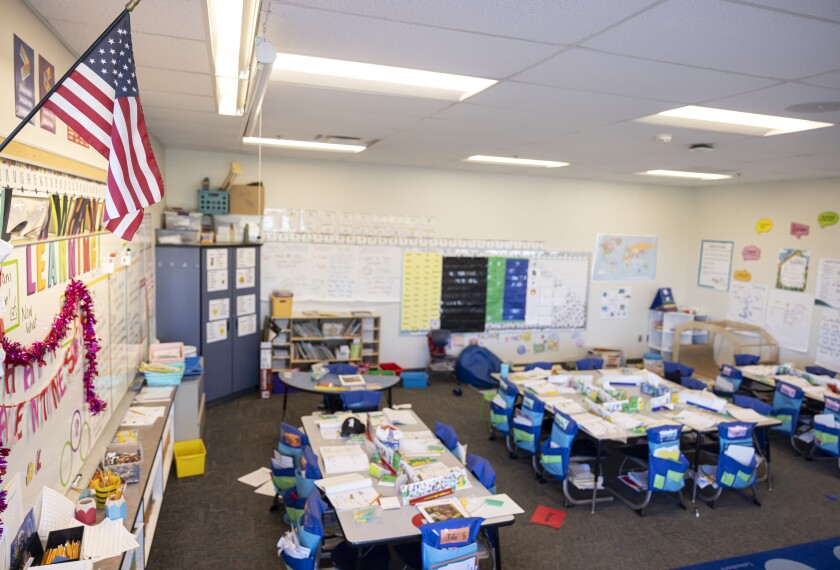
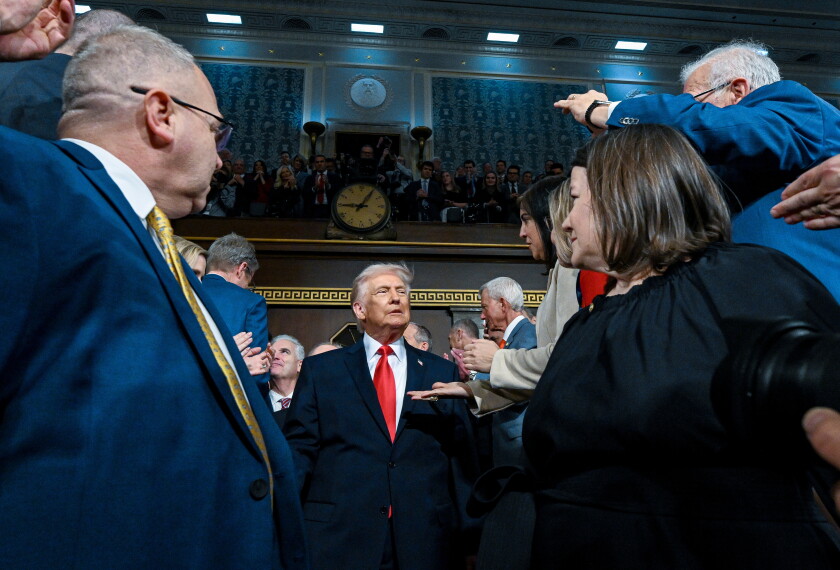
As students stream back into classrooms, Congress, too, is returning to work after spending most of August on its version of summer break.
Both the House and the Senate reconvened late last week to take up emergency funding for the aftermath of Hurricane Katrina. Starting this week, lawmakers face a busy legislative calendar that includes such pending education issues as the reauthorization of the Higher Education Act and the Head Start preschool program.
As federal lawmakers return from their summer recess, they are expected to continue work on the reauthorizations of three major education programs.
Higher Education Act
The House Education and the Workforce Committee passed its version of the bill to reauthorize federal higher education programs in July. The House bill would authorize an increase in the maximum Pell Grant from $5,800 to $6,000, and would authorize a $100 million Teacher Incentive Fund. The bill is expected to come before the Senate Health, Education, Labor, and Pensions Committee within the first few weeks of Congress’ return.
Head Start
Both the House and Senate education committees passed legislation in May to reauthorize the $6.7 billion Head Start program, which serves disadvantaged preschool children. While the two bills currently don’t appear to be too far apart, new language likely to be inserted in the House bill on the floor regarding discrimination in hiring based on religion could cause a rift.
Vocational Education
The House voted 416-9 in May to reauthorize the Carl D. Perkins Vocational and Technical Education Act. The Senate passed a similar bill 99-0 in March. Conferees have not yet been named to a committee that will be charged with ironing out the differences between the two versions of the bill.
SOURCE: Education Week
Lawmakers will also be grappling with the fiscal 2006 federal education budget, which has yet to make its way to the floor on either side of the Capitol. Meanwhile, it looks unlikely that President Bush’s initiative to expand the No Child Left Behind Act’s accountability measures at the high school level will generate any momentum in Congress.
Exactly when key education bills will make it through the legislative process is by no means predictable, said Vic Klatt, an education lobbyist at Van Scoyoc Associates in Washington.
“It’s very much an open question how all this gets done,” he said.
On July 27, just before leaving for the summer recess, the House Education and the Workforce Committee approved a revision of the Higher Education Act on a party-line vote of 27-20. Deliberations on the bill included two days of bitter wrangling over federal student-loan programs. Democrats blasted the bill, saying it would force the single largest cut ever in such loan programs. Republicans maintained that the GOP bill was bringing common-sense budgeting back to the table.
The bill would allow teachers and principals to get cash rewards for improved student performance, historically minority-serving colleges to receive federal grants for teacher-training programs, increase the maximum authorized Pell Grant award from $5,800 to $6,000, and close a loophole that provides subsidies to lenders participating in federal student-aid programs.
The Senate Health, Education, Labor, and Pensions Committee plans to take up its version of the bill within the first two weeks of Congress’ return, said Jeff Simering, the legislative director for the Council of the Great City Schools, a Washington-based group that represents 65 of the country’s largest urban school districts.
Meanwhile, both the House and Senate education committees have approved bills reauthorizing Head Start, the $6.7 billion program to help prepare disadvantaged children for kindergarten.
Rep. John A. Boehner, R-Ohio, the chairman of the House education committee, has pledged to insert language in the Head Start reauthorization on the House floor that may derail the process of working out the differences between final versions of a House and Senate bill. In May, Rep. Boehner said he would add language to allow faith-based groups that operate local Head Start programs to make hiring decisions based on religion, a divisive proposal that has both House and Senate Democrats fuming.
“The differences are not that dramatic between the House and the Senate” on Head Start, said Mr. Klatt, a former aide to House Republicans on education. The faith-based-hiring language “will make the debate a bit more contentious,” he said, “but at the end of the day, Chairman Boehner has shown he can get things done.”
Bush Plan Languishes
In a Democratic radio address on Aug. 27, Sen. Edward M. Kennedy of Massachusetts, the ranking Democrat on the Senate education committee, stressed the importance of passing measures to expand Head Start and make college more affordable through the reauthorized HEA.
“We want to transform American education to provide our citizens with the skills they need to compete and win the good jobs of the future,” he said.
Work is also likely to begin soon to reconcile differences between the House- and Senate-passed versions of the Carl D. Perkins Vocational and Technical Education Act. By moving forward on the reauthorization of the vocational education law, Congress has essentially rejected President Bush’s proposal to eliminate the federal vocational education program by shifting the $1.3 billion now spent on it to his $1.5 billion High School Initiative. That plan calls for expanded testing in 9th, 10th and 11th grades and a new high school intervention fund.
Budget Awaits
But the high school plan got little more than a hearing or two on Capitol Hill this year, and the White House has not spent much political capital to push the initiative in recent months.
“I don’t think there’s any real conversation about that,” Mr. Simering said.
Read the related story,
However, Secretary of Education Margaret Spellings again called attention to the initiative on Aug. 30, following the release of SAT scores for the high school class of 2005.
“The lesson is that the No Child Left Behind Act is working in the earlier grades. … It’s time to bring those principles to our nation’s high schools,” she said in a statement.
Meanwhile, the Department of Education awaits Congress’ word on what its budget will be. The new fiscal year begins Oct. 1.
Over the summer, both the House and Senate education committees approved separate bills that would each appropriate $56.7 billion in discretionary spending for the department—a 0.25 percent increase over last year—though the money would be parceled out in different ways.
Both bills would provide only minimal increases for the department’s two largest precollegiate programs: the Title I program for disadvantaged students and special education.