States

Contracts Heighten Chiefs’ Accountability

By Jessica L. Sandham — May 12, 1999 2 min read
  • Save to favorites
  • Print

In the midst of a school reform movement that is demanding results of its students, teachers, and principals, two recently appointed state schools chiefs are learning that accountability applies even to those at the top.

Glenn W.

Ohio Superintendent of Public Instruction Susan Tave Zelman and Illinois state Superintendent Glenn W. “Max” McGee--both hired within the past year--are working under performance-based contracts that demand progress in exchange for, respectively, salary bonuses and job renewal.

Performance-based contracts “are a must” when local superintendents and principals are responsible for student performance, said Louis Mervis, the chairman of the Illinois board of education. “We’ve got to make everybody in the food chain responsible for their section.”

State superintendents in 14 states are held directly accountable to the public because they are popularly elected, and the chiefs in 10 states are appointed and held accountable by governors.
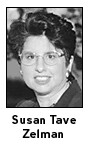
Susan Tave Zelman

But for the schools chiefs in the 26 states that are appointed by state boards of education, performance-based contracts seem a natural fit, said Gordon M. Ambach, the executive director of the Washington-based Council of Chief State School Officers.

“I expect we’ll see more of it,” Mr. Ambach said.

Clear Expectations

In Illinois last October, state board members agreed on a three-year contract that is renewable only if Mr. McGee meets certain criteria, including making continuous improvement in student performance statewide, providing solid service to districts, and working with schools of education to improve teacher training.

Unlike contracts with past state superintendents, the board’s expectations for Mr. McGee are written into the contract and are not negotiable at the end of one year, Mr. Mervis said. When salary and retirement benefits are combined, Mr. McGee--who started his new job in January--will receive $205,000 a year over three years. (“Ill. Board Names McGee State Schools Chief,” Nov. 4, 1998.)

With former Superintendent Joseph A. Spagnolo Jr., who resigned from office last summer amid a swirl of controversy, “we had a superintendent that didn’t meet our expectations,” Mr. Mervis said. “You can’t ask specific districts to perform and not hold your own person accountable. Otherwise, you give everybody an out.”

For Ms. Zelman, who started her tenure as the state superintendent in Ohio in March, the decision to include a performance-based provision in her contract was her own.

Before she left her previous position as deputy schools chief in Missouri, Ms. Zelman said she was trying to get performance-based contracts in place.

Now, in Ohio, Ms. Zelman’s contract guarantees her a base salary of $135,000, with a $15,000 bonus contingent on her ability to meet specified goals, including building solid relationships with lawmakers and the business community and establishing a long-term plan for the education department and long-term goals for Ohio schools.

“Ultimately, if they keep me around for a while, I can affect student performance,” Ms. Zelman said. “It’s important for a state superintendent to walk the talk.”

Related Tags:

A version of this article appeared in the May 12, 1999 edition of Education Week as Contracts Heighten Chiefs’ Accountability

Events

This content is provided by our sponsor. It is not written by and does not necessarily reflect the views of Education Week's editorial staff.
Sponsor
Artificial Intelligence Webinar
Managing AI in Schools: Practical Strategies for Districts
How should districts govern AI in schools? Learn practical strategies for policies, safety, transparency, as well as responsible adoption.
Content provided by Lightspeed Systems
This content is provided by our sponsor. It is not written by and does not necessarily reflect the views of Education Week's editorial staff.
Sponsor
Reading & Literacy Webinar
Unlocking Success for Struggling Adolescent Readers
The Science of Reading transformed K-3 literacy. Now it's time to extend that focus to students in grades 6 through 12.
Content provided by STARI
Jobs Virtual Career Fair for Teachers and K-12 Staff
Find teaching jobs and K-12 education jubs at the EdWeek Top School Jobs virtual career fair.

EdWeek Top School Jobs

Teacher Jobs
Search over ten thousand teaching jobs nationwide — elementary, middle, high school and more.
View Jobs
Principal Jobs
Find hundreds of jobs for principals, assistant principals, and other school leadership roles.
View Jobs
Administrator Jobs
Over a thousand district-level jobs: superintendents, directors, more.
View Jobs
Support Staff Jobs
Search thousands of jobs, from paraprofessionals to counselors and more.
View Jobs

Read Next

States A State Gets Closer to Challenging Undocumented Students' Free Access to School
Lawmakers are debating legislation that would require schools to collect immigration information.
4 min read
Bryan Najera holds a sign during a House Education K-12 subcommittee meeting Tuesday, March 11, 2025, in Nashville, Tenn.
Bryan Najera holds a sign during a House Education K-12 subcommittee meeting Tuesday, March 11, 2025, in Nashville, Tenn. Tennessee lawmakers are debating amended legislation, originally introduced last year, to collect students' immigration information.
George Walker IV/AP
States Q&A This State Stepped In When the Feds Stopped Honoring Schools' Environmental Work
The Trump administration last year ended the Green Ribbon Schools recognition program.
4 min read
West De Pere High School is committed to sustainability and environmental stewardship, focusing on reducing greenhouse gas emissions and enhancing environmental literacy through facility upgrades such as LED lighting, motion sensors and advanced HVAC systems. To further explore energy, students have opportunities to explore alternative energy, including participation in the annual Wisconsin Public Service Solar Olympics Challenge. Going the extra mile, West De Pere hosts recycling drives that successfully collected 117 pounds of batteries and Christmas lights last year alone. The school's physical education program fosters a deep appreciation for the natural world, offering diverse activities like biking, fishing, and archery that emphasize physical health and lifelong skills. Additionally, West De Pere's involvement in the Farm to Table program highlights the importance of local produce, complemented by a school greenhouse that enhances hands-on learning. Through these initiatives, West De Pere High School is empowering students to become proactive stewards of the environment and advocates for sustainability in their communities.
West De Pere High School in De Pere, Wis., was a 2025 honoree in the state's Green and Healthy Schools Wisconsin program. The state expanded that recognition program honoring schools' sustainability work after the U.S. Department of Education ended its Green Ribbon Schools program last year.
Courtesy of Wisconsin Department of Natural Resources
States What Happens to Students Who Join the Military? A New Effort Aims to Find Out
A pilot will allow states to use Pentagon data to track students from the classroom to the military.
3 min read
New military recruits take the Oath of Office during a swearing in ceremony at a Salute to Service event at an NFL football game between the Jacksonville Jaguars and the Minnesota Vikings, Sunday, Nov. 10, 2024, in Jacksonville.
New military recruits take the Oath of Office during a swearing-in ceremony on Nov. 10, 2024, in Jacksonville, Fla. States' education plans call for tracking students paths from the classroom to college, career, or the military, but they've struggled to access enlistment data from the U.S. Department of Defense. Through a new agreement, five states will pilot a data-sharing process with the Pentagon with hopes to expand to additional states.
Phelan M. Ebenhack/AP
States Heritage Foundation Targets Undocumented Students’ Access to Free Education
The conservative group put forward Project 2025, which has shaped Trump administration policy.
3 min read
An American flag is seen upside down at the conservative Heritage Foundation in Washington, May 31, 2024.
An American flag hangs upside down at the conservative Heritage Foundation in Washington, May 31, 2024. The think tank has called on states to enact legislation that would limit undocumented students' access to free, public education.
Jose Luis Magana/AP
