State education departments, rather than governors or legislatures, should lead the effort to improve their states’ public school systems, a report released last week argues.
For More Information |
| Copies of “Leadership for Student Learning: Recognizing the State’s Role in Public Education” are available for free from the IEL, 1001 Connecticut Ave. N.W., Suite 310, Washington, DC 20036; (202) 822-8405. |
The 25-page paper, released by the Institute for Educational Leadership, a Washington-based research organization, outlines the major actors in state K-12 politics and singles out the state education agency as the “pivotal player.”
In fact, in arguing for a central role for the agencies, the report criticizes those other actors. Legislatures are sometimes “downright foolish,” businesses offer merely “quick and tidy” reforms, and state school boards suffer from high member turnover, it says.
By contrast, the IEL says, the education departments are “the designated heavy lifters when it comes to doing most of what states actually do, rather than talk about, in education.” They oversee everything from curriculum development to special education, it notes.
But to meet new priorities, it recommends that state education departments be decentralized.
“Leadership for Student Learning: Recognizing the State’s Role in Public Education” is the last of four reports by the IEL to examine aspects of school leadership. It was financed by the U.S. Department of Education and several corporate foundations. (“Teacher Leadership Should Be Strengthened, Report Says,” April 25, 2001.)
The report’s recommendations contrast with what the authors say is the prevailing public view that state education departments are bloated.
John P. MacDonald, a professor of educational leadership at the University of Connecticut who co-chaired the panel that prepared the report, labeled that opinion a “tremendous misconception.”
‘Almost Too Lean’
Federal dollars once paid for a large share of state agencies’ budgets (80 percent during the mid-1960s), the report notes, but now make up much less (47 percent). It says state education agencies are “almost too lean,” but it stops short of calling for greater public funding.
|
Like other reports in the series, the paper highlights what the authors see as effective current practices.
It praises Texas’ and North Carolina’s state school agencies, arguing that the “reorganized and decentralized” agencies contributed to gains in student performance. Those states posted the largest average increases in student scores on the National Assessment of Educational Progress from 1990 to 1997.
The agency overhauls in Texas and North Carolina enabled the states to carry out a potpourri of tasks, the report says, from overseeing federal Goals 2000 grants to adopting statewide learning standards.
By contrast, the report criticizes Massachusetts’ education department for what the authors call its “slavish devotion to the mantra of ‘one size fits all’ standards.”
Not true, said Jonathan E. Palumbo, a spokesman for the department. “We go to extremes to represent as many teachers as possible,” he said.
State education agencies should “develop a policy framework, together with other state agencies, to guide funding and implementation of all programs and services,” the report recommends.
Legislators are urged to “hire the best possible professional staff and support them fully.” State school boards, the report says, ought to find out “exactly what board members should do and find the best people to do it.” Governors, it says, should “build on what exists. Consistency, if it can be achieved, is infinitely more worthwhile for everyone concerned.”
JoAnn Pottorff, a Republican member of the Kansas House of Representatives who served on the panel, said all parties need to work together. “There’s a problem with that,” she said. “State legislatures have one idea, governors have another, and state boards of education have another. I sometimes don’t see real consistency.”
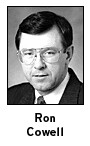
The 12-member task force was chaired by Mr. McDonald and Ron Cowell, a former Democratic chairman of the Pennsylvania House of Representative’s education committee and the president of the Education Policy and Leadership Center in Harrisburg, Pa.
Members included state legislators, national policy experts including Ted Sanders, the president of the Denver-based Education Commission of the States, members of state boards of education, and officials from state education departments.


