Teachers often think they lack time to take children outside—yet there are many benefits to making the time to do so. Cath Prisk, a children’s policy consultant and the Global Partnerships Manager for the Outdoor Classroom Day campaign at Project Dirt, explains.
Join Project Dirt on Thursday, September 8 at 8pm US Eastern time for #GlobalEdChat on Twitter to ask questions, or to share your own advice and ideas.
By guest blogger Cath Prisk
“Oh WOW!” Enya, a 5-year-old from East London, UK has just picked up a chicken for the first time. She did it quietly, with no fuss, and held it softly for her friends to stroke.
She will remember this experience for life.
She’ll also remember the hours later in the day when she and her new friends built a ‘secret’ den in the forest, where the grown-ups were only allowed if taken quietly by a child...
When we look back at our own childhood, the learning moments that stand out may not be in a classroom and most likely aren’t from a lesson either. They are probably from when we were simply playing outdoors.
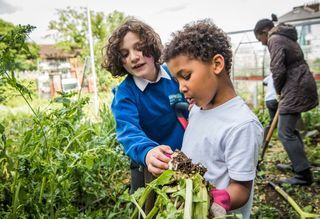
And yet in many countries children play outdoors for less than an hour a day; recess and break times at school are being cut; children are held inside to catch up on academic work; media messages rarely emphasise that outdoor time is as essential to a happy childhood as learning to read or good nutrition; and screen times eat away at free time.
At the same time children are becoming more stressed, finding it harder to learn, and becoming ever more disconnected from the environments around them. They have less time to make friends and develop social skills. They have less time to be kind to a classmate, discover a new plant, and watch it grow. They have less time to be themselves.
Whether you think the purpose of education is to learn to read and write, to become courageous or caring, or to foster creative potential, I believe that learning and playing outdoors should be a cornerstone of the curriculum.
Benefits of Being Outdoors
At Eagle Mountain Elementary School in Fort Worth, Texas, the children now have four recesses a day. Why? Because last year they took part in an experiment to replicate the Finnish school day, trying out more break times to see if it resulted in more learning. The results have been fantastic, with teachers reporting children are less distracted, make more eye contact, and tattle less. Halfway through the year, despite slightly less time in lessons, children in this elementary school were way ahead of schedule, indicating that children that are more relaxed learn more.
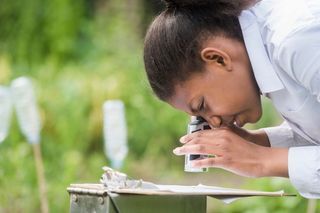
This is further supported by a recently completed four-year, in-depth qualitative assessment on the impact of outdoor learning in 125 schools from deprived communities across the southwest of England. The Natural Connections Demonstration Project found that children, teachers, and whole school communities benefitted from outdoor learning. As well as seeing children’s love of nature increase, and an overall improvement in general well being, teachers saw children simply more engaged with lessons and concentrating more.
Several Canadian corporations and NGOs joined together in 2015 to undertake a comprehensive review of the benefits of physically active outdoor play, concluding that at least 60 minutes a day helps children:
- Improve their health
- Do better in school
- Improve self-esteem and confidence
- Maintain a healthy body weight
- Improve their fitness
- Grow stronger
- Feel happier
- Learn new skills
The teachers themselves enjoyed their jobs more too—not an insignificant factor for busy school principals considering reasons to encourage more outdoor learning and play!
We cannot forget that we also need to nurture future stewards of our environment. In Biên Hòa, Dong Nai, Vietnam children from a large shoe factory now attend the award winning Farming Kindergarten, built with a deep understanding that children need to be immersed in nature. Children that play outdoors with green growing things every day develop a profound love of the outdoors, one that fosters a deep understanding of the importance of looking after our environment.
Taking Your First Steps Outdoors
Teachers everywhere are under pressure to achieve results. Outdoor lessons may be recognized as being good for children, but unless it is already part of your schools’ culture, it can seem daunting. But there is lots of help available!
Juliet Robertson, an outdoor learning consultant who has worked with schools around the world, including in Canada, Australia, and Eastern Europe, says: “One small step outside, may be one giant imprint in terms of positive impact.” You can download her short guide to getting started with outdoor learning from the Outdoor Classroom Day library.
Resources to Assist
- Access free lesson plans in the Outdoor Classroom Day library.
- US National Park Service provides free educational materials for outdoor learning.
- International School Grounds Alliance offers lesson plans, inspiration, and contacts.
- Children and Nature Network provides instructional resources, training, and networking.
- Forest Schools Canada has resources to understand perceptions of risk.
- SciStarter has a list of global collaborative outdoor projects.
- Australia-based Nature Play WA resources for schools.
Have a favorite resource? Please tell us by tweeting to: //twitter.com/OutdoorClassDay or using the #OutdoorClassroomDay hash tag.
Project Dirt is working with NGOs in Brazil, the UK, Finland, Spain, and Portugal and supporting schools in more than 20 other countries to get involved with the Outdoor Classroom Day movement, getting children across the world playing and learning outdoors. Learn more and sign up for Outdoor Classroom Day on Thursday, October 6.


