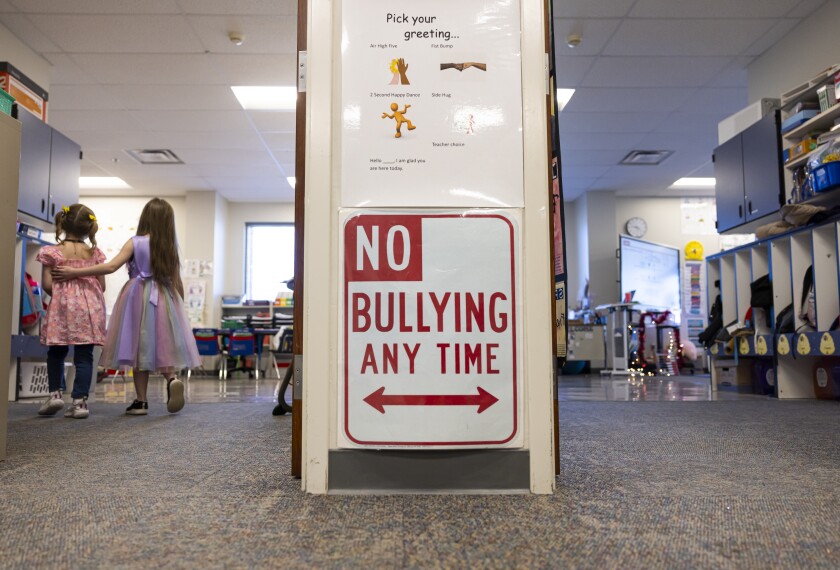
The definition of a successful student has to change from one whose achievement is measured solely on the basis of test scores to one who is healthy, emotionally and physically inspired, engaged in the arts, and prepared for employment in a global economy, a report says.
Prepared by the Association for Supervision and Curriculum Development’s Commission on the Whole Child, the report, released this month, says educational practice and policy today are concentrated overwhelmingly on testing gains. But academic achievement cannot happen without significant emphasis on other factors, including student engagement, personalized learning, and skilled and caring teachers, it adds.
The report is part of the ASCD’s new public-engagement campaign that encourages schools and communities to work together to ensure each student has access to a challenging curriculum in a healthy and supportive climate.
“The Learning Compact Redefined: A Call to Action” is posted by the Association for Supervision and Curriculum Development.
“The current focus on accountability has shifted focus away from whole-child education,” said Judy Seltz, the deputy executive director of the Alexandria, Va.-based ASCD, which works to identify and share sound policy and best practices in education.
“We need to rethink what education of the whole child means and make sure every student has access to a rich and challenging curriculum that pays attention to other aspects,” she added, pointing out that research shows students who feel connected to their community tend to do better academically.
Tough Sell?
The report includes several recommendations for school districts, communities, states, and the federal government. Under one recommendation on cultivating a healthy child, for instance, districts are urged to collaborate with local health and social-service agencies to ensure access to health care, offer healthy food options, and provide programs in physical and health education.
States, meanwhile, can provide incentives for schools to eliminate non-nutritional food and snacks, the report says, and the federal government can provide incentives and funding for effective health, nutrition, and school-readiness programs.
David Magnani, a former Massachusetts state legislator who is now an education policy consultant for the New York City-based Council of State Governments Eastern Regional Conference, called the recommendations “very impressive.”
The ASCD report “says that when you educate the whole child, you can count on academic growth as well, even if that’s not the primary intent,” Mr. Magnani said. But, he added, it might take some effort to convince lawmakers, who are now focused on academic gains because of the federal mandates of the No Child Left Behind Act.
“Legislators and policymakers would want to know how the whole-child compact correlates with academic achievement. If they don’t get an answer to that, they won’t embrace it,” he said.
Some Schools Praised
The report highlights a handful of schools and one state for their whole-child approach.
At the 200-student Quest High School outside Houston, students are actively involved in curriculum writing. They prepare, assess, and monitor their own wellness plans, including physical, social, and emotional health.
The Association for Supervision and Curriculum Development is calling on policymakers to fulfill a new compact that would enable each student to:
• Enter school healthy and learn about and practice a healthy lifestyle.
• Learn in an intellectually challenging environment that is physically and emotionally safe for students and adults.
• Actively engage in learning and be connected to the school and broader community.
• Have access to personalized learning and to qualified, caring adults.
• Be prepared for success in college or further study and for employment in a global environment.
SOURCE: Association for Supervision and Curriculum Development
“We have structures and systems in place to ensure all children are known well by the adults in the school and by other children, so they feel they belong,” Principal Kimberly Klepcyk said in an interview.
Teachers at Quest High, in the Humble Independent School District, lead “families” of 20 to 25 students in “houses” rather than classrooms. Students stay in the same family from 9th through 12th grade. That setup helps them develop interpersonal skills that further improve their chances of success in academics and in other areas, Ms. Klepcyk added.
Among states, the report singles out New Hampshire, where, it says, the department of education has a plan that “is grounded in a commitment to effectively incorporate real-world learning into the fabric of New Hampshire’s public schools.”
“In this model, the local museum curator becomes a purveyor of art and history knowledge, … and the researcher at the local aquarium is the science teacher for two days a week,” the report says.
State Commissioner of Education Lyonel B. Tracy said that suggestions his department outlined under the 2-year-old initiative, although not mandatory, have been adopted by several schools. “Once the schools get the plan in place, they will follow each child all the way through the system to record tangible evidence” of his or her development, he said last week in an interview.
In coming weeks, the ASCD will hold community conversations in which school officials, parents, and people in the spheres of health, recreation, and the arts will identify their communities’ strengths and how they define education.
“The premise,” said the ASCD’s Ms. Seltz, “is that there is an important part of whole-child education that sits with schools, but schools alone” cannot implement the concept without help from those other stakeholders.