January 15, 2020
Education Week, Vol. 39, Issue 18

Law & Courts
LGBTQ Teachers Await Decision on Discrimination Protections
LGBTQ teachers are waiting for the U.S. Supreme Court to decide whether the federal civil rights law guarantees them nationwide protection from workplace discrimination.

Law & Courts
Long History Underlies Fight Over Religious-School Funding
The case being heard by the Supreme Court next week deals with a debate that has raged since the 19th century about federal education funding for private religious schools.
Education
Opinion
What Gets an Education Scholar Into the Newspaper? (Data)
The EdWeek Research Center dug into what some of the education scholars with the most newspaper mentions had in common.

School Climate & Safety
Briefly Stated
Briefly Stated: Stories You May Have Missed
A special state panel in Wisconsin has rejected a financially strapped district's request to dissolve.
Education
Correction
Correction
A story about teacher classroom talk in the Dec. 11, 2019, issue of Education Week misnamed two apps: Teachers can use TeachFX to analyze talk patterns, and the app developed by John Hattie is called Visible Classroom.
Science
What the Research Says
Coursetaking Drives Global Math, Science Scores for Top Students
American physicists and mathematicians helped develop the foundations of quantum theory and built the first atomic bomb, but even among advanced U.S. students, 1 in 3 never get exposed to core concepts in electricity, magnetism, or nuclear physics by their final year of high school.
Reading & Literacy
Letter to the Editor
Dispelling Phonics Myths
To the Editor:
The article "Teaching Reading Takes Training" (Dec. 4, 2019) is riddled with leaps of logic. If "1 in 10 professors could not correctly identify that the word 'shape' has three phonemes," why does every kindergartner need to be able to successfully complete that task? I doubt if 10 percent of the professors interviewed were illiterate. Another issue is the article's assumption that teaching phonics in context (a key element of teaching reading through the three-cueing systems, one of which is graphophonemics) is not teaching phonics. Construing use of the cueing systems as "an approach that tells students to take a guess when they come to a word" is simplification at best, deliberate misrepresentation at worst, since all good readers predict and make use of multiple cueing systems, not just phonics. Good teachers who emphasize cueing systems teach children how to confirm or disconfirm their guesses using phonics, syntax, and meaning.
The article "Teaching Reading Takes Training" (Dec. 4, 2019) is riddled with leaps of logic. If "1 in 10 professors could not correctly identify that the word 'shape' has three phonemes," why does every kindergartner need to be able to successfully complete that task? I doubt if 10 percent of the professors interviewed were illiterate. Another issue is the article's assumption that teaching phonics in context (a key element of teaching reading through the three-cueing systems, one of which is graphophonemics) is not teaching phonics. Construing use of the cueing systems as "an approach that tells students to take a guess when they come to a word" is simplification at best, deliberate misrepresentation at worst, since all good readers predict and make use of multiple cueing systems, not just phonics. Good teachers who emphasize cueing systems teach children how to confirm or disconfirm their guesses using phonics, syntax, and meaning.
School & District Management
Letter to the Editor
Don't Overlook Vowels in Reading Research
To the Editor:
Education Week's special report on the science of reading lays out well the current condition of reading education ("Getting Reading Right," Dec. 4, 2019). A thesis from one of the articles, however, that "there's a settled body of research on how best to teach early reading," is missing an essential facet: vowel knowledge. In 1971, researchers Isabelle Liberman and Donald Shankweiler studied linguistic aspects of error patterns in reading and speech for both consonants and vowels under the auspices of the National Institute of Child Health and Human Development as part of a concerted effort to determine how reading is accomplished. They found that vowels "are seldom misheard but often misread," identified the need for explication, and even proposed a method of study.
Education Week's special report on the science of reading lays out well the current condition of reading education ("Getting Reading Right," Dec. 4, 2019). A thesis from one of the articles, however, that "there's a settled body of research on how best to teach early reading," is missing an essential facet: vowel knowledge. In 1971, researchers Isabelle Liberman and Donald Shankweiler studied linguistic aspects of error patterns in reading and speech for both consonants and vowels under the auspices of the National Institute of Child Health and Human Development as part of a concerted effort to determine how reading is accomplished. They found that vowels "are seldom misheard but often misread," identified the need for explication, and even proposed a method of study.

Classroom Technology
Troubleshooting Tech Realities in Rural Schools
Internet connectivity, recruiting staff, and finding partners to learn from are all big challenges for an ed-tech leader in a district off the coast of Alaska.
Families & the Community
Opinion
It's Hard to Stay on Top of Education Policy. You've Got to Have a Strategy
There's no one-stop shop to get everything you need from education policy, politics, and practice, writes academic Deven E. Carlson.
Families & the Community
Opinion
When Online Surfing Replaced Long Days in a Dusty Library
Changing what and where I read has reshaped how I write about research—and where I publish that writing, explains Jo Boaler.

Families & the Community
Opinion
Education News Has Become a Surging River. Here's How I Stay Afloat
It’s hard to overstate how profoundly the internet has altered the media landscape, writes Frederick M. Hess. Have our habits caught up?
Families & the Community
Opinion
5 Guidelines to Avoid Getting Bamboozled by Misleading News
Deceptive news and research is having a heyday. Here’s how distinguished professor Donna Y. Ford cuts through the clutter.
Special Education
Why the Feds Still Fall Short on Special Education Funding
Calls to fully fund the nation's main special education law resound on the campaign trail, but a complex array of factors make that an elusive goal.

States
'At-Promise'? Can a New Term for 'At-Risk' Change a Student's Trajectory?
California no longer uses the term “at-risk,” with supporters arguing it stigmatized students. But some are skeptical that the new term is better.

Federal
Education Spending: What Democratic Candidates Want vs. Reality, in Charts
Some of the top Democrats seeking the White House want massive funding increases for Title I and other federal education programs. What would that look like compared to current spending?

School & District Management
Principal Turnover Is a Problem. New Data Could Help Districts Combat It
School districts and states invest millions of dollars in preparing and hiring new principals each year. New research out of Texas could help districts get better at understanding why principals leave and help alleviate the school leadership churn.

Student Well-Being & Movement
Mining for Gifted Students in Untapped Places
An internationally known gifted-education center is scouting—and helping to develop—gifted students in after-school programs and pullout classes in one of Maryland’s most challenged school districts.
Equity & Diversity
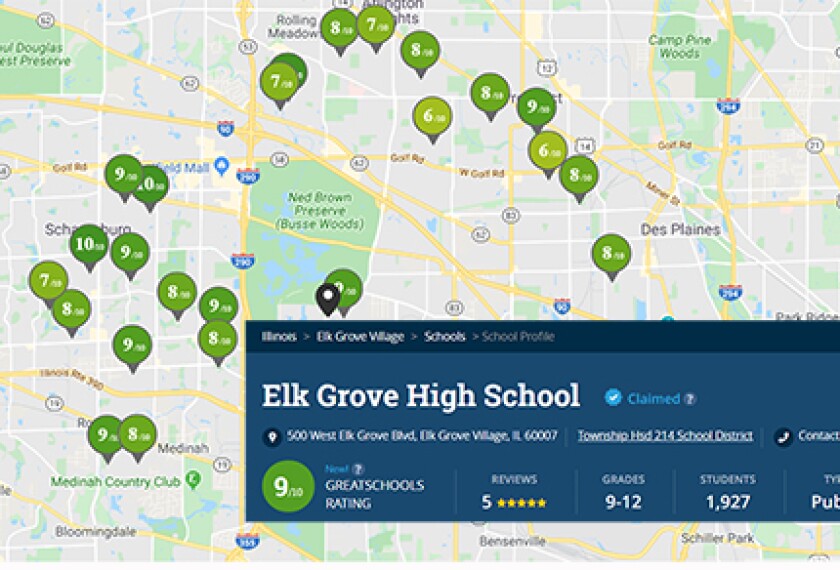
Are GreatSchools Ratings Making Segregation Worse?
With more than 40 million unique visitors a year, GreatSchools.org is a wildly popular source of information on K-12 schools. Though the site has added more factors and nuance to how it rates schools, researchers argue that it’s exacerbating already existing patterns of segregation.
Education
From Our Research Center
What Do We Know About America's Most Influential Ed. Scholars?
Where did the top RHSU Edu-Scholars go to school? What did they study? Delve into a new analysis of the top education scholars around the country.