High School
Education news, analysis, and opinion about schools typically serving 9th to 12th grades and the students who attend them

The High School Handoff
A new series examines how high school is evolving to reflect changing pathways to degrees, credentials, and the workforce.

Curriculum
How Top Teachers Make Student Voice a High Priority
The winners of the 2019-2020 Milken Educator Awards reflect on how they invite students' questions about the world and encourage them to share their perspectives.

Families & the Community
How States and Schools Are Working to Grow Young Voters
States are tweaking voter registration laws for teenage voters and schools are busing students to the polls. Will these efforts help young people get in the habit of voting?

School & District Management
Starting High School Later Shows 'Big Impact'
To make better, evidence-based use of time, a district in Illinois changed high school start times from 7:20 a.m. to 8:30 a.m.

Student Well-Being & Movement
Like College Athletes, These High School Players Get an Assist on Academics
An unusual program in Cincinnati provides academic coaches to help high school players meet eligibility requirements to stay in the game.

Mathematics
7 Takeaways From the 2019 Advanced Placement Results
Nearly one-quarter of the high school graduates of 2019 who took Advanced Placement exams scored a 3 or higher, continuing trends of score improvements among students overall, according to results released Thursday by the College Board. But the results also show small declines for three ethnic groups, including white students.

College & Workforce Readiness
Microsoft, Verizon, and Other Big U.S. Companies Design Their Ideal High School Courses
Education Week asked executives from some of the biggest and fastest-growing companies to design their ideal high school class.

College & Workforce Readiness
Aptitude Tests Steer Students to Careers. Does That Narrow Their Options?
More than 17,000 schools use YouScience, a commercial aptitude assessment that seeks to gauge a test taker’s skills in areas such as idea generation and spatial awareness.

School & District Management
A 'Good News' Story: Curriculum Can Help Students Better Evaluate Online Information
The finding is a small beacon of hope for schools, who are reeling from the volume of misinformation students are exposed to online.

College & Workforce Readiness
Students' 'Dream Jobs' Out of Sync With Emerging Economy
A new 41-country study by the Organization for Economic Cooperation and Development finds that students’ career expectations are stuck in the last century.
School Climate & Safety
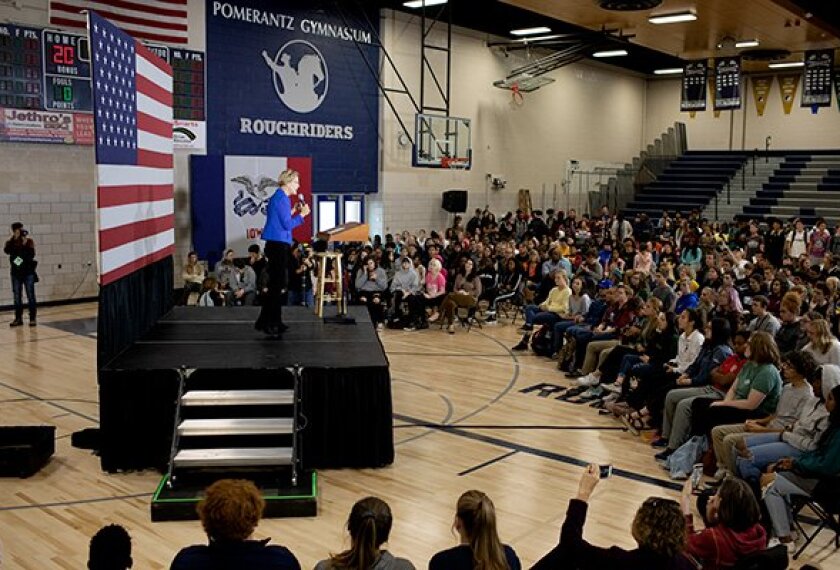
Iowa Caucuses Offer Students a Laboratory for Civics Education
With their state’s caucuses the first official marker in the 2020 presidential contest, Iowa teenagers are in a unique position to observe and participate.

College & Workforce Readiness
What the Research Says
High School Completions on Par for Black, White Students
For the first time in 40 years, the percentage of black 18- to 24-year-olds with a high school credential was nearly the same as that of their white peers, data from the National Center for Education Statistics show, but racial gaps remain for earning an on-time diploma.

Curriculum
Without Rules, Credit Recovery Is Just an 'Easy Ticket to Graduation,' Report Says
Too many districts that use a lot of credit recovery to enable students to finish high school don't have sufficient policy safeguards to ensure that those catch-up courses are high quality, according to a new report.

College & Workforce Readiness
California State University Wants to Raise Admissions Standards. Will It Shut Out Black and Latino Students?
The nation’s largest public university is pushing to raise minimum standards for freshman admissions—a move that has galvanized opposition from advocates and some districts that argue it puts more roadblocks in the path of students who already struggle to meet current requirements.

College & Workforce Readiness
Many Young People Think a High School Diploma Is Enough, Poll Finds
Two new polls offer more evidence that Americans—and especially young Americans—are skeptical whether the investment in higher education is necessary or worth it.