Ron Brown Tie 2000 full
Equity & Diversity Audio

Let Brotherly Love Continue: An All-Male Public School Opens

By Kavitha Cardoza & Cory Turner — October 18, 2017 1 min read
Equity & Diversity Audio

Let Brotherly Love Continue: An All-Male Public School Opens

By Kavitha Cardoza & Cory Turner — October 18, 2017 1 min read
  • Save to favorites
  • Print

Raising Kings: A Three-Part Audio Series From Education Week/NPR (Episode 1)

Introducing Washington, D.C.’s newest high school: the roughly $60 million Ron Brown College Preparatory High School, the capital city’s first all-male traditional public school.

The school is designed specifically to meet the needs of its young black male students – who are called “kings.” And for many of the young men, their needs are profound.

Two reporters, Education Week’s Kavitha Cardoza and NPR’s Cory Turner, spent hundreds of hours with teachers, students, and parents from the school for a three-part audio series on Ron Brown’s first year.

In this episode, we’ll meet Dr. Benjamin Williams, the principal, who personally recruited each of the 100 young men who enrolled as freshmen.
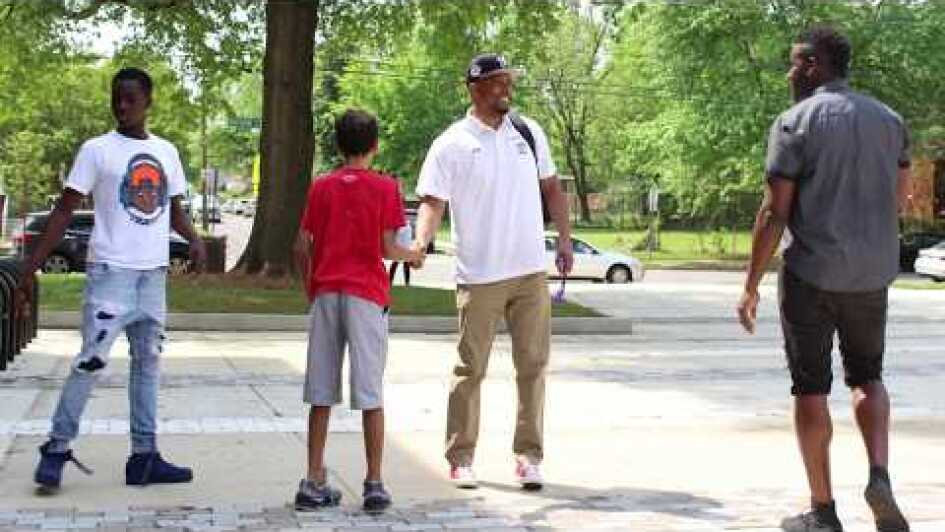
We’ll also meet two of the men at the center of what makes Ron Brown so unusual: Dr. Charles Curtis and Dawaine Cosey, members of the school’s CARE team.

"They feel like it's a place where they can take chances, where they can grow." — Benjamin Williams, principal
“I tell the guys here: You’re gonna get love and there’s really nothing you can do about it.” — Dawaine Cosey, director of culture, empowerment, and restorative justice
"When we look at these young people, we’re looking at them from a place of godliness, of kingliness, of royalty." — Charles Curtis, school psychologist

In the first few months of the academic year, the educators at Ron Brown work with an almost single-minded focus on establishing a school culture and ethos that few of the kings, and in many cases even teachers, have ever experienced.

They spend hours every week in restorative justice circles, putting offenders and their wronged parties together to talk through what’s happened and find ways to set things right. And the students resist. And some parents and school faculty push back too.

For Principal Williams and the CARE team especially, it’s an effort to convince many skeptics that this approach to educating young men of color is worth fighting for.

Listen to Episode One

This episode originally aired Oct. 18, 2017 on NPR’s Code Switch. It’s introduced by Code Switch’s Shereen Marisol Meraji and Gene Demby.

More episodes: Episode Two | Episode Three

Events

This content is provided by our sponsor. It is not written by and does not necessarily reflect the views of Education Week's editorial staff.
Sponsor
Teaching Webinar
Closing the Practice Gap: Essential Insights for Leaders
Three instructional experts will share strategies for making students’ reading and math practice more engaging and impactful this year.
Content provided by Renaissance

EdWeek Top School Jobs

Teacher Jobs
Search over ten thousand teaching jobs nationwide — elementary, middle, high school and more.
View Jobs
Principal Jobs
Find hundreds of jobs for principals, assistant principals, and other school leadership roles.
View Jobs
Administrator Jobs
Over a thousand district-level jobs: superintendents, directors, more.
View Jobs
Support Staff Jobs
Search thousands of jobs, from paraprofessionals to counselors and more.
View Jobs

Read Next

Equity & Diversity Federal Equity Centers Protecting Students' Civil Rights Fight to Stay Open
Four centers that support schools' efforts to expand student opportunity are fighting for their existence.
12 min read
Attorney Eshé Collins at her office in Downtown Atlanta, Georgia on June 25, 2026.
Dustin Chambers for Education Week
Equity & Diversity Opinion 'Culturally Responsive Teaching Isn’t Performative’: How to Get It Right
Want to create a more equitable education experience for all students? Start here.
9 min read
Conceptual illustration of classroom conversations and fragmented education elements coming together to form a cohesive picture of a book of classroom knowledge.
Sonia Pulido for Education Week
Equity & Diversity What's Driving Graduation Gains at Federally Funded Native American Schools?
Innovations in career-focused education, virtual learning, and other areas could be contributing, some say.
5 min read
Native American Graduation Rates 26148594508639
Chief Leschi Schools senior Gerald Dillon, 18, gets a hug from a 2nd grade student as he serves as a teaching assistant through the school's career and technical education program, Wednesday, March 18, 2026, at Chief Leschi Schools in Puyallup, Wash. Over the past decade, graduation rates have risen at Bureau of Indian Education Schools.
Lindsey Wasson/AP Photo
Equity & Diversity Decades After Brown v. Board, New Lawsuit Challenges Persistent K-12 Segregation
Segregation violates a state constitution's right to an adequate education for all, plaintiffs argue.
6 min read
Portrait of nine-year-old African-American student Linda Brown as she poses outside Sumner Elementary School, Topkea, Kansas, 1953. When her enrollment in the racially segregated school was blocked, her family initiated the landmark Civil Rights lawsuit 'Brown V. Board of Education,' that led to the beginning of integration in the US education system. (Photo by Carl Iwasaki/Getty Images)
Nine-year-old African-American student Linda Brown poses outside Sumner Elementary School in Topeka, Kan., in 1953. When her enrollment in the racially segregated school was blocked, her family initiated the landmark civil rights lawsuit <i>Brown</i> v. <i>Board of Education</i> that led to the Supreme Court decision outlawing racial segregation in U.S. schools. A new lawsuit in Massachusetts challenges persistent segregation in that state's schools.
Carl Iwasaki/Getty
