Bashing teachers’ unions never goes out of style in education. But when the complaints started flying thick and fast at a recent meeting here, the malcontents weren’t business leaders or politicians. Rather, they were union leaders themselves.
The Network’s Members |
| Following are the members of TURN and their national union affiliations: |
| Albuquerque (N.M.) Teachers Federation, AFT |
| Bellevue (Wash.) Education Association, NEA |
| Boston Teachers Union, AFT |
| Cincinnati Federation of Teachers, AFT |
| Columbus (Ohio) Education Association, NEA |
| Denver Classroom Teachers Association, NEA |
| Hammond (Ind.) Teachers Federation, AFT |
| Memphis (Tenn.) Education Association, NEA |
| Minneapolis Federation of Teachers, AFT |
| Montgomery County (Md.) Education Association, NEA |
| Pinellas (Fla.) Classroom Teachers Association, NEA |
| Pittsburgh Federation of Teachers, AFT |
| Poway (Calif.) Federation of Teachers, AFT |
| Rochester (N.Y.) Teachers Association, AFT |
| San Diego Teachers Association, NEA |
| San Juan (Calif.) Teachers Association, NEA |
| Seattle Education Association, NEA |
| Toledo (Ohio) Federation of Teachers, AFT |
| United Educators of San Francisco, AFT/NEA |
| United Federation of Teachers (New York City), AFT |
| United Teachers of Los Angeles, AFT/NEA |
| Westerly (R.I.) Teachers Association, NEA |
They complained about their unions’ layered bureaucracies, disengaged members, and overworked staffs and officers. And that was just for starters.
Such candor—and the opportunity to exchange ideas about possible remedies—is a hallmark of a 4-year-old network of union affiliates, known as TURN, for Teacher Union Reform Network of NEA and AFT Locals.
Along with a big name, the network has a big goal: restructuring unions so they can promote changes that will lead to improved student achievement. TURN now includes 24 local unions, roughly divided between affiliates of the two national teachers’ unions.
Members of the network, which includes both elected officers and top employees, say it provides a rare opportunity to step back from their day-to-day worlds to trade ideas and information and learn from one another’s experiences and mistakes. But whether the network can move beyond intellectual support to serve as a catalyst for union change remains to be seen.
The tension between “TURNsters” who want to make their work concrete and those who lean toward using the network primarily for professional development was evident here last month at the group’s quarterly meeting.
“The challenge is not just to come together to talk about the issues, but to come together and really work hard to push the envelope and go back home and make it real,’' argued Mark Simon, the president of the Montgomery County (Md.) Education Association, an affiliate of the National Education Association. “I don’t think everyone is in the same position to do that.”
Adam Urbanski, a co-director of TURN and the president of the Rochester (N.Y.) Teachers Association, an American Federation of Teachers affiliate, is pressing the leaders to draft local action plans for their unions as a way of bringing their sometimes-lofty discussions down to earth. The four locals that haven’t done so, he said, likely will be asked to leave the network by the fall.
It was evident here that such action plans vary considerably in quality, just as the participating unions vary in their records on rethinking their agendas.
Some teachers’ union locals have been recent standouts in taking bold steps, such as those in Cincinnati, Denver, Minneapolis, Montgomery County, and Seattle. Others, including the unions in Dade County, Fla.; Memphis, Tenn.; and Pittsburgh, are more notable for their past willingness to support change.
Other affiliates are still struggling to form the collaborative relationships with their districts that would allow them to negotiate reform-oriented contracts.
Four locals that are officially still members of the network, including the Pinellas County, Fla., and San Diego unions, no longer participate. The Greece, N.Y., teachers’ association dropped out of TURN altogether under a new president.
John Grossman, the president of the Columbus (Ohio) Education Association, said he doesn’t attend meetings of the network because “we’ve been waiting for a lot of the other locals to really get moving.’'
“A lot of what TURN has been talking about are things we’ve done a long time ago,’' said Mr. Grossman, who hasn’t prepared a local action plan.
Last year, three new locals joined the network, including the Poway (Calif.) Federation of Teachers, which has been a leader in creating peer-review programs and has helped a large proportion of the district’s teachers become certified by the National Board for Professional Teaching Standards.
The network, launched in 1996 by Mr. Urbanski and Helen Bernstein, the late president of United Teachers Los Angeles, has the blessing of both the NEA and the AFT. But while staff members of the national unions occasionally attend meetings of the network as invited guests, neither has an official liaison to TURN.
‘Implicit Consensus’
In its first three years, the network organized its discussions around “working groups” in three areas: teacher compensation, the union role in professional development, and teacher recruitment, induction, and retention.
The idea that unions should take a leading role in inducting new teachers into the profession and act as either a provider or broker to help their members hone their teaching skills wasn’t a big stretch for the self-described TURNsters.
Many of the participating locals—such as those in Cincinnati, Columbus, and Dayton, Ohio, and Rochester—had been at the forefront of negotiating peer-review programs. The United Federation of Teachers in New York City has a long history of providing training for teachers.

|
Even on the touchy issue of compensation, TURN reached what Mr. Urbanski calls “an implicit consensus” that paying teachers for acquiring knowledge and skills was a worthy idea. Network members have worked with Allan Odden, a professor of educational administration at the University of Wisconsin-Madison and an expert on teacher compensation, both in groups and individually.
That the Denver Classroom Teachers Association, a member of TURN, is helping to design a pilot program to tie teacher pay to student performance is no accident. But neither was the union’s involvement with TURN responsible for the pay experiment, which was advocated by the school board and announced last fall. (“Denver Teachers To Pilot Pay-for-Performance Plan,” Sept. 22, 1999.)
Bruce Dickinson, the executive director of the Denver union, said TURN has been “a really good clearinghouse for what’s important.”
Through the network, Denver leaders are able to exchange electronic mail about the design of their pilot program. And they attended Mr. Odden’s seminar on teacher pay, although Denver union leaders weren’t part of the TURN working group on that issue.
Mr. Urbanski and Roger Erskine, the outgoing executive director of the Seattle Education Association, who is now co-directing TURN, argue in an article in the January issue of the journal Phi Delta Kappan that new approaches to teacher compensation can reinforce efforts to improve instruction.
Mr. Odden lays out, in the same issue, various types of skill-and-knowledge pay and school incentive programs that offer rewards for better student achievement.
The growing interest in alternative forms of teacher compensation also was underscored at the third National Education Summit last fall, when business leaders pledged to help 10 states incorporate pay-for-performance incentive plans into their salary structures. TURN members played a prominent role in those discussions.
No Progressive Unions?

|
Last fall, TURN reorganized into three new working groups, examining teacher quality and instructional issues, ways of engaging union members and the public in improvement efforts, and change inside unions themselves to build capacity to help increase student achievement.
Mr. Urbanski gets no argument from TURNsters—who are not shy about disagreement—when he asserts that while there are progressive teachers’ union leaders, there are no progressive unions.
Union officials here were unanimous in their concern that their members don’t pay much attention to the union and do not see it as synonymous with professional issues—TURN’s ultimate goal.
While some locals, such as the union in Maryland’s Montgomery County, have made concerted efforts to get teachers who are also instructional leaders to serve as union stewards, others find themselves presiding over two unions: one oriented toward member rights and enforcement of the teachers’ contract, and the other pressing for a voice in curriculum, school governance, and other educational policy areas.
In Hammond, Ind., 125 teachers are involved in rewriting the curriculum and devising related assessments. Not one has been a union activist, said Patrick O’Rourke, the president of the union there, although building representatives have been invited to attend meetings of the project.
|
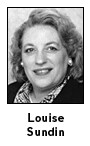
A major problem, said Louise Sundin, the president of the Minneapolis Federation of Teachers, is the “archaic, one-dimensional information system from us to them—in forms our folks ignore.”
Increasingly, Ms. Sundin said, younger teachers don’t trust the union, and even bring their own lawyers to represent them in grievances."We have to move from an organization that serves individual professionals and their needs to the profession as a whole,” she argued.
In Denver, the union hired a consultant to poll its members and conduct focus groups that helped shape its contract talks and willingness to experiment with performance-based pay.
Union leaders here also were sharply critical of their own structures, which typically include a representative in each building, a staff to respond to queries and operate a few programs, and a governance configuration that includes an elected board of directors and numerous committees. Less clear, however, was what form a more progressive union would take.
Federal Backing
TURN has received a $355,000 two-year grant from the U.S. Department of Education’s office of educational research and improvement for selected local affiliates to put themselves under the microscope and map changes.
Julia Koppich, a San Francisco-based education consultant who is working on the project, said risk-taking unions haven’t had time to step back and take a hard look at themselves.
“There are parallel unions—the people who do traditional work, and the people who do reform,” Ms. Koppich said. TURN members, she said, “are realizing that reform work is the work.”
The four local affiliates involved in the Education Department-financed study—in Albuquerque, N.M., Denver, Minneapolis, and Montgomery County—will do “self-studies” to assess their structures, cultures, operations, and ways in which they could change to reflect better the work the union is trying to do.
On their own, TURN members agree, unions can’t do much. They need good relationships with district administrators and school boards and with the larger community, including partnerships with universities and other groups that can help them weather the high turnover of superintendents that continues to buffet many districts.
Mr. Urbanski also hopes that TURN will receive a three-year, $1.5 million grant to examine new models of labor-management relations from the Broad Foundation, created last year by Eli Broad, the chairman of the Los Angeles-based SunAmerica Corp.
The existing rhythm of collective bargaining, according to Mr. Urbanski and Mr. O’Rourke, disrupts cooperative efforts around negotiating time and can lead to serious setbacks.
As evidence, they pointed out that Tom Mooney, the president of the Cincinnati Federation of Teachers, feared he might be on strike last month. Increasingly, such wild mood swings are seen as a poor fit for professional unions, although no TURNsters seemed willing to chuck their advocacy of bread-and-butter issues.
With support from the John D. and Catherine T. MacArthur Foundation, the network is now spawning a series of TURN satellites, in California, Florida, the Midwest, and New England, that will let more union leaders become involved in the discussion.
TURN also has support from the Pew Charitable Trusts, its initial underwriter, and maintains a World Wide Web site at www.turnexchange.net.
While Mr. Urbanski is clearly eager to see the local action plans evolve into workable blueprints for improvement, he believes TURN has already served a valuable purpose.
“There is downright affection here,” Mr. Urbanski said of the tight-knit group, “and I am damned determined to protect it.”


