When you think about reading, what do you visualize? I imagine traveling through time or around the world—while curled up in my armchair. I picture books stacked around my house. I see my husband, my daughters, my granddaughters, and my friends—all readers who suggest titles, share books, and incessantly talk about what they are reading now and reading next. For me, reading is part of my daily life—nothing rare or remarkable. I love reading and the emotional and intellectual pleasure it brings.
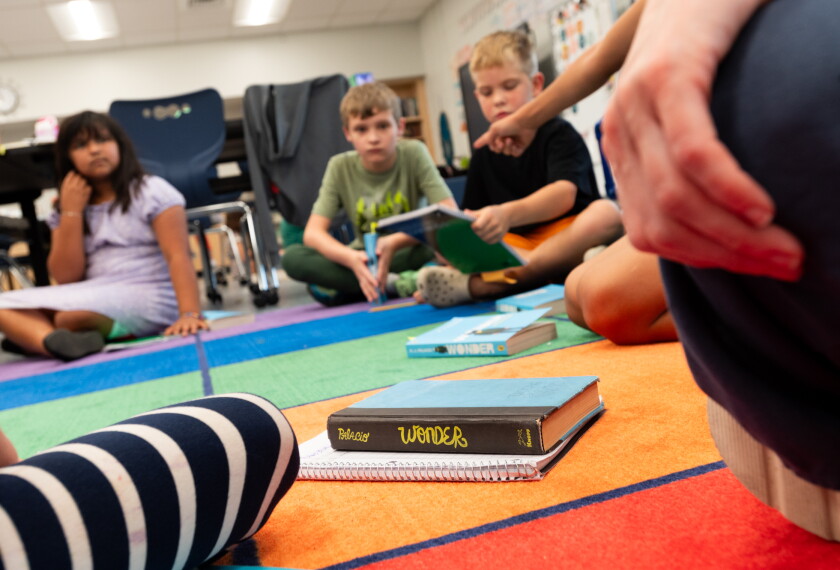
As a teacher, I share my love of reading with my students and try to inspire and encourage them to read more. Setting aside time for them to read in class, building a classroom library of accessible, interesting books, and providing opportunities for my students to preview, share, and talk about books works for many. Over the years, my middle school and upper elementary students have read 30 or more books a year, without incentives or extrinsic rewards. No matter what their reading experiences were in the past, all of my students read more and report greater motivation and interest with reading. One student, Ashley, told me, “It is impossible to be a non-reader in your class, Mrs. Miller.” In a classroom where reading weaves throughout everything we do, I know that Ashley is right.
April 3, 2014
Are schools today doing enough to cultivate independent-reading skills and habits in students? Donalyn Miller—author of The Book Whisperer and the just-published Reading in the Wild—will discuss specific classroom and schoolwide strategies educators can use to build students’ self-efficacy in reading and help them internalize strong literacy habits. Register now.
Many of my students develop a love for reading during one year in our classroom. I hear from former students and their families often, and a lot of them report that they are still enthusiastic readers. Unfortunately, I run into some former students at football games or Target who admit sheepishly that they aren’t reading much anymore.
What happens? Why do these students, who read avidly in my class, lose their reading motivation? They tell me that they don’t have time in school to read anymore, they have too much homework and too many outside activities, or that they “can’t find anything good to read.” In the past, I would grow irritated with their English teachers. How did these teachers squash my students’ independent reading engagement? Why weren’t they promoting a love of reading? But I have evolved in my understanding of lifelong reading habits and a teacher’s role in fostering their development in students.
Internalizing Reading Habits
If my students had internalized the habits of lifelong readers, they wouldn’t need a teacher to orchestrate their reading lives. While students benefit from the optimal reading environment I build in my classroom, many lack the skills they need to maintain independent reading habits outside of school. It is necessary to model, explicitly teach, and reflect on students’ development of lifelong, avid (or, as I call them, “wild”) reading behaviors to ensure that students remain motivated, engaged readers.
Habitual readers exhibit an array of individual characteristics that define their reading lives, but through surveys of 900 adult readers, my colleague, Susan Kelley, and I have identified five habits that translate well to classroom instruction.
In the classroom, allowing students to choose their own texts fosters engagement and increases their reading motivation and interest.
When students select their own books to read and enjoy, they develop confidence in their abilities to make reading choices and build their capacity for choosing books in the future. If a book choice doesn’t work out, students can fine-tune their book-selecting skills and reflect on what they will do differently next time.
Analyzing the body of research about self-selected reading, Johnson and Blair (2003) identify several ways that self-selected reading builds children’s self-efficacy as readers. Self-selecting reading material:
- Allows students to value their decisionmaking ability;
- Fosters their capacity to choose appropriate literature;
- Gives them confidence and a feeling of ownership;
- Improves reading achievement; and
- Encourages them in becoming lifelong readers.
Wild readers:
• Dedicate time to read. They spend substantial time reading in spite of their hectic lives. Wild readers capitalize on the moments in their days when they are bored or waiting, and rack up significant reading time by stealing it.
Teaching tip: Encourage students to carry a book with them everywhere they go, so they have something to read when they finish assignments, wait for the bus, or ride to soccer practice.
• Successfully self-select reading material. Wild readers are confident when selecting books to read and have the experience and skills to choose books successfully that meet their interests, needs, and reading abilities.
Teaching tip: Create “preview stacks”—sets of four or five books at a student’s reading level that match their interests and reading experiences and invite students to select books from this focused, hand-picked stack instead of the entire library.
• Share books and reading with other readers. Wild readers enjoy talking about books almost as much as they like reading. Reading communities provide a peer group of other readers who challenge and support us. As literacy expert Stephen Krashen reminds us, “Children read more when they see other people reading.”
Teaching tip: Provide students lots of opportunities to preview, select, and share books together. Foster reading relationships between students by seating students with common reading interests at the same table.
• Have reading plans. Wild readers plan to read beyond their current book. They anticipate new books by favorite authors or the next installment in a beloved series. Reading is not a casual, once-in-a-while pursuit.
Teaching tip: Promote series, which become a reading plan for students who struggle to maintain reading momentum and motivation. Students who read series develop confidence and increased comprehension with each subsequent book because they build background knowledge as they go.
• Show preferences for genres, authors, and topics. Yes, children need to read widely and experience a wide range of texts as part of their literacy educations. But wild readers express strong preferences in the books they like to read—gravitating toward specific genres, writing styles, topics, and beloved authors.
Teaching tip: Validate students’ reading tastes, but encourage them to stretch by reading texts across all genres—including fiction, nonfiction, and poetry. Exhibit the same variety in the texts you share with students through book talks and read alouds. Show students connections between texts of different genres, like Laurie Halse Anderson’s Fever 1793 and Jim Murphy’s American Plague, or The Lightning Thief by Rick Riordan and D’Aulaires’ Book of Greek Myths.
Students need encouragement and practice to develop the habits of wild readers. Every day, I ask myself, “What did I teach my students about reading that they can use with other texts? What did I show my students about reading that they can use outside of school?” We must never lose sight of our true goal—fostering a lifelong love of reading, which lasts long after school ends.