As the 12 Race to the Top winners reach the midpoint of their four-year, $4 billion federal grant program, states are shifting their work from the planning stages to what is perhaps the more difficult part: implementing new programs and school improvement efforts in the classroom.
This critical midpoint comes as President Barack Obama, who considers the initiative one of his signature domestic-policy achievements, campaigns for a second term. Race to the Top became a bragging point in several speeches at the Democratic National Convention this month, while some of its components took a beating at the Republicans’ gathering last month. (“Nominees Serve Up Stark Differences on Education,” Sept. 12, 2012.)
Race to the Top was even invoked last week during the Chicago teachers’ strike because revamping teacher evaluations to include student performance—a key sticking point between the union and the district—is also a focus of the grant competition.
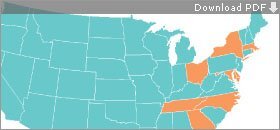
The 11 states plus the District of Columbia that are sharing $4 billion in Race to the Top grants are at the halfway point in implementing their four-year plans. As of Aug. 31, states still had the vast majority of their grant money left to spend.
SOURCES: Individual states’ Race to the Top “scopes of work”; U.S. Department of Education approved amendments; annual state reports
As states start the third year of Race to the Top, changes start hitting the classroom in earnest. Six states, for example, have committed to implementing the Common Core State Standards this year. Several states, including Rhode Island, Delaware, and Hawaii, continue to roll out new teacher-evaluation systems that incorporate student learning gains as they promised to do in their Race to the Top plans.
“The harder piece is in year three or year four, in terms of how states support districts and making sure it’s not siloed education reform,” said Ann Whalen, the director of policy and program implementation for the U.S. Department of Education. “We are two years into a four-year grant, but this is more than a four-year grant, this is a long-term investment in reform,” Ms. Whalen said. “This is to invest to create the structures and to build off of the work that has begun.”
Clock Ticking
This halfway point also means the clock is ticking for states to make good on promises they made to win the money back in 2010. In addition to implementing of new teacher-evaluation systems, states are encountering big challenges modernizing their data systems. States also have strained to get contracts awarded on time, and to get new teacher- and principal-recruitment efforts off the ground.
Implementation problems over teacher evaluations in two states—Georgia and Hawaii—earned those states “high risk” designation by the Education Department, meaning at least a portion of their grants could be taken away if federal officials don’t see improvement.
And, of the $4 billion awarded, $3 billion remains for states to spend. (States have four years from the time their grants were awarded to spend their money, but can ask for a one-year extension that the Education Department will consider on a case-by-case basis.)
Race to the Top, which started in 2010 with a $4 billion general school reform competition funded by the economic-stimulus package passed by Congress in 2009, has become an education improvement brand name for the Obama administration. Subsequent Race to the Top competitions have been launched to jump-start improvements in early learning and, most recently, at the district level.
The department’s second annual performance report for Race to the Top should be out in December. It will offer more insight into the accomplishments and challenges in each state—and also will include additional specific information about how states are doing in hitting their academic goals (such as in student test scores) and performance measures (such as what percent of their teachers are subject to new evaluations).
Common-Core Questions
Ulrich Boser, who has studied Race to the Top as a senior fellow at the Center for American Progress, a Washington think tank, said he’ll be interested in how districts in Race to the Top states implement the common core, and how those new standards align with new teacher evaluations.
A big question, Mr. Boser said, is, “How do you really get teachers up to speed on the common core?”
Even in a small state such as Delaware, the general Race to the Top rollout is daunting when you look at the numbers: 10,000 public school employees educating 150,000 children, said Paul A. Herdman, the president and chief executive officer of the Rodel Foundation of Delaware, which has worked closely with the state on education reform.
“You’ve got a short window of time to not only implement Race to the Top but also to transform the system. It’s one thing to mechanically go through the delivery of what’s been promised: hiring X number of coaches and to build in certain strategies,” Mr. Herdman said. “But it’s a different proposition to change people and to change the culture.”
Mr. Herdman said he will, in particular, be watching how the state and districts implement the common core in classrooms, how new evaluations translate into discussions about teachers’ overall career paths, and how promising Race to the Top strategies can be sustained once federal money runs out.
The next two years will also be critical for Hawaii, which has not been able to reach an agreement with its teachers union to create a new evaluation system statewide that includes student academic growth, and results in consequences—and benefits—for teachers and principals.
Hawaii state schools Superintendent Kathryn Matayoshi said in an interview, “We have to get the work done well, and done on time.”


