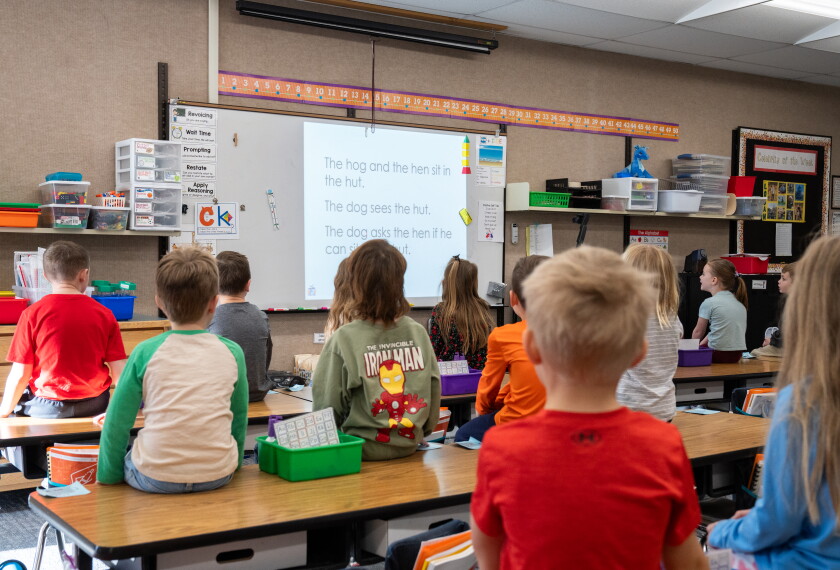
The iBooks are coming! The iBooks are coming! Like some invading force, these tablet devices carry great promise. They allow students to rid themselves of back-straining printed books and replace them with portable devices that capture thousands of colorful, interactive pages with multimedia elements, three-dimensional graphics, and photo galleries. At the same time, they threaten to replace traditional texts and even libraries, a development already in progress in some halls of learning, where library stacks have been displaced by computers and carts of high-tech tablets. The hoped-for outcome is a revolution in reading in specific and learning in general.
We use the word “threaten” advisedly, as the history of technology has been a bumpy and uncertain path with numerous cul-de-sacs. In 1933, Elementary English, a journal for teachers, advertised the manual typewriter as a device that would dramatically change writing and spelling: “Education must assume control of this new educational tool.”
Other technological advances tell a similar story. When “talkie” motion pictures became popular, hopeful educators jumped on the movie bandwagon. Then there was the talking typewriter, a short-lived effort to teach 3-year-olds to read using an electric typewriter. Next up was educational television. When the personal computer arrived, teachers were encouraged to individualize instruction by becoming educational programmers (as if they didn’t have enough tasks to fill their days). The educational use soon focused mainly on drill-and-skill activities.
When the Internet burst onto the scene, some thought it would change education by allowing students to access information far beyond classrooms and school libraries. But this access came with a challenge—students were faced with hyperlinked text that sent them into distracting territory.
All of these ventures initially seemed hopeful, and yet as we look back, not one has fulfilled its promise. Today, the manual typewriter serves virtually no schoolchild. Few movies are produced solely for the educational audience, and educational television, once thought to be a breakthrough, is relegated to a single channel in most metropolitan areas. Even the computer has been corrupted as students sneak onto forbidden websites or insist on listening to their favorite music while studying. Music usually wins out.
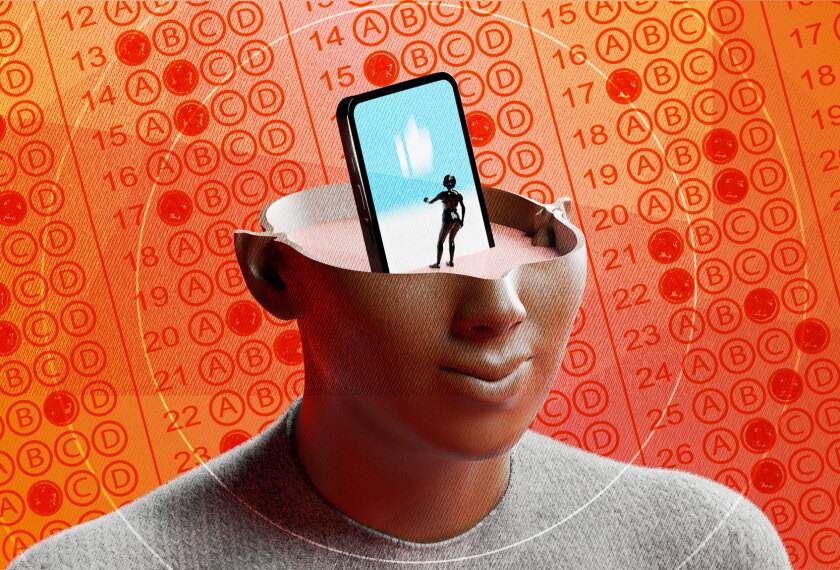
The iPads, iPhones, and other devices that allow immediate contact with everyone and anyone at all times have become a distraction in the classroom, supporting the notion that multi-tasking is a dubious way of getting an education. Last year, the PBS “Frontline” series aired the program “Digital Nation,” which included a segment on multi-tasking and tackled the issue of whether laptops are a massive distraction or a valuable tool in the classroom.
Not long ago in Education Week, Arthur E. Wise wrote: “Technology has failed to transform the way schools operate. Schools have added hardware, software, courseware, and technical support, but in ways that continue the familiar forms of teaching and learning. Technology does not substitute for labor, and efforts to improve the management and deployment of human resources have generally not succeeded.” (“Out of the Box: Ending the Tyranny of the Self-Contained Classroom,” Jan. 25, 2012.)
We believe that iBooks, tablets, and other technological tools can be worthwhile if they are seen as a means to an end rather than an end in themselves."
The central question, as we look forward to another great leap in education, fueled by the iBook and tablets, is whether these devices, like those that have preceded them are toys or tools, and if tools, what sort? To prevent this new generation of devices from becoming merely peripheral tools in the 21st-century classroom, some thought must be given as to how they will be used and by whom.
We believe that iBooks, tablets, and other technological tools can be worthwhile if they are seen as a means to an end rather than an end in themselves. For this to happen, they need to be used in a rich, meaningful context. We further believe that this context can be project-based learning. In our experience, these tools are servants—intellectual assistants that enable the learner to go beyond his or her intellectual capabilities. Like any tool—a hammer, for example—they can be used well or misused.
In project-based learning, students identify an authentic, messy debatable question, inquire as to possible answers, and respond by making a presentation, producing an innovation, or planning an event. They use technology to search for information, communicate with others locally and abroad, store vital information, and present their findings. We call this version of project-based learning technology-inquiry education, or TIE. This has the potential to literally harness technology in the service of learning. For TIE to be implemented, teachers need to engage in meaningful professional development. Otherwise, we fear that a great deal of time, energy, and money will be spent on the latest “toys” with no discernible improvement in learning.
We recently worked together with middle school teachers on a social studies unit about Egypt as an extension of our graduate course in middle and secondary reading methods at Providence College. Part 1 of the unit dealt with the historical Egypt, which most of us experienced in our own school days: the pyramids, the pharaohs, and hieroglyphics. In Part 2, students studied the modern Egypt of the Arab Spring, and were confronted with the question: Should U.S. foreign aid to Egypt, presently about $6.50 for every man, woman, and child in this country, be continued?
While technology itself could not answer this question, it helped students in their pursuit. They used the Internet to gather information from websites based within and outside the United States, including accessing online videos and other reports from Al Jazeera. Students used word processing to prepare written reports for the unit, Skype to talk with students in Egypt, a wiki to store information and resources, and multimedia to present findings. Additionally, video was used to record the entire unit. The unit concluded with a more traditional debate dealing with the question of continued foreign aid. In the background, technology supported the students and enhanced the learning experience.
These latest developments could fuel significant improvements in learning, or tablets and the like could join their predecessors as well-intended but harmless diversions. So, what will it be, technology toys or tools?
If technology is to be employed as an integral tool, it must support fundamental literacy, serve the inquiry process, and extend the learning experience. When education leaders catch the vision of a technology-inquiry approach, they will succeed in making a real difference in the lives of students, defying the belief that the more education changes, the more it remains the same.